Why Poor Blood Circulation at Night Can Disrupt Sleep

Poor blood circulation at night can cause cold feet, tingling, swelling, cramps, or aching that wakes you up. It is often linked to vein problems, narrowed leg arteries, inactivity, dehydration, diabetes, or sleep apnea. New, severe, or one-sided leg pain and swelling needs prompt medical care, especially if the foot is cold, pale, numb, or has a sore that will not heal.
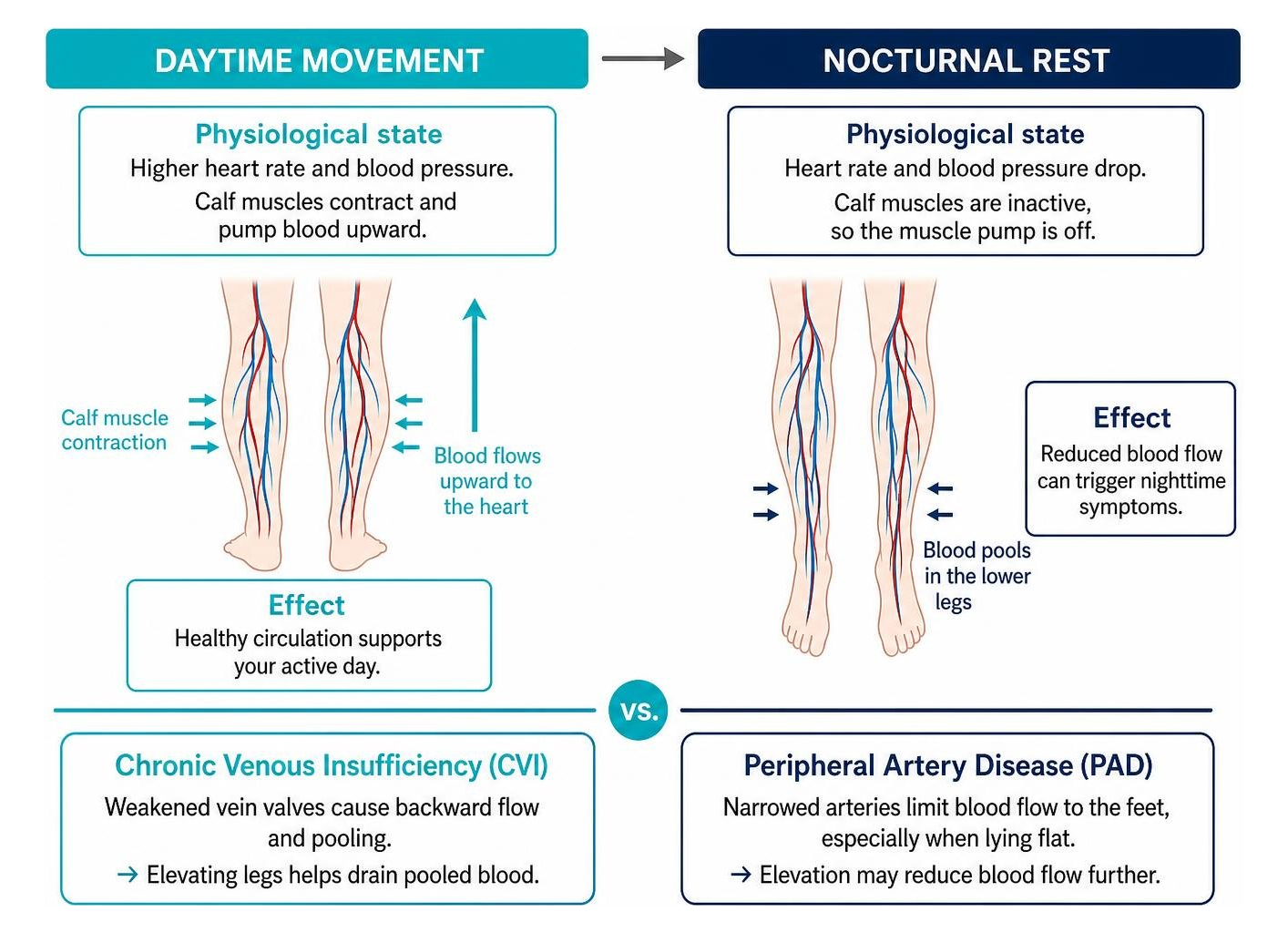
Sleep naturally changes blood flow. Your heart rate and blood pressure drop, and your calf muscles are no longer moving blood upward from the legs. For people with chronic venous insufficiency, blood can pool in the lower legs. For people with peripheral artery disease (PAD), lying flat can make it harder for narrowed arteries to supply the feet.
Simple steps may help, depending on the cause:
- Take a short walk and do ankle circles or calf stretches before bed.
- Stay hydrated through the day and limit very salty evening meals.
- Elevate your legs gently for swelling caused by vein problems - but avoid leg elevation if you have suspected or diagnosed PAD unless a clinician tells you otherwise.
- Avoid tightly crossing your legs and ask a clinician before wearing compression socks overnight.
Night symptoms are not always a circulation problem. Restless legs syndrome, nerve damage, medication effects, and ordinary muscle cramps can feel similar. Still, the pattern matters: persistent foot or toe pain at rest that improves when you dangle the leg may point to PAD, while heaviness and ankle swelling often fit a vein-related issue.
I am Michelle M. Henson, a copywriting leader and legal compliance editor with more than 20 years of experience turning health research into clear, responsible guidance. In this guide to poor blood circulation at night, I will help you separate practical sleep-related steps from symptoms that deserve medical evaluation.

Common Causes of Poor Blood Circulation at Night
When we lie down to sleep, our cardiovascular system shifts into a resting state. Cardiac output declines, resting blood pressure dips naturally, and our skeletal muscle pump—the contraction of our calf muscles that drives venous blood back to the heart—goes entirely quiet. For healthy vessels, this nocturnal slowdown is restorative. But if your circulatory pathways are compromised by arterial plaque, damaged venous valves, or declining endothelial function, the night highlights these vulnerabilities.
The primary culprit behind reduced vascular flow is often structural damage within the blood vessels themselves. As we age, oxidative stress and arterial stiffening reduce the flexibility of vessel walls. When combined with prolonged daytime sitting, blood pools in the lower extremities, setting the stage for discomfort as soon as your head hits the pillow.
Chronic Venous Insufficiency vs. Peripheral Artery Disease
To properly address nighttime vascular issues, we must distinguish between the two primary circulatory disorders affecting the legs: Chronic Venous Insufficiency (CVI) and Peripheral Artery Disease (PAD). While both disturb your rest, their underlying mechanisms and nighttime remedies are opposites.
- Chronic Venous Insufficiency (CVI): Veins have one-way valves designed to push deoxygenated blood upward against gravity. When these valves weaken, blood pools backward (venous reflux), leading to pressure buildup, evening swelling, and heaviness. CVI affects between 10% and 35% of adults. In fact, a 2025 clinical study found that roughly 60% of CVI patients suffer from poor sleep quality. Elevating the legs provides immediate relief by using gravity to drain pooled blood back toward the heart.
- Peripheral Artery Disease (PAD): PAD involves atherosclerotic plaque buildup that narrows the arteries, restricting the delivery of oxygen-rich blood down to the extremities. PAD affects an estimated 8 to 12 million Americans. During the day, gravity helps pull arterial blood downward. At night, lying completely flat removes that gravitational help, resulting in severe oxygen starvation in the feet and toes—known clinically as ischemic rest pain. Elevating the legs worsens PAD pain, whereas hanging the foot over the edge of the bed restores flow.
The Cleveland Clinic clinical overview of poor circulation highlights how arterial and venous blockages uniquely disrupt cellular health. Understanding how to support blood flow lower legs depends entirely on knowing which system is compromised:
| Vascular Condition | Core Problem | Key Nighttime Symptoms | Effect of Leg Elevation | Positional Relief |
|---|---|---|---|---|
| Chronic Venous Insufficiency (CVI) | Leaky vein valves; blood pools in lower legs | Throbbing, heavy legs, ankle edema, restless crawling sensation | Improves symptoms by draining fluid toward the heart | Lying back with legs elevated above heart level |
| Peripheral Artery Disease (PAD) | Narrowed arteries; insufficient arterial oxygen reaching feet | Burning or aching pain in toes/forefoot, icy skin, pale toes | Worsens pain by reducing arterial perfusion pressure | Dangling legs over bed edge or sleeping slightly upright |
The Impact of Sleep Apnea and Systemic Conditions
Circulation does not operate in isolation from your respiratory and endocrine systems. Obstructive sleep apnea (OSA) is a major contributor to nocturnal vascular distress. When your airway collapses during sleep, blood oxygen levels drop sharply (intermittent hypoxia). This triggers an immediate surge in the sympathetic nervous system, spiking blood pressure, constricting peripheral blood vessels, and accelerating arterial stiffness. Research from the National Institutes of Health and the American Heart Association indicates that sleep apnea can increase the risk of developing PAD by 37% to 60%.
Other systemic conditions can also impair nighttime circulation:
- Diabetes and Diabetic Neuropathy: Chronic high blood sugar damages the delicate microvascular capillary beds supplying the nerves in your feet. This creates a combination of poor microcirculation and numbness.
- Raynaud’s Phenomenon: This condition causes hyper-reactive vasospasms in small extremity vessels, turning fingers and toes white or blue in response to minor temperature drops.
- Autonomic Neuropathy: Damage to the nerves controlling involuntary functions can disrupt normal vascular constriction and dilation, leaving the feet cold and poorly perfused overnight.
Symptoms and Warning Signs You Shouldn't Ignore
Recognizing how vascular problems manifest during sleep allows you to take corrective action before minor nighttime annoyances turn into long-term tissue damage.
Symptoms of Poor Blood Circulation at Night While Sleeping

Nighttime symptoms often progress gradually. You might write them off as normal aging or a chilly bedroom, but your extremities are sensitive indicators of cardiovascular health. Look for these warning signs:
- Icy Toes and Cold Feet: If your feet remain freezing under heavy blankets, your microvascular perfusion may be compromised. Reviewing the Guy's and St Thomas' guidance on circulation warning signs shows that persistent cold extremities often reflect diminished arterial supply rather than room temperature.
- Nocturnal Leg Cramps and Spasms: Painful calf contractions can occur when oxygen delivery fails to meet tissue demands or when venous congestion causes metabolic waste products to accumulate in the muscle beds.
- Restless, Crawling Sensations: Restless legs syndrome (RLS) affects 7% to 10% of adults. While RLS can have neurological roots, vascular congestion is a frequent trigger. A 2023 study published in the Journal of Vascular and Interventional Radiology showed that among 90 patients with restless legs or night cramping who had isolated venous reflux, 100% experienced significant or complete relief after receiving targeted venous treatment.
- Pins and Needles (Paresthesia): A persistent prickling sensation indicates that sluggish blood supply is starving sensory peripheral nerves of essential oxygen.
- Evening Ankle and Foot Swelling (Edema): Socks leaving deep, indented grooves in your skin at bedtime indicates fluid retention from overburdened veins.
If you struggle with maintaining healthy circulation in feet, track when these symptoms appear to help your doctor identify the root cause.
Critical Red Flags: Blood Clots, PAD, and Venous Ulcers
While many nighttime circulation problems develop slowly, some require immediate emergency intervention.
- Deep Vein Thrombosis (DVT): A blood clot lodged in the deep venous system is a medical emergency. Watch for sudden, dramatic swelling in only one leg, accompanied by deep calf tenderness, warmth, and skin redness. If a piece of this clot breaks off, it can travel to the lungs, causing a life-threatening pulmonary embolism.
- Chronic Limb-Threatening Ischemia (CLTI): This advanced stage of PAD happens when arterial blood flow is so restricted that tissues begin to starve. Symptoms include burning rest pain in the toes that prevents sleep, shiny hairless skin on the shins, thickened toenails, and sores on the feet that will not heal.
- Venous Stasis Dermatitis and Ulceration: Long-standing venous pooling causes red blood cells to leak into skin tissues, staining the lower legs a rust-brown color. Left untreated, the skin becomes inflamed and fragile, eventually breaking down into open, weeping venous ulcers around the ankles.
Learning how to check blood circulation at home can help you monitor temperature differences, skin discoloration, and pulse strength in your feet.
Optimal Sleeping Positions and Postural Adjustments
How you align your body on the mattress plays a direct physical role in how easily blood circulates back to your heart.
How Sleeping Positions Affect Poor Blood Circulation at Night
Your sleep posture directly influences central and peripheral hemodynamics:
- Left-Side Sleeping: This is widely regarded as an ideal position for cardiovascular circulation. Sleeping on your left side prevents the weight of your abdominal organs from compressing the inferior vena cava—the large vein running along the right side of the spine that carries blood from the lower body back to the heart.
- The Semi-Fowler Posture: In this position, the upper body is elevated between 15 and 45 degrees, often with the knees slightly bent. For people with arterial challenges, this posture relies on gravity to gently encourage arterial blood downward into the legs without stressing the heart. Reviewing the Cleveland Clinic advice on sleeping with PAD confirms that maintaining slight upper-body elevation helps ease nighttime rest pain.
- Stomach Sleeping (Prone): Sleeping flat on your stomach forces your neck and spine into unnatural angles, compresses pelvic blood vessels, and increases pressure on peripheral capillary networks. It is generally the worst position for vascular flow.
- Crossed-Leg Sleeping: Entangling your legs or sleeping with one knee bent tightly over the other can pinch the popliteal vessels behind the knee, causing pins and needles and restricting venous drainage.
The Proper Way to Elevate Legs for Vascular Relief
If your nighttime symptoms are driven by venous reflux, varicose veins, or dependent edema, elevating your legs can significantly improve blood flow. A 2024 study published in the New England Journal of Medicine demonstrated that even a modest 6-degree leg elevation above horizontal increased mean peak femoral vein blood velocity by 17%.

To elevate your legs safely:
- Use a Contoured Wedge Pillow: Avoid stacking loose, soft pillows under your heels, which can bend your knees unnaturally and compress the popliteal vein. A gradual foam wedge supports the entire calf evenly.
- Aim for Heart Level: Elevate your lower legs roughly 6 to 8 inches so your ankles rest slightly above the level of your heart.
- Keep Knees Slightly Bent: A gentle bend at the knee prevents hyperextension and ensures unobstructed blood flow through the major vessels behind the joint.
- PAD Warning: If you have severe peripheral artery disease, do not sleep with your legs elevated above heart level, as this works against the narrowed arteries trying to deliver oxygenated blood to your toes.
Adopting proper elevation techniques provides effective support for lower leg circulation throughout the night.
Daytime Habits and Nighttime Strategies to Restore Blood Flow
Improving nighttime circulation begins well before you climb into bed. Consistent daily routines help keep blood vessels healthy and responsive overnight.
Hydration, Diet, and Targeted Nutrient Support
- Hydration and Plasma Volume: Dehydration causes blood volume to drop and blood viscosity to rise. This thicker blood travels more slowly through microcapillaries, making nighttime pooling and cold extremities worse. Drink water steadily throughout the day, but taper intake slightly during the last hour before bed to prevent frequent bathroom trips.
- Evening Sodium Restriction: High-sodium dinners pull water into the interstitial tissues, worsening evening ankle swelling and increasing venous pressure when you lie flat.
- Nitric Oxide Production: Endothelial cells rely on the amino acids L-arginine and L-citrulline, along with dietary nitrates from beetroot and leafy greens, to synthesize nitric oxide—the signaling molecule that tells smooth muscle tissues inside artery walls to relax and dilate.
- Targeted Supplementation: Supporting your diet with high-quality circulatory system supplements helps maintain flexible, elastic blood vessels. Formulas incorporating supplements for blood vessels often utilize botanicals and antioxidants that support microvascular integrity. Additionally, supplementing with fish oil circulation concentrates provides omega-3 fatty acids (EPA and DHA) that encourage healthy blood viscosity and balanced systemic inflammation.
Bedtime Routines, Movement, and Compression Therapy Rules
Establishing a predictable evening routine can prevent sluggish circulation before sleep:
- Evening Walking: A 15-minute walk after dinner activates the calf muscle pump, clearing out fluid that accumulated during hours of daytime sitting.
- Bedside Ankle Pumps and Calf Stretches: Before getting into bed, perform 20 slow ankle circles in each direction, followed by 15 standing heel raises. This simple routine empties the venous reservoirs in your lower calves.
- Warm Foot Baths: If cold feet keep you awake, soak them in warm (not hot) water for 10 minutes before bed. This encourages peripheral vasodilation. Caution: If you have diabetic neuropathy or reduced sensation, always test the water temperature with your hand or a thermometer first to prevent accidental burns.
- Daytime vs. Overnight Compression Rules: Graduated medical compression stockings (typically 20–30 mmHg) are an effective way to manage venous insufficiency. However, they should be worn during the day while you are upright and active. Do not wear tight daytime compression stockings to bed unless specifically instructed by your vascular specialist. When you are lying flat, resting arterial pressure drops; tight stockings can exert excessive external pressure on skin and superficial arteries without the counterbalancing force of gravity, potentially causing tissue irritation.
Integrating these habits creates reliable circulation improvement that protects both daytime energy and overnight rest.
Frequently Asked Questions About Nighttime Circulation
Should you wear compression socks while sleeping?
For most people, graduated compression socks should only be worn during daytime waking hours. When you are standing or sitting, these garments counteract gravity and help your calf muscles push venous blood upward. When you lie flat, gravity is no longer pulling blood into your feet, reducing the need for strong external compression. Wearing tight daytime stockings overnight can restrict resting arterial inflow and irritate skin tissues. Low-pressure, non-binding sleep socks are a much safer choice for keeping cold feet warm in bed.
Why does hanging your foot off the bed relieve leg pain at night?
Dangling your leg over the side of the bed is a classic sign of advanced Peripheral Artery Disease (PAD). When you lie flat, gravity cannot assist blood flow through narrowed leg arteries, starving your feet of oxygen and causing burning ischemic rest pain. Letting your foot hang down allows gravity to pull arterial blood past blockages into the small vessels of the foot, offering temporary pain relief. If you regularly rely on this habit to fall asleep, schedule an Ankle-Brachial Index (ABI) test with a vascular doctor promptly.
When should you see a vascular doctor for nighttime circulation problems?
You should consult a vascular specialist or vein doctor if you experience:
- Persistent, burning foot pain at night that disrupts your sleep or forces you to dangle your legs.
- Swelling in one or both legs that does not improve after consistent elevation.
- Slow-healing cuts, sores, or ulcers on your toes, feet, or ankles.
- Skin on your lower legs that becomes discolored, hardened, or shiny and hairless.
- Painful leg cramping that consistently wakes you up and fails to respond to hydration or gentle stretching.
A specialist can perform non-invasive diagnostic tests, such as a duplex ultrasound or an ABI, to assess your vascular health and design an effective treatment plan.
Conclusion
Restorative sleep requires healthy, steady blood circulation. When vascular pathways are compromised by vein valve dysfunction, arterial narrowing, or systemic health conditions, your body often sounds the alarm at night through cold extremities, throbbing heaviness, spasms, or burning pain. Ignoring these signals not only damages your sleep quality, but it can also leave serious underlying cardiovascular issues unaddressed.
At Juvenon, we believe supporting lifelong vitality starts with proactive daily choices—from targeted nutritional support to healthy movement patterns. Managing your vascular health provides the foundation your body needs for deep, healing rest. For a comprehensive overview of how to safeguard your cardiovascular wellness, explore our detailed guide on understanding poor blood circulation symptoms, causes, and treatments and take control of your circulatory health today.