Why Lower Leg Circulation Matters

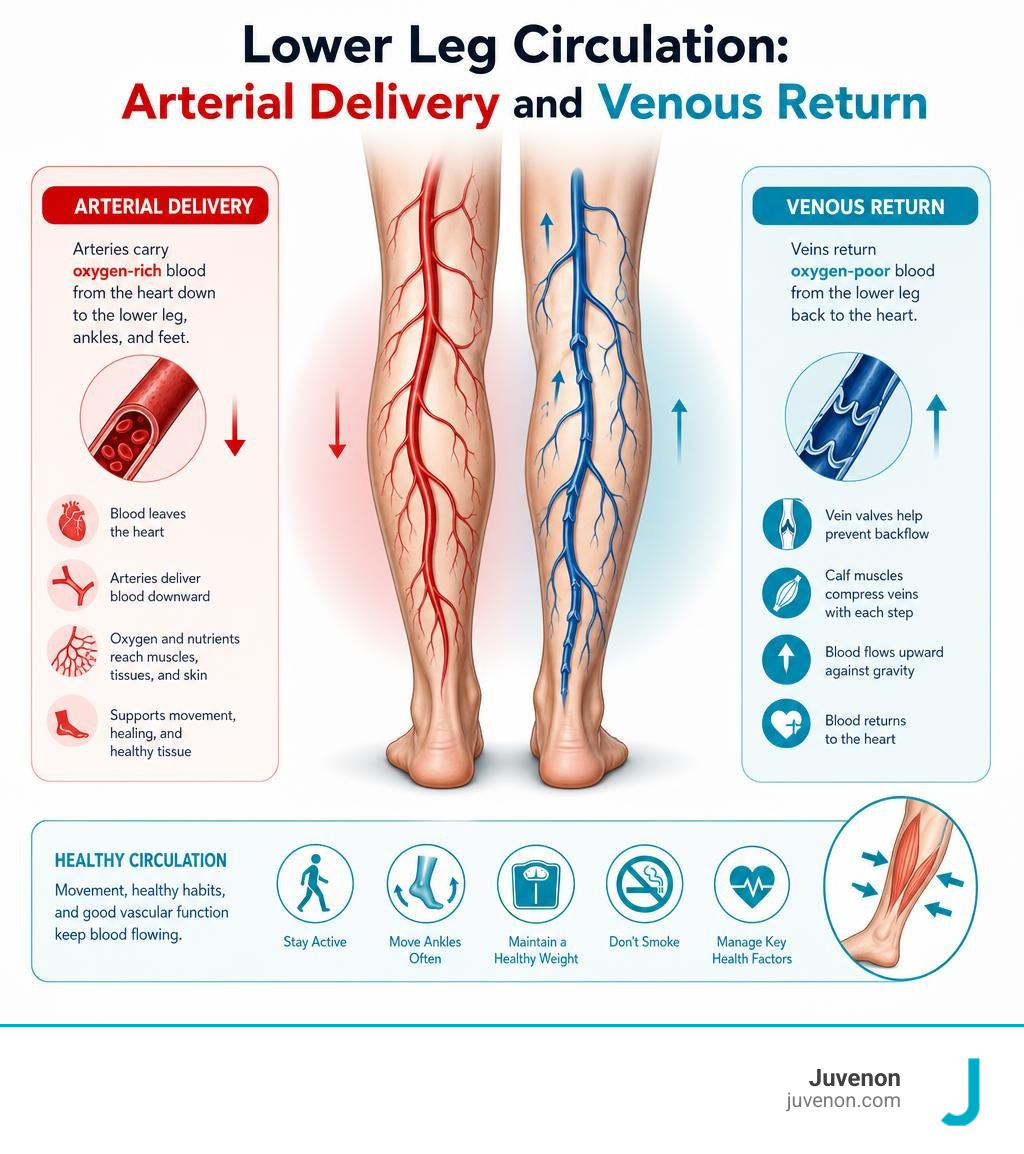
Lower leg circulation depends on two systems working together: arteries carry oxygen-rich blood down to the calves, ankles, and feet, while veins return blood to the heart. Problems can happen when arteries narrow, vein valves weaken, a clot blocks flow, or long periods of sitting or standing allow blood and fluid to pool in the legs.
Common clues include cold feet, calf cramping with walking, ankle swelling, heaviness, visible varicose veins, skin color changes, or wounds that heal slowly. These symptoms are not all caused by the same issue. For example, swelling and heaviness that worsen late in the day often point to vein problems, while repeatable calf pain during activity that improves with rest can be a sign of peripheral artery disease.
Your calf muscles play a major role. Each step compresses veins in the lower legs and helps move blood upward against gravity. Regular walking, ankle movement, healthy weight management, not smoking, and control of blood pressure, cholesterol, and blood sugar can all support healthier circulation. But sudden one-sided swelling, a cold or pale foot, severe pain, numbness, chest pain, shortness of breath, or a non-healing foot sore needs prompt medical care.
Michelle M. Henson is a copywriting leader and legal compliance editor with more than 20 years of experience translating health research into clear, responsible content. Her work on lower leg circulation focuses on helping readers understand evidence-based habits, risks, and when to seek qualified medical care.
Lower leg circulation terminology:
Understanding the Vascular Mechanics of Lower Leg Circulation
When we think about circulation, we usually focus on the heart pumping fresh, oxygenated blood away through high-pressure arterial highways. But the return trip is where the real engineering challenge begins.
In your lower extremities, blood must make its way upward against the downward drag of gravity and high hydrostatic pressure. When you stand still, gravity causes blood to exert significant pressure against the walls of your leg veins—often reaching between 60 to 100 mmHg at the ankle. To keep fluid from pooling, your body relies on a dynamic balance between arterial inflow, competent one-way valves, and muscular contractions.
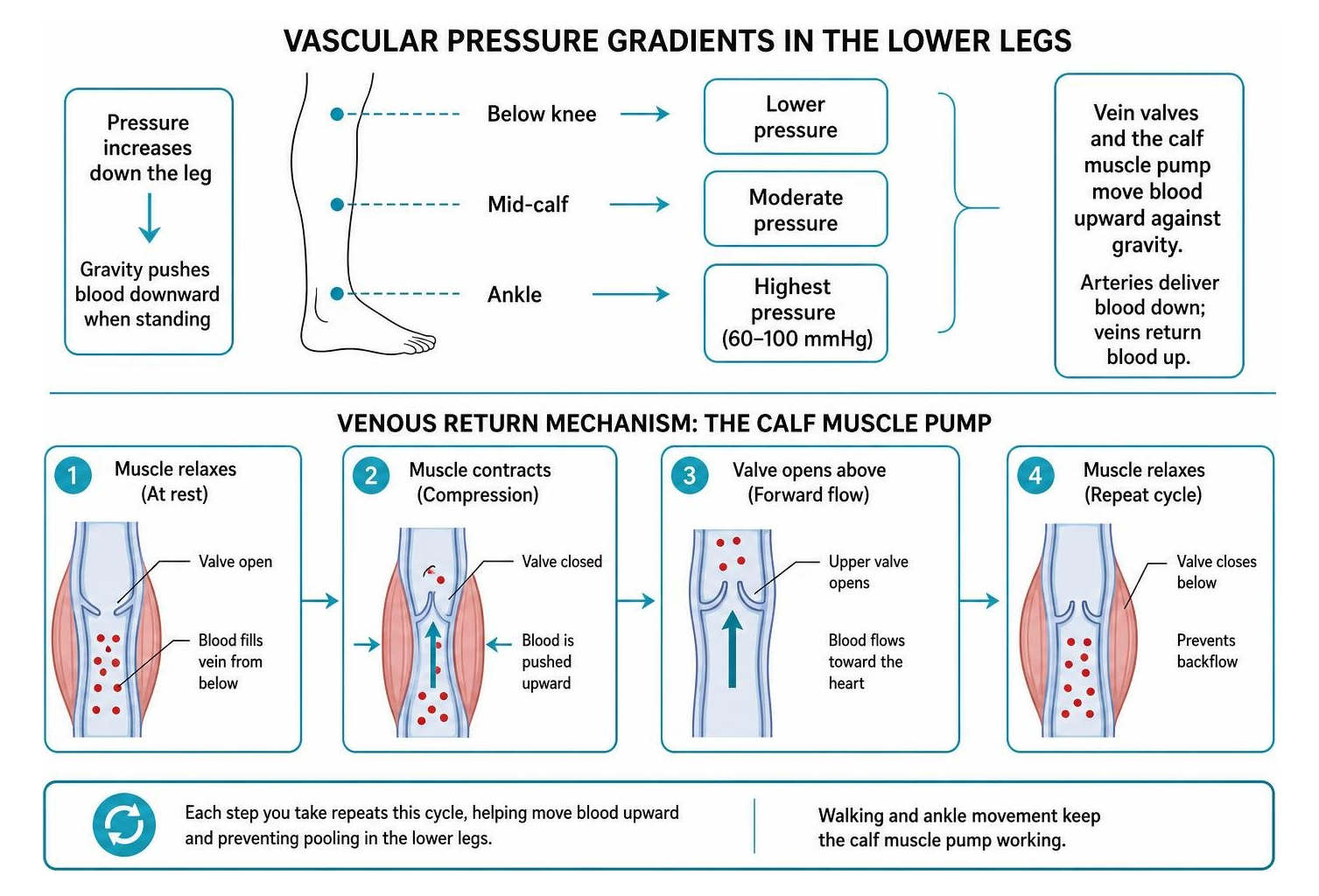
Understanding how your body manages blood flow lower legs helps pinpoint why even minor mechanical disruptions can lead to tired, heavy, or swollen limbs.
The Calf Muscle Pump and Lower Leg Circulation Dynamics
The unsung hero of lower extremity vascular health is the calf muscle pump. Often called the body’s "peripheral heart," this anatomical engine consists of the gastrocnemius and soleus muscles encased in a rigid fascial envelope.
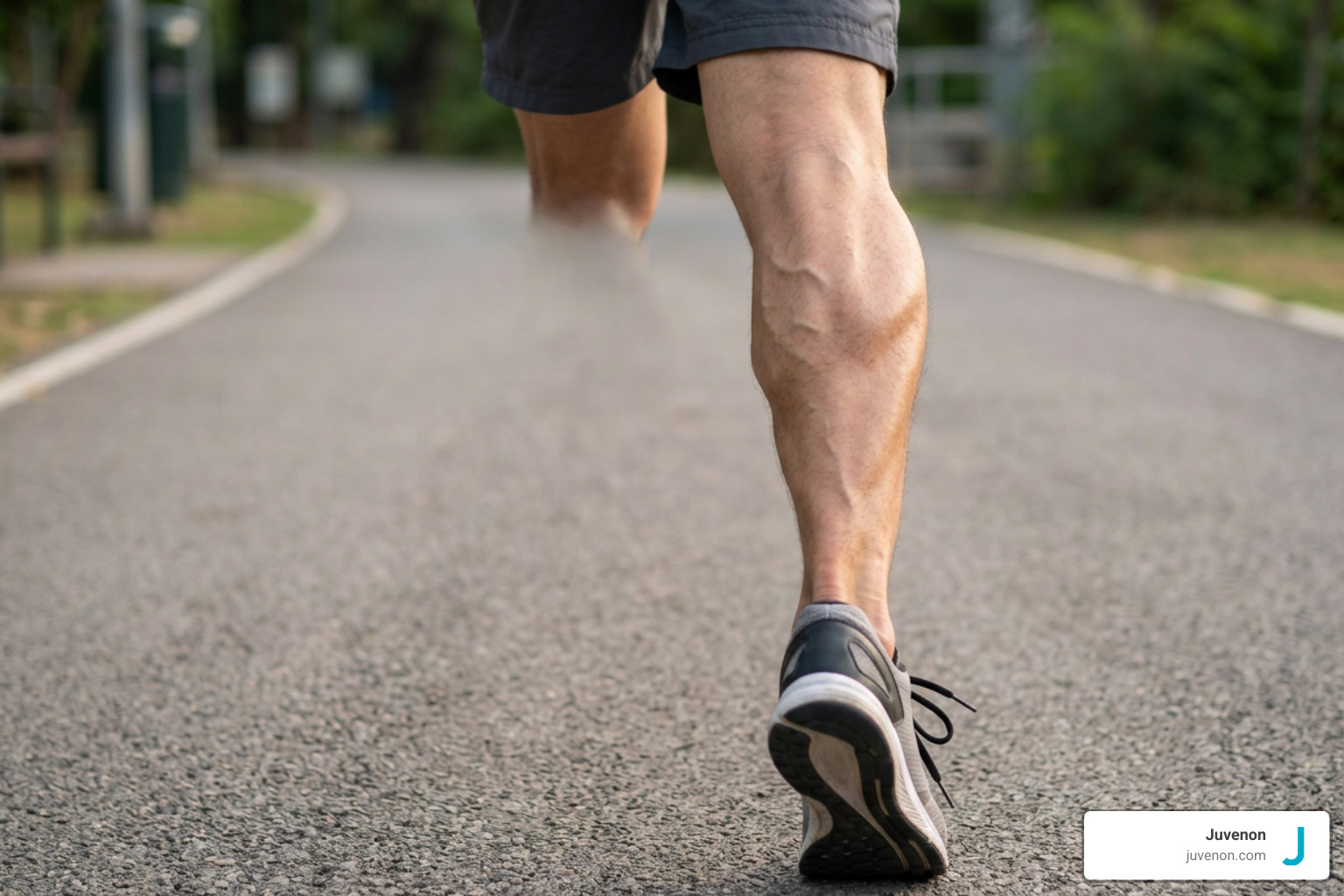
When you walk, the gastrocnemius and soleus contract, generating intramuscular pressures exceeding 200 mmHg. This dramatic compression squeezes the deep intramuscular venous sinuses, forcing deoxygenated blood upward toward the heart through one-way bicuspid valves.
Recent vascular research reveals that The human lower leg muscle pump functions as a flow diverter pump, maintaining low ambulatory venous pressures during locomotion. Rather than pushing blood entirely straight up the long saphenous trunks, the muscle pump acts as a sophisticated flow diverter. It shifts blood horizontally from high-resistance superficial veins into low-resistance deep veins via perforating channels during the relaxation phase of your stride.
This mechanism drops venous foot pressure from an immobile standing level of 95–105 mmHg down to a healthy 20–30 mmHg during continuous walking.
Arterial Blood Delivery vs. Venous Return
To protect vascular health, it helps to distinguish the inbound delivery system from the outbound return network. Arteries feature thick, muscular walls designed to transport oxygen, glucose, and nutrients delivered by the beating heart.
Veins, by contrast, are thin-walled, compliant capacitance vessels designed to hold volume and direct deoxygenated blood back upward. While arterial flow is driven primarily by cardiac output and systemic vascular resistance, venous return depends heavily on musculoskeletal movement and healthy valve leaflets.
When either pathway is compromised, tissues experience low oxygen delivery or chronic fluid buildup. For a deeper look into these mechanisms, explore our guide on understanding poor blood circulation.
Primary Causes and Warning Signs of Poor Leg Blood Flow
Circulation challenges in the lower extremities generally stem from two distinct vascular problems: arterial delivery restrictions or venous return failure. Chronic venous insufficiency affects roughly 25 million American adults, while metabolic conditions like diabetes—which affects over 38.4 million Americans—can damage both large vessels and microcapillaries over time.
For an overview of arterial blockages, clinical resources like Peripheral artery disease - legs illustrate how systemic plaque compromises muscular performance.
| Symptom Feature | Venous Insufficiency (CVI) | Peripheral Artery Disease (PAD) |
|---|---|---|
| Primary Pain Trigger | Prolonged standing or sitting | Walking or uphill exertion (claudication) |
| Relief Mechanism | Leg elevation, active walking | Resting in place, dangling legs over bed |
| Swelling (Edema) | Marked swelling, worse late in the day | Typically minimal or absent |
| Skin Temperature | Warm to touch, normal pulses | Cool or cold feet, weak or absent pulses |
| Skin Appearance | Brownish staining, thick skin, eczema | Shiny, pale, hair loss, thickened toenails |
| Ulcer Location | Inner ankle/gaiter area (wet/irregular) | Toes, heel, pressure points (dry/punched out) |
Chronic Venous Insufficiency (CVI) and Valve Dysfunction
When the delicate one-way leaflets inside leg veins stretch, weaken, or suffer damage from previous blood clots, they fail to close completely. This condition, known as valvular incompetence, allows blood to flow backward (venous reflux) and pool in the lower calves and ankles.
Over time, sustained venous hypertension forces red blood cells to leak into surrounding skin tissues. As these cells break down, iron deposits create a distinct reddish-brown discoloration known as hemosiderin staining.
Left unchecked, this inflammatory process causes tissue hardening (lipodermatosclerosis) and stasis dermatitis. Learn how to care for these tissues in our article on from feet to calves vascular support.
Peripheral Artery Disease and Metabolic Risk Factors
Peripheral artery disease (PAD) occurs when atherosclerosis—the accumulation of fatty plaques, cholesterol, and calcium—narrows the arterial lumen supplying the legs. Because narrowed arteries cannot deliver enough oxygen during muscle exertion, people with PAD experience intermittent claudication: cramping, aching, or fatigue in the calf or thigh that appears predictably after walking a certain distance and resolves within minutes of resting.
Metabolic conditions such as diabetes significantly accelerate this process by damaging the delicate endothelial lining of blood vessels. For practical insights, read our overview on how diabetes causes poor circulation.
Natural Lifestyle Strategies to Restore Blood Flow
Improving lower extremity vascular tone does not always require high-impact workouts. Simple, consistent daily habits can reduce venous pooling and encourage microvascular health.

- Elevate your legs: Raising your feet above the level of your heart for 20–30 minutes, two to three times daily, allows gravity to drain excess interstitial fluid and decompress lower leg veins.
- Maintain optimal hydration: Dehydration increases blood viscosity (thickness), making it harder for blood to pass through distal capillaries.
- Eat nitrate-rich foods: Leafy greens, beetroot, and citrus fruits support natural vascular dilation and healthy blood flow. You can learn more in our breakdown of 5 circulation boosting foods.
- Avoid prolonged static postures: If you work at a desk or stand for long shifts, change positions every 45 to 60 minutes to prevent blood from pooling in your calves.
Exercises to Stimulate Lower Leg Circulation Daily
Regular physical activity is one of the most reliable ways to maintain vascular elasticity and engage the calf muscle pump. We recommend incorporating low-barrier exercises throughout your day:
- Dynamic walking: Aim for 20 to 30 minutes of continuous walking daily. Alternating movement with brief rest intervals helps stimulate collateral microcirculation in arterial tissue while lowering venous pressures.
- Seated ankle pumps: While seated, slowly flex your toes upward toward your shins, then point them downward. Repeat 20 to 30 times per hour to stimulate blood flow during sedentary tasks.
- Standing heel-to-toe raises: Stand near a wall for balance, rise onto the balls of your feet to contract the calves, lower slowly, and then rock back slightly onto your heels to activate the tibialis anterior muscle.
- Seated leg extensions: Straighten one leg out in front of you, hold for three seconds, and return down, alternating legs to activate the quadriceps and popliteal vessels.
For more simple daily movement ideas, check out 9 things you can do today to get your blood pumping.
Nutritional and Bioactive Nitric Oxide Support
The vascular endothelium produces nitric oxide (NO), a vital signaling gas that signals smooth muscle cells around blood vessels to relax, widening arteries and supporting microcirculation.
As we age, natural endothelial nitric oxide synthesis tends to decline, increasing vascular resistance. Emerging research on the Influence of the calf muscle pump on chronic venous insufficiency highlights the importance of cellular bioenergetics—including cofactors like L-carnitine—in supporting muscular endurance and endothelial integrity in oxygen-deprived lower limbs.
Supporting your body with dietary nitrate precursors, L-arginine, and botanical antioxidants helps sustain daily vascular elasticity. Explore effective strategies in our guide on boosting nitric oxide in your body.
Medical Diagnostics, Compression, and Clinical Interventions
If lifestyle adjustments are not enough to manage persistent leg heaviness or aching, clinical diagnostic tools can evaluate your vascular system:
- Ankle-Brachial Index (ABI): A quick, painless test comparing blood pressure measurements taken at your ankle with those taken at your arm to identify arterial blockages.
- Duplex Ultrasound: A non-invasive vascular scan that evaluates real-time blood velocity, maps venous reflux, and checks for blood clots.
- Angiography or CT Venography: Detailed imaging studies used by vascular specialists to visualize severe arterial plaque or deep pelvic vein compressions.
Detailed clinical resources like Chronic Venous Insufficiency and Post-Thrombotic Syndrome explain how these tests guide personalized treatment plans.
Graduated Compression Stockings and Pressure Classes
Graduated elastic compression stockings apply the highest pressure at the ankle, gradually decreasing compression up toward the knee and thigh. This mechanical gradient supports weak vein walls, restores valve closure, and prevents fluid accumulation.
- Mild Over-the-Counter (15–20 mmHg): Ideal for minor end-of-day swelling, travel, and prolonged standing.
- Class 1 Medical Grade (20–30 mmHg): The standard clinical recommendation for managing varicose veins, moderate edema, and mild venous insufficiency.
- Class 2 Medical Grade (30–40 mmHg): Used under medical supervision for severe chronic venous insufficiency, active venous ulcers, and post-thrombotic syndrome.
For complementary swelling management tips, see our review of natural solutions for swollen or painful legs and feet.
When to Seek Immediate Medical Evaluation
While occasional leg tiredness is common after a long day, certain warning signs require immediate emergency medical care:
- Sudden, severe swelling, redness, and warmth in a single leg (potential deep vein thrombosis).
- A foot or leg that suddenly turns pale, blue, cold to the touch, or completely numb (signs of acute arterial limb ischemia).
- Constant leg pain occurring while resting or lying flat in bed that keeps you awake at night.
- Non-healing wounds, black skin discoloration, or rapidly spreading sores on the toes or ankles.
- Leg pain accompanied by shortness of breath, chest pain, or coughing up blood.
Review clinical guidelines in Poor Circulation: Symptoms, Causes and Treatment to learn more about recognizing emergency circulatory risks.
Frequently Asked Questions About Lower Leg Blood Flow
How does walking specifically improve blood flow in the lower legs?
Walking engages the reciprocal action of antagonistic muscle groups—the gastrocnemius, soleus, and tibialis anterior. Each step rhythmically compresses deep calf veins, dropping venous pressure by roughly 60% compared to standing still and drawing pooled blood upward. At the same time, the metabolic demand of walking encourages arteries to dilate and deliver fresh, oxygenated circulation in feet and calves.
What is the difference between arterial and venous leg pain?
Arterial leg pain typically presents as muscle cramping or aching (intermittent claudication) triggered by walking, climbing stairs, or exercising, which subsides within minutes of resting. Venous leg pain, on the other hand, feels like a heavy, dull ache or throbbing sensation that builds gradually throughout the day, worsens with static standing, and improves when you elevate your legs.
Can compression socks be dangerous for certain circulation conditions?
Yes. While graduated compression stockings are beneficial for venous insufficiency, they can be dangerous for individuals with moderate-to-severe peripheral artery disease (PAD). Squeezing an artery that is already struggling to supply enough blood to the foot can further cut off circulation, potentially causing skin breakdown or tissue death. Always have a healthcare provider evaluate your pedal pulses before using medical-grade compression.
Conclusion
Healthy lower leg blood flow relies on the continuous teamwork of your heart, arterial network, venous valves, and calf muscle pump. Recognizing early clues like swelling, skin changes, cold feet, or exertion-related cramping gives you the opportunity to take proactive steps—such as daily walking, elevating tired legs, staying hydrated, and supporting vascular elasticity.
At Juvenon, we are dedicated to helping you live a vibrant, active life through scientifically backed health and longevity education. Explore practical daily habits to keep your vessels functioning at their best in our guide to circulation ways to increase blood flow.