Why Circulation Improvement Matters More After 40

Circulation improvement is one of the most impactful things you can do for your health — especially as you get older. Here's a quick overview of what works:
Quick answers: How to improve circulation
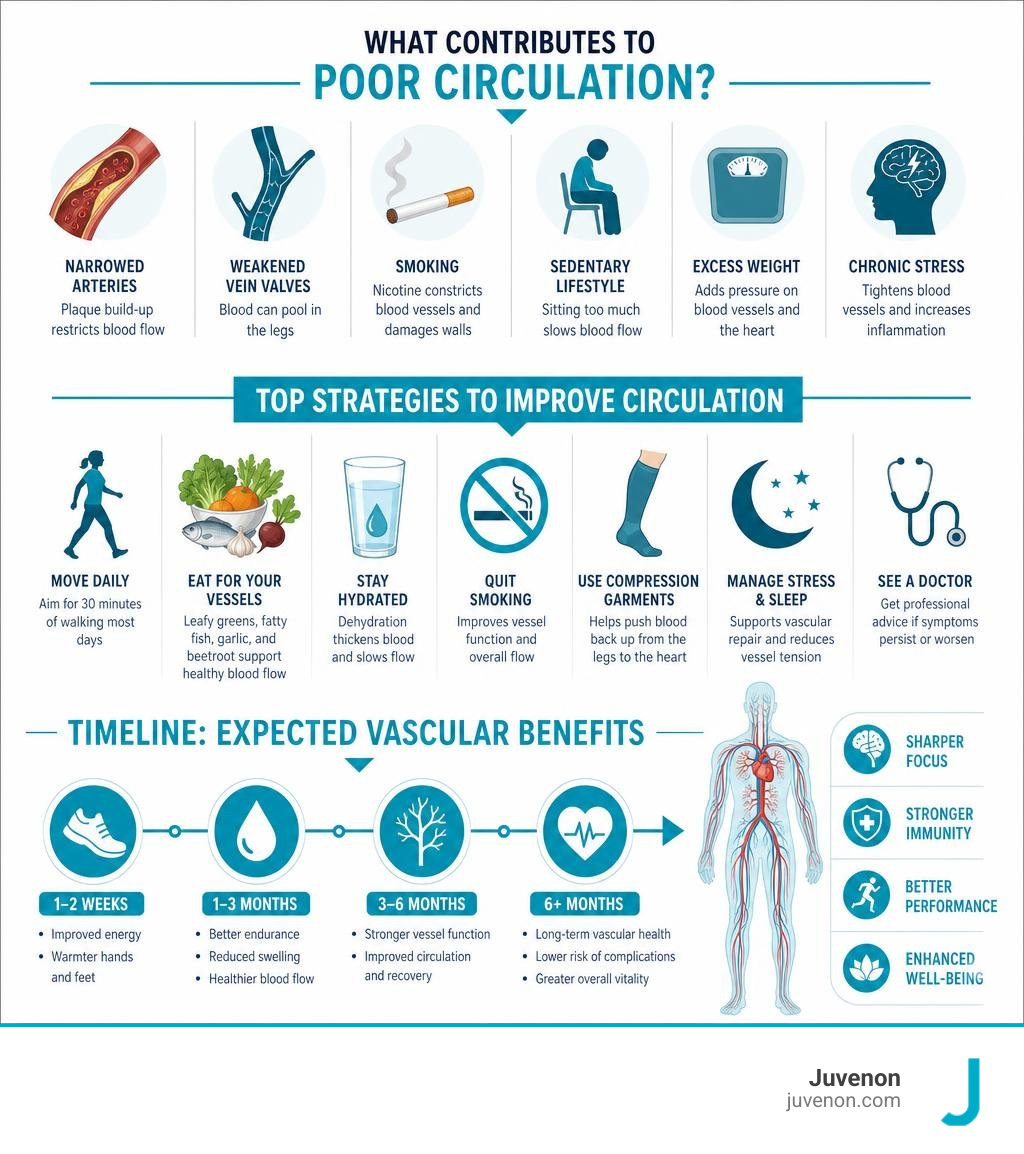
- Move more — 30 minutes of walking most days is one of the most effective steps
- Eat for your vessels — leafy greens, fatty fish, garlic, and beetroot support healthy blood flow
- Stay hydrated — blood is roughly 50% water; dehydration thickens it and slows flow
- Quit smoking — nicotine constricts blood vessels and damages arterial walls
- Wear compression garments — helps push blood back up from the legs to the heart
- Manage stress and sleep — chronic stress tightens blood vessels and disrupts vascular repair
- See a doctor — if symptoms are persistent or severe, medical treatment may be needed
Your blood travels through roughly 100,000 kilometres of vessels, delivering oxygen and nutrients to every cell in your body. When that delivery system slows down — due to narrowed arteries, weakened vein valves, or lifestyle factors — the effects show up fast: cold hands and feet, fatigue, leg cramps, and slow-healing wounds.
And here's the part most people don't expect: this process accelerates with age. Nitric oxide — the molecule that relaxes and widens your blood vessels — declines by roughly 50% by age 40 compared to your twenties. That means the same habits that worked fine at 30 may not be enough to keep circulation healthy at 50 or 60.
The good news? Circulation responds well to consistent, targeted effort. This guide covers everything: causes, symptoms, lifestyle changes, diet, supplements, and when to see a doctor.
I'm Michelle M. Henson, Head of Copywriting and Legal Compliance Editor at Juvenon, where I've spent years researching and writing about healthy aging topics — including the science of circulation improvement and how it connects to energy, longevity, and daily vitality. As we walk through this guide together, you'll find every recommendation grounded in current evidence and practical enough to start today.
Understanding Poor Circulation: Causes and Symptoms
To understand why circulation improvement matters so deeply, we first need to look at how blood moves through our bodies. Think of your vascular system as a massive, high-efficiency delivery network. Your heart acts as the main pump, sending oxygen-rich blood out through elastic arteries to nourish every organ, tissue, and cell. Once oxygen and vital nutrients are dropped off, dark, oxygen-depleted blood returns back up toward the heart through your veins.
When this intricate system operates at peak capacity, your brain stays sharp, your muscles recover quickly, your immune cells travel effortlessly to ward off illness, and your extremities feel warm and responsive. However, when obstacles, arterial stiffness, or vessel constriction disrupt this journey, blood flow slows down. Because your toes and fingers sit furthest away from your heart, they are usually the very first places to show signs of oxygen deprivation.
Vascular impairment rarely happens overnight. In many cases, it begins with subtle endothelial dysfunction — a breakdown in the delicate inner lining of your blood vessels. This lining is responsible for synthesizing nitric oxide, the gas that signals smooth muscle tissues around arteries to dilate and relax. As endothelial health wanes, arteries lose their elasticity, blood viscosity increases, and systemic blood flow struggles to meet cellular demand. To dive deeper into the root mechanics of blood flow disruption, explore our detailed breakdown on understanding poor blood circulation: symptoms, causes, and treatments. For clinical background on how these vascular issues are classified, you can review this overview of clinical circulation factors.
Common Causes of Impaired Vascular Function
Why do our blood vessels lose their youthful vigor over time? A variety of systemic conditions and lifestyle choices contribute to sluggish blood flow:
- Arterial Narrowing and Plaque Accumulation: Atherosclerosis occurs when fatty deposits, cholesterol, and calcium build up inside arterial walls. This plaque hardens over time, restricting space for blood to move and increasing the risk of Peripheral Artery Disease (PAD).
- Venous Insufficiency: While arteries carry blood away from the heart, veins rely on tiny one-way valves to push blood back upward against gravity. When these valves weaken, blood pools in the lower legs and calves, causing visible swelling, heavy limbs, and varicose veins.
- Diabetes and High Blood Sugar: Sustained elevation in blood glucose damages the delicate endothelium, triggering chronic vessel inflammation and peripheral neuropathy.
- High Blood Pressure (Hypertension): Excess force pushing against arterial walls causes microscopic tears, creating rough patches where plaque accumulates easily while forcing arteries to stiffen.
- Raynaud's Phenomenon: A condition where small arteries supplying skin overreact to cold temperatures or acute stress, spasming shut and turning fingers and toes white or blue.
- Sedentary Habits and Smoking: Inactivity disables the lower leg muscle pump, while nicotine directly damages vascular walls and causes rapid vasoconstriction.
Early Symptoms and Warning Signs
Recognizing early warning signs gives us the advantage of taking immediate action before mild circulation issues progress into serious vascular concerns.
- Cold Extremities: Persistent icy hands or feet, even when resting in a comfortably warm room.
- Numbness and Tingling: A lingering "pins and needles" sensation in your feet, calves, or fingers.
- Leg Cramps and Claudication: A distinct aching, throbbing, or tight muscle pain in your calves or buttocks during simple walks that disappears shortly after you rest.
- Skin Discoloration: Pale, purplish, or pale-blue skin tones on lower extremities due to reduced microvascular blood supply.
- Persistent Swelling (Edema): Fluid accumulation around ankles, feet, or lower calves after standing or sitting.
- Slow-Healing Wounds: Scratches, cuts, or sores on the lower legs or feet that take unusually long to close up.
Proven Lifestyle Changes for Circulation Improvement

Achieving real, lasting circulation improvement does not require an all-or-nothing overhaul overnight. Instead, consistent daily adjustments create powerful cumulative benefits across your entire vascular network. When we make healthy movement, postural support, and stress management part of our routine, our blood vessels adapt by building resilience and releasing natural dilating compounds.
For an overview of evidence-backed natural methods to revitalize your vascular flow, read about 5 ways to improve your circulation as well as our internal guide outlining how to improve circulation: 5 methods that guarantee results.
Here is a practical checklist of daily habits that lay the foundation for vascular wellness:
- Break Up Sitting: Stand up, walk around, or stretch every 45 to 60 minutes during desk work.
- Practice Diaphragmatic Breathing: Deep belly breathing lowers stress hormones like cortisol, relaxing constricted blood vessels.
- Avoid Tight Restrictive Clothing: Ditch overly tight waistbands or restrictive bands around hips and thighs that choke off venous return.
- Elevate Legs Daily: Prop your feet up above hip level for 15 to 20 minutes while unwinding in the evening.
- Eliminate Nicotine: Kick smoking or vaping to immediately prevent chemical-induced arterial constriction.
Physical Exercise and the Muscle Pump for Circulation Improvement
Physical movement stands out as one of the most dynamic drivers of blood flow. When you exercise, your working muscles demand more oxygen, prompting your heart to pump faster and stronger. But exercise does something even more profound at the microscopic level: it generates shear stress against your arterial walls.
Shear stress is the friction created as blood flows across endothelial cells. This friction triggers the enzymatic production of nitric oxide, which dilates blood vessels, increases vessel elasticity, and expands microcirculation pathways.

Furthermore, lower-body exercise harnesses the power of the skeletal muscle pump. When you walk, jog, or perform calf raises, your calf muscles contract firmly around deep leg veins. This squeezing action forces venous blood upward through internal one-way valves, fighting gravity to return blood smoothly to your heart.
Even short bursts of activity can transform your vascular vitality. To explore how daily micro-routines can optimize your arterial health, read about the 1 secret to better circulation: the simple daily habit that transforms blood flow in 2026 | Upgraded Health.
Hydration, Compression, and Posture
How you rest and position your body throughout the day matters just as much as how you exercise:
- Hydration and Plasma Volume: Blood is made up of approximately 55% liquid plasma, which itself consists of about 90% water. When you become dehydrated, your total blood volume drops and your blood becomes thicker and more sluggish. Maintaining fluid intake keeps plasma volume stable, allowing blood cells to glide smoothly through tiny capillaries.
- Graduated Compression Garments: Compression socks gently squeeze superficial leg veins, pushing stagnant fluid into deeper vein channels where muscle pumps can move it upward. This prevents fluid from leaking into ankle tissues.
- Zero-Gravity Sleep and Leg Elevation: Raising your feet slightly above heart level while sleeping or resting removes gravitational pressure from lower extremity veins, allowing trapped blood to drain easily back to your core.
Dietary Strategies and Vascular Nutrition
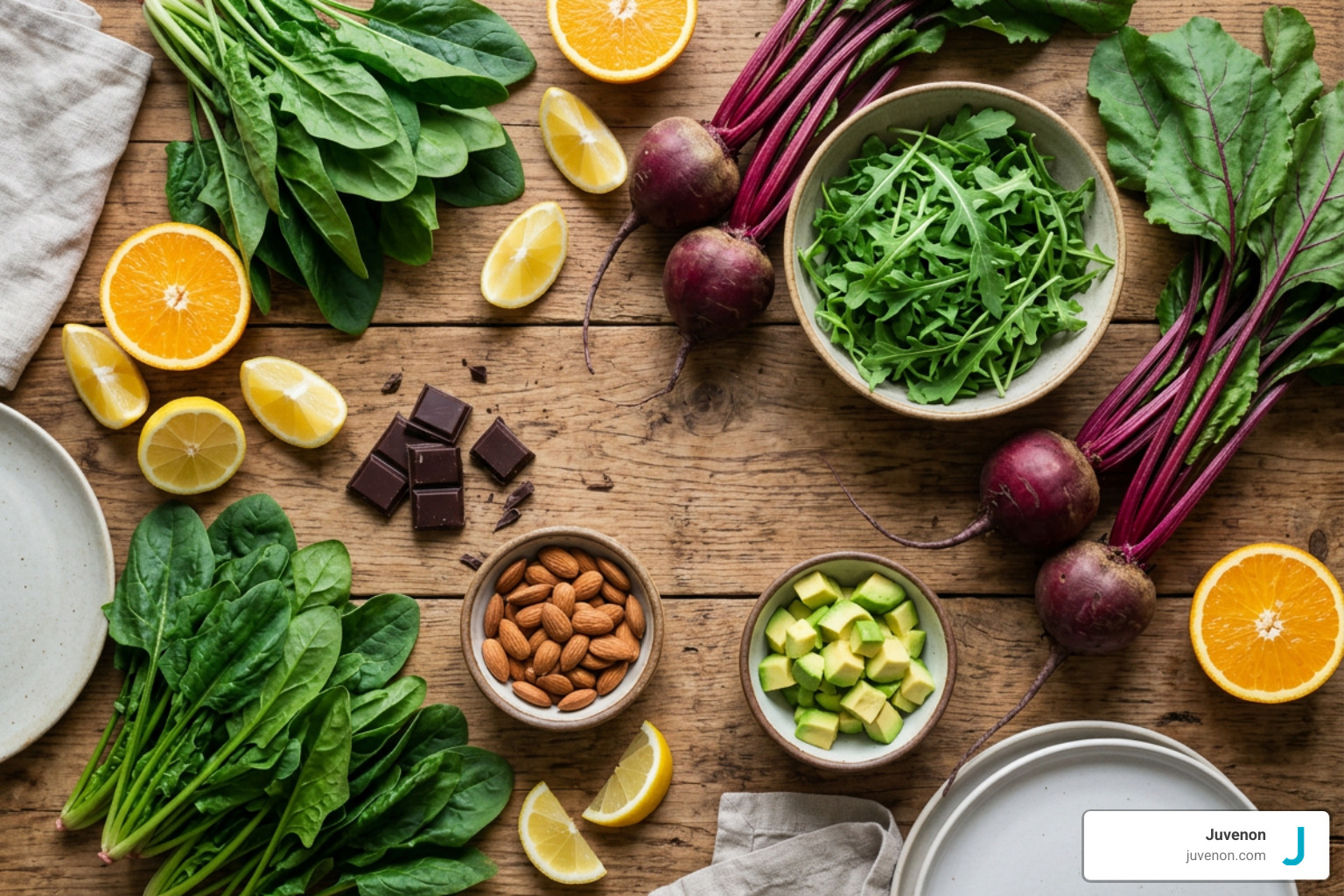
What we put on our dinner plate plays a massive role in our daily vascular flexibility. Certain foods contain active compounds, minerals, and antioxidants that actively trigger nitric oxide production, decrease systemic inflammation, and protect arterial walls from oxidative stress.
To deepen your understanding of culinary choices that support your blood flow, explore our guide on 5 circulation boosting foods alongside this expert breakdown of the 13 best foods to increase blood flow and circulation.
Key Foods and Nutrients for Vasodilation
Integrating the following nutrient-dense foods into your weekly grocery rotation provides the essential building blocks for optimal vasodilation:
- Beetroot and Leafy Green Vegetables: Beets, spinach, arugula, and Swiss chard are exceptionally high in dietary nitrates. When eaten, beneficial bacteria in your mouth and digestive tract convert these nitrates into active nitric oxide, widening blood vessels and relaxing arterial pressure.
- Dark Chocolate (70%+ Cacao): Cacao is rich in natural flavanols, powerful antioxidants shown to improve endothelial function and stimulate arterial flexibility.
- Citrus Fruits and Pomegranate: Packed with vitamin C, polyphenols, and unique antioxidants, citrus fruits and pomegranates shield nitric oxide molecules from rapid breakdown in the bloodstream.
- Garlic and Onions: Garlic contains organosulfur compounds like allicin, which relax smooth vascular tissue and inhibit blood clot formation.
- Fatty Fish (Salmon, Mackerel, Sardines): Rich in omega-3 fatty acids (EPA and DHA), oily fish reduces blood viscosity, lowers triglycerides, and prevents arterial plaque buildup.
- Green Tea: Packed with catechins, green tea promotes blood vessel dilation and protects delicate arterial linings from cellular damage.
Targeted Supplements for Natural Circulation Improvement
While a balanced diet sets a strong foundation, modern food processing and soil depletion mean we don't always get therapeutic levels of key vascular nutrients from meals alone. That is where targeted, high-purity supplementation steps in to fill the gap.
When formulating our vascular support products at Juvenon, we prioritize scientifically validated, patented botanical ingredients designed to work synergistically. Key nutrients to look for when shopping for circulation improvement supplements include:
- L-Arginine and L-Citrulline: Essential precursor amino acids that fuel the endothelial nitric oxide synthesis cycle, boosting long-term nitric oxide levels.
- Beetroot Extracts: Concentrated source of dietary nitrates that deliver rapid support for arterial dilation.
- Pine Bark and Grape Seed Extracts: Potent oligomeric proanthocyanidins (OPCs) that strengthen capillary walls, support vein elasticity, and fight oxidative stress.
- Horse Chestnut and Butcher’s Broom: Renowned botanical extracts that promote healthy vein tone and reduce fluid retention in lower legs and calves.
- Essential Vitamins (B3, C, D3, K2): Niacin (B3) dilates surface blood vessels, while Vitamin K2 directs calcium into bones rather than allowing it to collect in arterial walls.
To explore how curated formulas can help keep your blood moving freely, review our complete guide on how to boost your flow: best circulation and vein support supplements.
Medical Treatments, Timelines, and When to See a Doctor
While natural lifestyle changes and targeted nutrition deliver remarkable benefits, knowing when to seek professional medical assessment is critical. Severe structural blockages, advanced peripheral artery disease, or deep vein blood clots require formal diagnosis and medical management from vascular specialists. For clinical context on professional treatment paths, refer to this authority guide on how to improve blood circulation | Mass General Brigham. For home management of mild lower extremity discomfort, read our article on natural solutions for swollen or painful legs and feet.
When to Seek Immediate Medical Attention
Certain vascular warning signs demand urgent or emergency medical evaluation. Seek immediate care if you experience:
- Sudden Severe Numbness or Weakness: Loss of sensation or motor control on one side of your body or down a single limb (a potential stroke sign).
- Rest Pain: Severe burning or aching pain in your toes or feet while lying flat in bed that only eases when dangling your foot over the mattress edge.
- Non-Healing Foot or Leg Ulcers: Open sores, dark skin lesions, or wounds that show signs of infection or fail to heal over several weeks.
- Asymmetrical Leg Swelling: Sudden, unexplained swelling in one calf accompanied by tenderness, heat, or redness (a key warning sign for Deep Vein Thrombosis).
- Chest Pain or Shortness of Breath: Sudden tightness, pressure, or air hunger during mild exertion.
Medical and Surgical Interventions for Severe Vascular Issues
When lifestyle strategies are not enough to clear advanced arterial blockages, modern medicine offers several highly effective treatment options:
| Intervention Type | Medical / Surgical Approach | How It Improves Circulation | Typical Recovery / Result Timeline |
|---|---|---|---|
| Lifestyle & Nutrition | Walking, Nitrate-Rich Diet, Hydration, Compression, Supplements | Enhances nitric oxide production, improves muscle pump, reduces viscosity | Acute benefits in hours; structural vessel adaptation in 6-12 weeks |
| Prescription Medications | Statins, Antiplatelet Agents, Blood Thinners, Antihypertensives | Lowers blood pressure, stabilizes plaque, prevents clot formation | Risk reduction begins within days; plaque stabilization over months |
| Minimally Invasive Procedures | Angioplasty, Stenting, Atherectomy, Thermal Ablation | Balloon expansion or laser removal of plaque directly reopens narrowed vessels | Immediate mechanical relief; full recovery within days to weeks |
| Open Vascular Surgery | Arterial Bypass Surgery, Endarterectomy, Deep Venous Arterialization | Direct surgical re-routing of blood flow around blocked arterial segments | Restores tissue perfusion instantly; physical recovery takes 4-8 weeks |
Frequently Asked Questions About Circulation
How quickly can lifestyle changes improve blood flow?
You can expect improvements across a few clear stages:
- Acute Effects (Hours): Eating a nitrate-rich meal, taking a circulation supplement, or going for a 20-minute brisk walk triggers rapid nitric oxide release, dilating blood vessels and boosting localized blood flow within hours.
- Early Changes (2 to 4 Weeks): Consistent hydration, daily movement, and compression wear lead to noticeable reductions in leg heaviness, swelling, and cold extremities within a month.
- Structural Vascular Adaptation (6 to 12+ Weeks): Over several months, sustained shear stress encourages capillary recruitment and improves arterial elasticity, delivering durable improvements in energy and vascular health.
Does drinking extra water immediately cure poor circulation?
While proper hydration is vital, drinking extra water is not an instant cure for poor circulation caused by structural vessel damage. Hydration keeps plasma volume healthy and prevents blood from thickening. However, water alone cannot undo hardened arterial plaque, repair broken vein valves, or instantly raise nitric oxide levels. Hydration works best when paired with physical movement, solid nutrition, and targeted vascular supplements.
Are cold hands and feet always a sign of a serious medical condition?
Not necessarily. Cold extremities can simply be your body's natural response to cooler ambient temperatures, brief stress, or mild Raynaud's phenomenon. However, if your hands and feet remain icy in warm environments, or are accompanied by numbness, skin discoloration, muscle pain, or slow-healing sores, it is time to schedule a formal check-up with your doctor.
Conclusion
Achieving circulation improvement is one of the most rewarding steps you can take for your long-term health and daily vitality. As we've explored throughout this guide, keeping your blood moving freely supports everything from mental clarity and immune strength to warm extremities and quick physical recovery.
Because natural nitric oxide production drops significantly as the years go by, staying active and eating well are essential. Supporting your vascular system with daily movement, nutrient-dense foods, proper hydration, and targeted supplements gives your body the tools it needs to maintain flexible, resilient blood vessels at any age.
At Juvenon, we are committed to helping you age with energy, confidence, and strength. To complement your daily movement and healthy eating routine, explore our scientifically formulated vascular solutions and read our expert guide on essential vitamins for enhanced blood flow and circulation. Take control of your vascular wellness today—your body will thank you for years to come!