How to Find the Best Topical Collagen for Skin

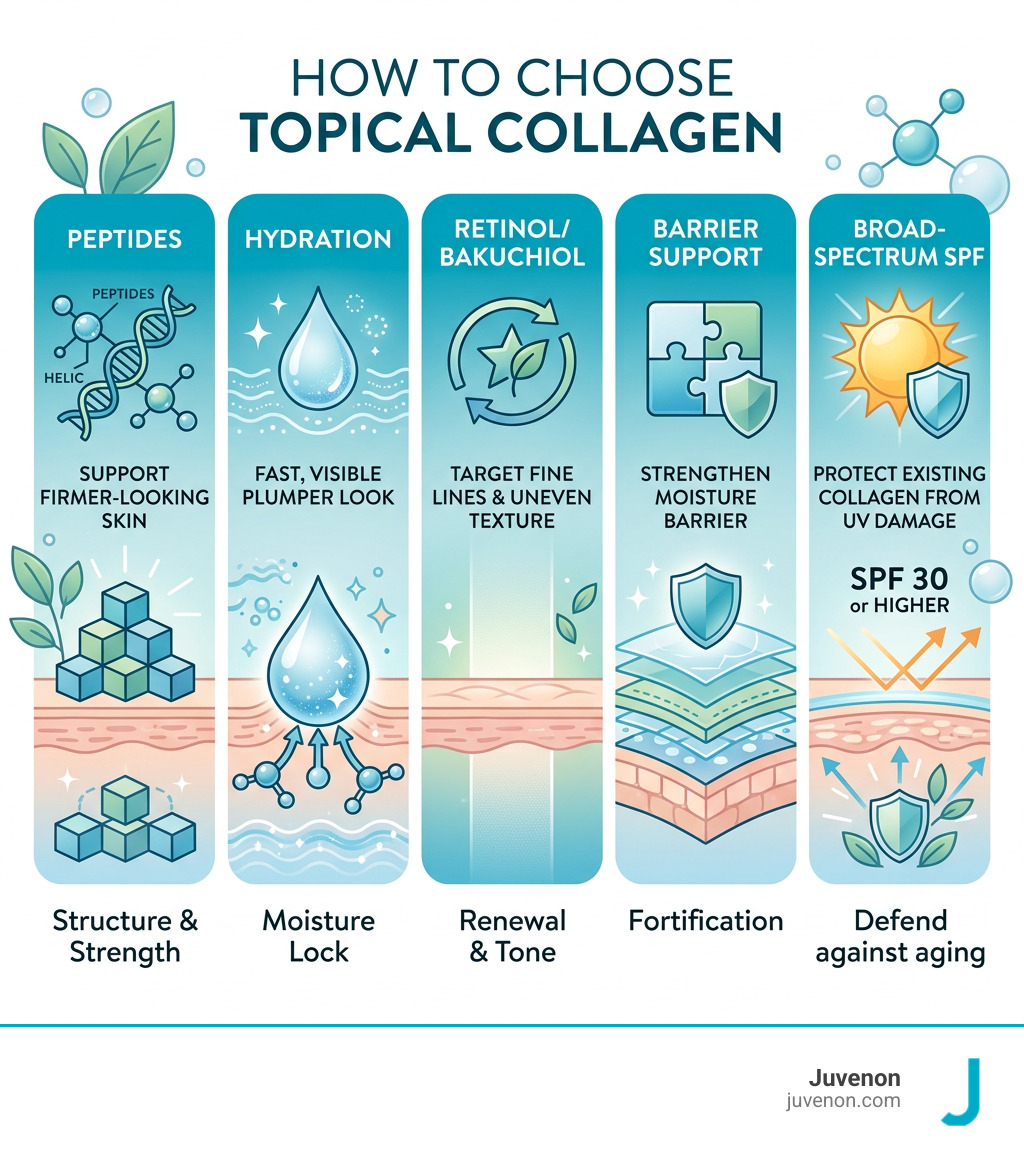
The best topical collagen for skin is usually not the cream with the largest "collagen" claim on the jar. Look for a moisturizer or serum that pairs hydrolyzed collagen or peptides with proven support ingredients:
- Hyaluronic acid for fast, visible hydration and a plumper look
- Peptides to support firmer-looking skin over time
- Retinol or bakuchiol for fine lines and uneven texture
- Niacinamide and ceramides to strengthen the moisture barrier
- Broad-spectrum SPF 30 or higher in a day cream to help protect existing collagen from UV damage
Topical collagen can help skin feel softer, smoother, and more hydrated. But it cannot simply replace collagen lost deeper in the skin. Collagen molecules are often too large to pass far through the skin barrier, so the biggest benefits tend to come from surface moisture plus well-studied active ingredients that support the skin's own renewal processes.
I am Michelle M. Henson, a copywriting leader and legal compliance editor with more than 20 years of experience translating health and wellness research into clear, practical guidance. In this roundup of the best topical collagen for skin, I will focus on evidence, ingredient quality, and realistic expectations rather than hype.
Key best topical collagen for skin vocabulary:
Understanding How Topical Collagen Works on Aging Skin
To appreciate what a collagen product can actually achieve, we need to understand the architecture of the human skin. The outermost shield is the stratum corneum, a resilient barrier made of dead skin cells (corneocytes) and lipids designed to keep hydration in and environmental toxins out.
Full-sized native collagen is a massive triple-helix protein molecule. Its molecular weight easily surpasses 300,000 Daltons (Da). In dermatology, there is a well-known benchmark known as the 500-Dalton rule: substances larger than 500 Da generally cannot penetrate intact human skin. Applying raw, unhydrolyzed collagen to your skin is a bit like trying to push a basketball through a keyhole. As a result, that collagen sits on the surface.
This is why dermatologists often point out that a standard cream will not physically integrate into your dermal matrix to replace missing structural fibers. A comprehensive scientific perspective on topical collagen penetration confirms that while unhydrolyzed collagen acts as a fantastic humectant, it does not physically cross the deeper dermal barrier to rebuild tissue from within.
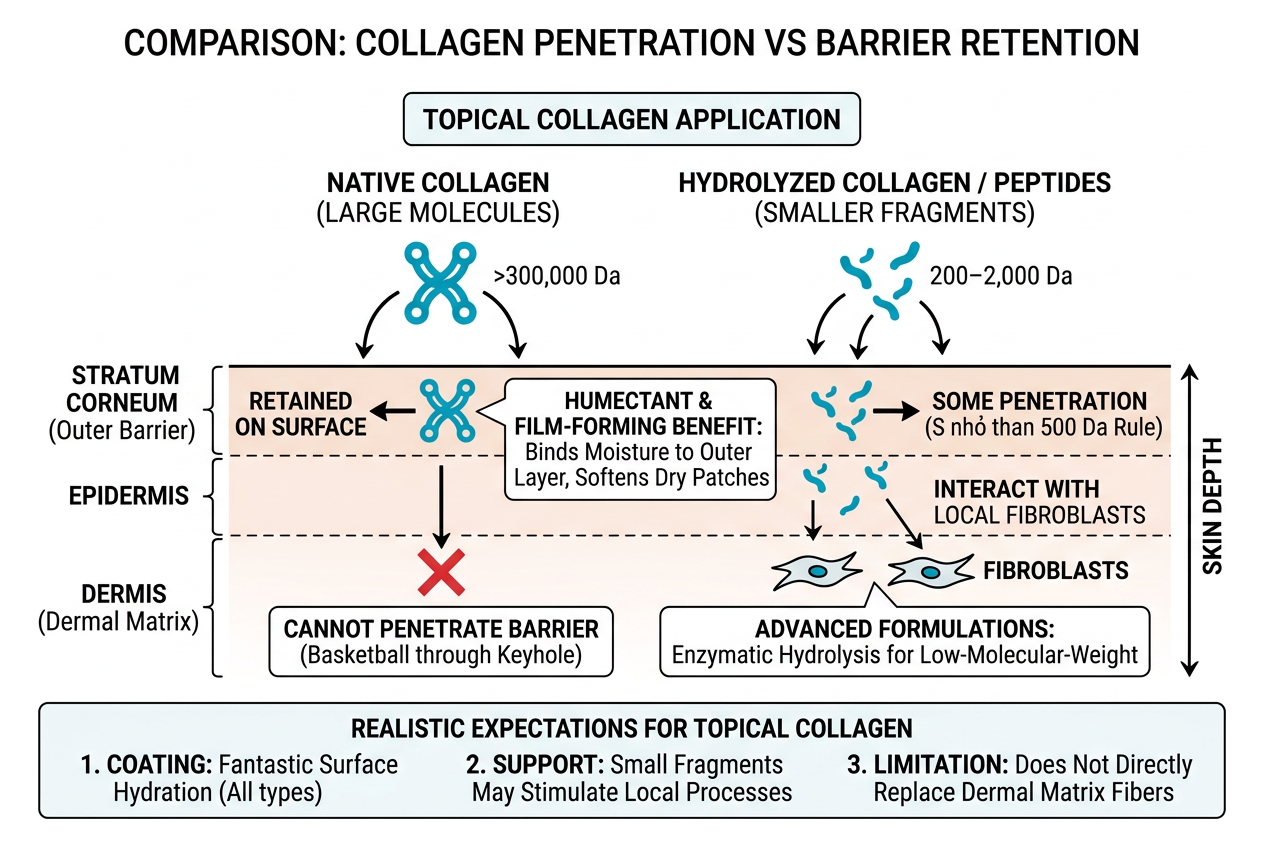
However, topical formulas still offer immense cosmetic value. When applied to the skin, collagen works as a potent film-forming humectant, binding moisture to the outer layer, softening rough dry patches, and visibly diminishing fine dehydration lines. When brands hydrolyze collagen into micro-fragments or pair it with bioactive signal peptides, these smaller chains can interact with the surface environment and stimulate local fibroblasts, supporting the extracellular matrix while you actively protect your natural skin collagen.
What Makes the Best Topical Collagen for Skin Penetration Work?
Skincare chemistry has evolved significantly. Advanced laboratories now utilize enzymatic hydrolysis to break large animal or marine proteins down into low-molecular-weight collagen peptides, sometimes as small as 200 to 2,000 Da.
These specialized amino acid fragments behave differently than whole proteins:
- Enhanced Surface Bioavailability: Micro-peptides integrate more smoothly with the lipid matrix of the epidermis.
- Superior Humectant Properties: They attract and bind ambient moisture directly to the stratum corneum, locking in water.
- Reduction of Transepidermal Water Loss (TEWL): By creating a lightweight, breathable moisture seal, they stop internal hydration from evaporating into dry air.
- Skin Barrier Reinforcement: Supplying essential amino acids helps soothe irritation and replenish the natural moisturizing factor (NMF) of fragile skin.
Synergistic Actives That Enhance Collagen Creams
A truly high-performing collagen formula rarely relies on collagen alone. The gold standard for modern skin rejuvenation involves pairing collagen with active ingredients that stimulate cellular renewal and protect against collagen degradation:
- Retinol and Retinoids: The undisputed titans of anti-aging. Retinol speeds cellular turnover and signals dermal fibroblasts to synthesize new structural collagen.
- Hyaluronic Acid: A powerhouse humectant capable of holding up to 1,000 times its weight in water, creating an immediate plumping effect.
- Signal Peptides (e.g., Matrixyl, Copper Peptides): Short chains of amino acids that mimic broken-down collagen fragments, tricking the skin into producing fresh collagen and elastin.
- Bakuchiol: A gentle, plant-derived alternative to retinol that provides similar wrinkle-smoothing benefits without peeling or photosensitivity.
- Vitamin C (L-Ascorbic Acid): An essential cofactor in bodily collagen synthesis that provides vital antioxidant defense against collagen-destroying free radicals.
- Niacinamide (Vitamin B3): Strengthens the lipid barrier, fades discoloration, and enhances skin elasticity.
Key Categories: Finding the Best Topical Collagen for Skin Types
No two complexions are identical. The ideal formula for an oily, acne-prone t-zone will feel completely inadequate on dry, mature skin. Reading an in-depth dermatologist review of collagen face creams demonstrates how heavily texture and active concentration influence real-world results across different skin types.
Selecting the Best Topical Collagen for Skin with Aging Signs
As we age—particularly after age 30, when natural collagen production declines by roughly 1% per year—the skin loses structural density and elasticity. For mature skin showing visible loss of firmness and deeper expression lines, a lightweight lotion is rarely enough.
Mature skin benefits most from rich, emollient formulations packed with ceramides, squalane, signal peptides, and nourishing fatty acids. These rich creams reinforce the compromised lipid barrier, lock in deep hydration, and smooth out textural roughness. If you are navigating hormonal shifts or post-menopausal skin dryness, exploring targeted strategies for the best collagen for women over 50 can help you combine topical barrier support with internal structural care.
Lightweight Collagen Serums vs. Rich Night Creams
Choosing between a lightweight serum and a heavy night cream comes down to your daily schedule and personal skin goals:
- Collagen Serums & Gels: Formulated with high concentrations of low-molecular-weight peptides and hyaluronic acid. Their ultra-thin texture absorbs instantly without leaving a greasy sheen, making them ideal for oily, combination, or daytime use beneath sunscreen and makeup.
- Restorative Night Creams: Formulated with occlusive and emollient agents like shea butter, ceramides, and slow-release retinoids. They create a protective seal that prevents overnight moisture evaporation and supports natural cellular repair while you sleep.
| Feature / Criteria | Day Creams with SPF | Restorative Night Creams |
|---|---|---|
| Primary Goal | Environmental defense & daily hydration | Deep nourishment & barrier repair |
| UV Protection | Broad-spectrum SPF 30 or higher | None (not suitable for sun exposure) |
| Core Active Focus | Antioxidants (Vitamin C, Niacinamide), Peptides | Retinol, Bakuchiol, Ceramides, Rich Lipids |
| Texture & Finish | Fast-absorbing, non-greasy, satin or matte | Rich, emollient, deeply occlusive |
| Best Skin Pairing | All skin types needing daytime protection | Dry, dehydrated, or mature skin |
Topical vs. Oral Collagen: Which Approach Yields Better Elasticity?
A common question in skin longevity is whether applying collagen directly to the face outperforms taking a daily dietary collagen supplement.
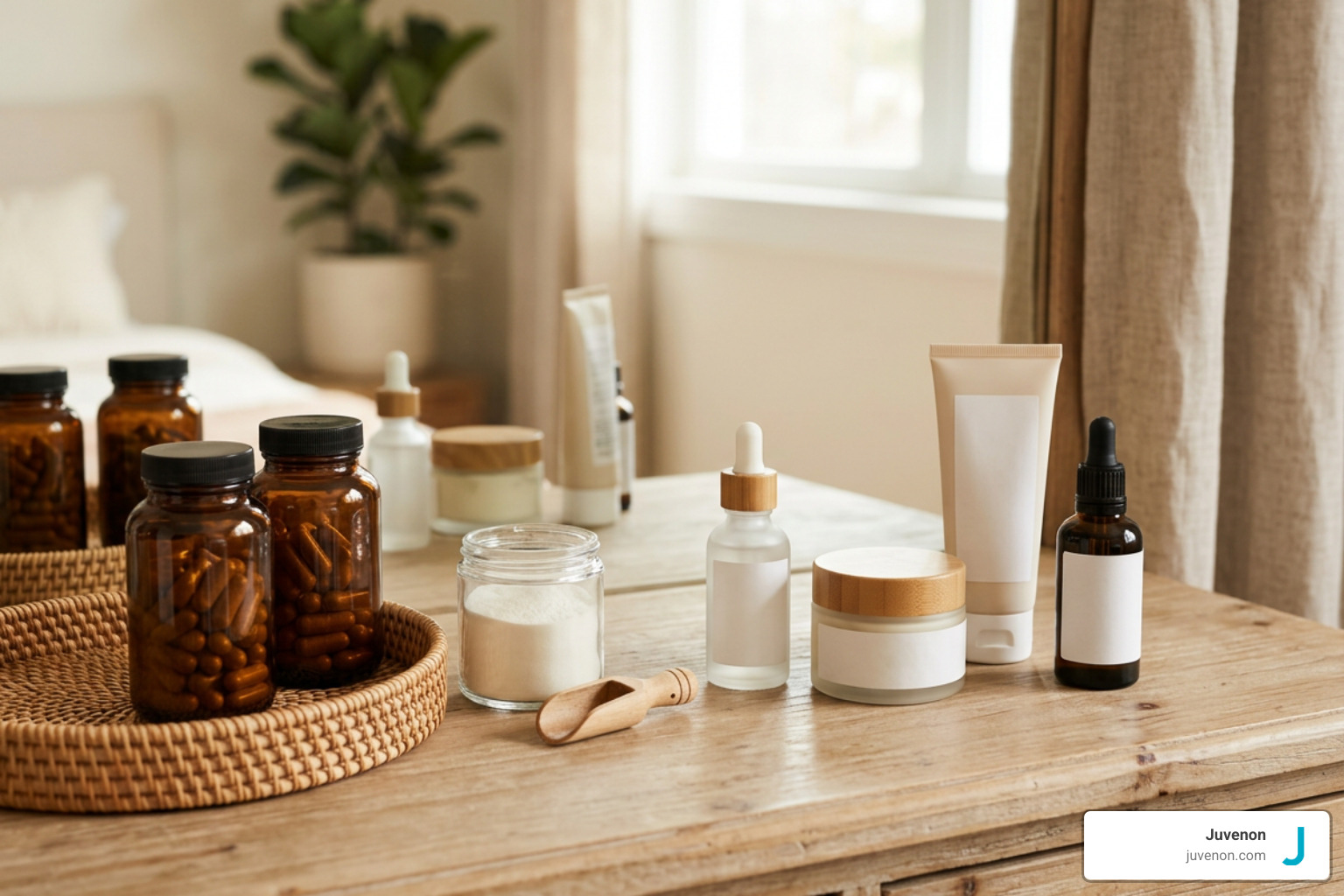
The truth is that topical and oral collagen perform entirely different, highly complementary jobs (Al-Atif, 2022):
- Topical Collagen (Outside-In): Works immediately on the epidermis. It provides essential hydration, soothes the barrier, prevents water loss, and temporarily plumps the skin surface to minimize fine lines.
- Oral Collagen Peptides (Inside-Out): Ingested hydrolyzed collagen peptides are broken down during digestion into specialized di-peptides (such as proline-hydroxyproline). These peptides enter the bloodstream and reach the deeper dermal layers, acting as biological messengers that signal fibroblasts to manufacture new, native collagen and elastin fibers.
Clinical evidence highlights that neither method is strictly superior; rather, they form a powerful 360-degree anti-aging system. When you pair a protective topical peptide cream with the best oral collagen, you support surface barrier resilience while actively fueling internal collagen synthesis.
What to Look for Before Buying: Quality, Price, and Certifications
Navigating thousands of skincare products can feel overwhelming. To make sure you invest in a formula that delivers real results, keep these shopping criteria in mind:
- Active Ingredient Hierarchy: Check the ingredient deck. Look for hydrolyzed collagen, peptides, hyaluronic acid, or niacinamide near the top of the list, rather than buried below preservatives and fragrances.
- Price-to-Value Ratio: Expensive does not automatically mean better. Effective collagen creams span from $15 drugstore staples to $100+ luxury peptide treatments. Focus on formulation stability and proven active concentrations rather than fancy packaging.
- Customer Review Volume & Authenticity: Look for products with thousands of verified customer ratings. Consistent feedback highlighting improved hydration and skin bounce across several months is a great indicator of a reliable formula.
- Ethical & Sustainability Certifications: Consider choosing brands that feature ClimatePartner certification, recyclable packaging, and verified cruelty-free credentials (such as Leaping Bunny).
- Allergen & Sensitivity Screening: Marine-derived collagens can trigger reactions in individuals with severe shellfish or fish allergies. Always check the sourcing and conduct a 24-hour patch test on your inner forearm before applying any new cream to your face.
Frequently Asked Questions About Topical Collagen
How long does it typically take to see visible results from topical collagen creams?
You will generally notice an immediate surge in surface hydration and subtle plumping within minutes of application due to the humectant properties of the formula. However, for structural improvements in skin elasticity, tone, and fine-line smoothing, consistent twice-daily application for 2 to 4 weeks is typically required. Clinical evaluations of skin firmness usually measure peak topical benefits at the 8- to 12-week mark.
Can topical collagen replace lost structural collagen in the dermis?
No. Because of molecular size limitations, topical collagen molecules cannot pass through the dermal-epidermal junction to physically replace lost collagen bundles. Instead, topical creams work by reinforcing the skin's surface barrier, preventing water loss, and delivering supportive actives like retinol and peptides that signal your skin to produce its own collagen naturally.
Should you use collagen creams in the morning or at night?
Topical collagen is non-photosensitizing, meaning it does not make your skin sensitive to sunlight. You can safely apply it both morning and evening. For your morning routine, ensure your moisturizer contains broad-spectrum SPF or layer a sunscreen over your collagen cream. In the evening, pair your collagen formula with nighttime repair actives like retinoids or barrier-restoring ceramides.
Conclusion
Achieving smooth, resilient, and bouncy skin does not come from a single miracle ingredient. While the right topical collagen moisturizer will soften texture, quench dehydration, and strengthen your skin barrier, true long-term elasticity requires an integrated inside-and-out strategy.
At Juvenon, we believe in supporting longevity through scientifically validated nutrition and healthy aging protocols. By combining a dedicated daily skincare routine with internal collagen nourishment, you can provide your body with the foundational building blocks it needs. Learn more about how whole-body collagen supplementation supports everything from skin to joints and take control of your healthy aging journey today.
References
Al-Atif H. "Collagen Supplements for Aging and Wrinkles: A Paradigm Shift in the Fields of Dermatology and Cosmetics.." Dermatology practical & conceptual, 2022. PMCID PMC8824545.