How to Improve Testosterone Naturally

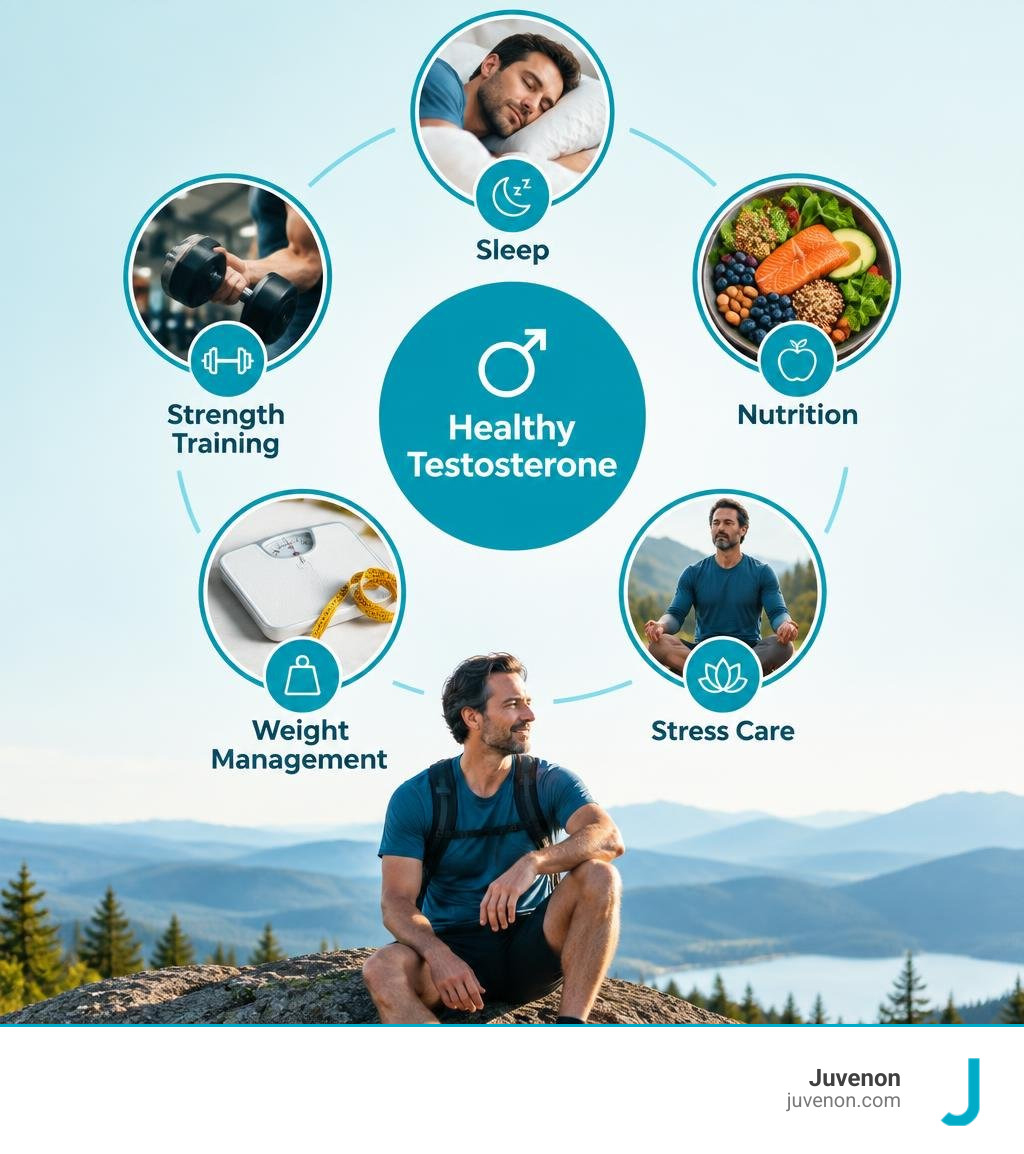
To support healthy testosterone levels, start with the habits you can control: sleep 7 to 9 hours a night, lift weights a few times a week, eat enough nutritious food, and work toward a healthy weight if you carry excess body fat. Make time to manage stress, too. If you have symptoms such as low sex drive or lasting fatigue, ask a clinician about blood testing rather than guessing or buying a "testosterone booster."
These habits can help, especially when poor sleep, excess weight, or a nutrient deficiency is part of the problem. They may not fix a medical cause of low testosterone. The steps below will help you focus on what is worth doing first.
I'm Luke Bucci, PhD CCN(Rtd) CNS-S C(ASCP), and I've spent more than 37 years in nutritional science and supplement research. I'll use that experience to help you sort out which habits may improve testosterone naturally and where the evidence has limits.
Maintaining optimal endocrine health is one of the most effective ways to preserve vitality, lean muscle mass, cognitive drive, and metabolic resilience as we age. Starting around age 30 to 40, men naturally experience a gradual hormonal decline of approximately 1% to 2% per year. However, much of what gets written off as "normal aging" is actually accelerated by modern lifestyle factors: chronic sleep disruption, sedentary routines, elevated systemic stress, and nutritional gaps.
Your body produces testosterone primarily through the Leydig cells in the testes, which receive upstream signals via luteinizing hormone (LH) released by the pituitary gland. This entire system—the hypothalamic-pituitary-gonadal (HPG) axis—operates on strict circadian regulation. When we support this axis through evidence-based lifestyle habits, our endocrine system responds. Before diving into changes, getting baseline blood work (including total testosterone, free testosterone, sensitive estradiol, and sex hormone-binding globulin) provides an accurate starting point.
Evidence-Based Training Protocols to Improve Testosterone Naturally
Exercise is one of the most potent stimuli for acute and chronic endocrine adaptations. However, not all workouts affect male hormones equally. To optimize androgen production, the focus must be on compound movements that demand significant neuromuscular recruitment.

The literature consistently demonstrates that resistance training can increase resting testosterone levels by 20% to 40% in men. Heavy mechanical tension triggers a favorable neuroendocrine cascade, upregulating androgen receptor density in skeletal muscle and stimulating transient spikes in circulating serum testosterone.
Multi-Joint Resistance Workouts vs. Overtraining
To maximize your body's hormonal response, exercise selection is paramount. Multi-joint compound lifts—such as back squats, deadlifts, overhead presses, and bench presses—elicit a 25% to 50% higher acute testosterone surge compared to isolation exercises like bicep curls or leg extensions. This occurs because compound lifts engage massive amounts of active muscle tissue and place a higher demand on the central nervous system.
The optimal training parameters include:
- Intensity: Moderate to heavy loads ranging between 75% and 90% of your 1-repetition maximum (1RM), working primarily in the 6 to 8 repetition range.
- Volume: In a meta-analysis of 140 studies, protocols using 3 or more working sets per exercise produced roughly 40% greater increases in testosterone compared to single-set routines. Aim for 12 to 20 total sets per muscle group per week.
- Rest Intervals: Rest for 2 to 3 minutes between heavy sets. Extremely brief rest periods elevate growth hormone and metabolic stress, but adequate rest preserves mechanical power output and supports the androgenic response.
However, more is not always better. Resistance training-induced benefits are quickly blunted by overtraining. Studies indicate that exceeding roughly 20 to 25 heavy sets per muscle group weekly without adequate recovery can cause a 15% to 20% decrease in resting testosterone levels within just three weeks due to excessive neuromuscular fatigue and chronic adrenal activation.
Balancing Aerobic Conditioning and Recovery
Cardiovascular fitness is essential for heart health, metabolic flexibility, and nitric oxide production, but excessive endurance training can be counterproductive for androgen status. Chronic, high-volume endurance running often elevates baseline glucocorticoids and depresses circulating testosterone.
To maintain hormonal balance:
- Prioritize Zone 2 Cardio: Low-intensity steady-state (LISS) exercise (such as brisk walking or light cycling for 20 to 40 minutes, 2 to 3 times per week) promotes mitochondrial biogenesis and fat oxidation without driving up systemic cortisol.
- Incorporate Targeted Intervals: Short high-intensity interval training (HIIT) sessions (e.g., 10 to 15 minutes of sprint intervals) offer cardiovascular benefits while preserving lean muscle mass and androgen receptor sensitivity.
- Target Visceral Fat Loss: Lowering visceral body fat removes aromatase-heavy tissue, preventing the unwanted peripheral conversion of testosterone into estrogen.
Restorative Sleep and Circadian Hormone Production
Sleep is the single most powerful and immediate lever for natural testosterone production. Unlike many other physiological processes that occur throughout the day, the vast majority of daily testosterone release in men occurs while sleeping.
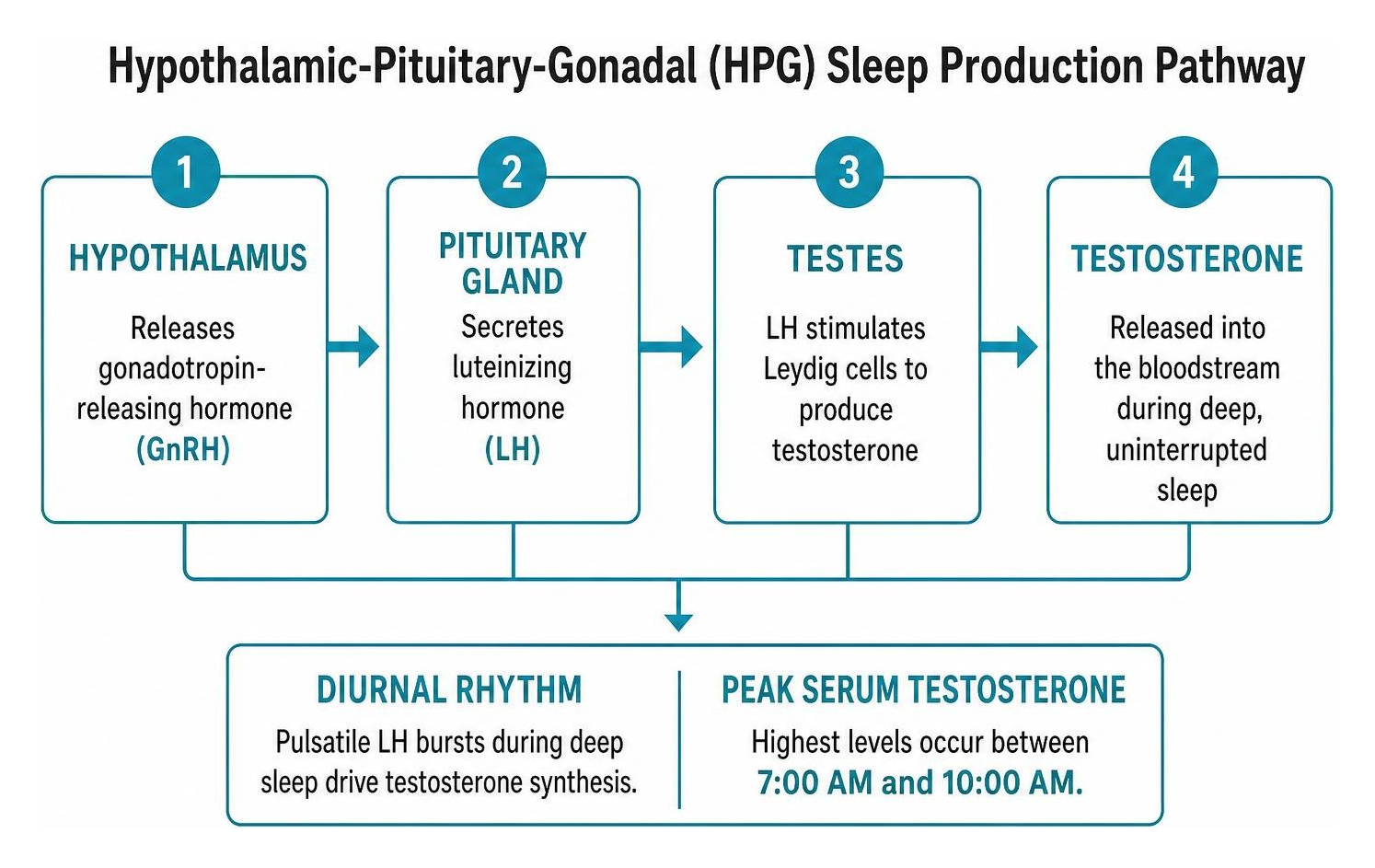
The HPG axis follows a strict diurnal rhythm. Pulsatile bursts of luteinizing hormone trigger testosterone synthesis during deep, uninterrupted sleep cycles, culminating in peak serum levels between 7:00 AM and 10:00 AM.
Optimizing Sleep Architecture to Improve Testosterone Naturally
The architecture of your sleep matters just as much as total time spent in bed. Testosterone synthesis is intimately tied to non-REM slow-wave sleep (deep sleep) and regular rapid eye movement (REM) cycles.
When men undergo acute sleep restriction—such as sleeping only 5 hours per night for a single week—their daytime testosterone levels drop by 10% to 15%. In endocrine terms, that drop represents the equivalent of aging 10 to 15 years. Chronic sleep debt suppresses nocturnal LH pulses, elevates next-day cortisol, and disrupts insulin sensitivity, creating an internal environment that works directly against hormone production.
Men who struggle with chronic fatigue, loud snoring, or morning brain fog should evaluate their risk using the STOP-BANG assessment for obstructive sleep apnea (OSA). Untreated sleep apnea fragments sleep architecture and severely starves the body of the oxygen required for nocturnal hormone synthesis.
Sleep Hygiene and Circadian Entrainment
To establish consistent circadian rhythm entrainment and maximize restorative sleep stages, implement these practical daily habits:
- Get Direct Morning Sunlight: Step outside for 10 to 20 minutes within an hour of waking. Natural light striking the retinas sets your master circadian clock (the suprachiasmatic nucleus), anchoring nighttime melatonin production and morning testosterone peaks.
- Maintain a Consistent Sleep Schedule: Go to bed and wake up at the exact same times every day—including weekends—to reinforce natural hormonal rhythms.
- Cool Your Sleep Environment: Lower bedroom ambient temperature to around 65°F to 68°F (18°C to 20°C). A drop in core body temperature is biologically required to initiate deep slow-wave sleep.
- Mitigate Evening Blue Light: Avoid screens, bright overhead LED lighting, and stimulating media at least 60 minutes before bed to protect your natural melatonin surge.
- Cut Late Caffeine and Alcohol: Eliminate caffeine after 12:00 PM and avoid alcohol within 3 to 4 hours of bedtime, as both substances significantly disrupt REM and slow-wave sleep stages.
Dietary Strategies for Endogenous Hormone Synthesis
Testosterone is a steroid hormone synthesized directly from cholesterol. Severely low-fat diets, prolonged crash dieting, and micronutrient deficiencies can starve your body of the essential building blocks required for steroidogenesis.
| Nutrient / Food Category | Primary Hormonal Mechanism | Optimal Dietary Sources |
|---|---|---|
| Monounsaturated & Saturated Fats | Provides cholesterol substrate and enhances steroidogenic enzyme activity | Extra virgin olive oil, avocados, whole pasture-raised eggs, grass-fed beef |
| Zinc | Essential cofactor for 17β-HSD enzyme and Leydig cell function | Wild oysters, pumpkin seeds, beef shank, shellfish |
| Vitamin D3 | Functions as a secosteroid hormone; binds to nuclear receptors in testicular tissue | Wild salmon, fortified egg yolks, UV sunlight exposure |
| Magnesium | Lowers sex hormone-binding globulin (SHBG) to increase free testosterone | Dark leafy greens, pumpkin seeds, cacao, wild mackerel |
| Boron | Downregulates SHBG and supports optimal free-to-total testosterone ratios | Raisins, prunes, almonds, avocados |
Nutrition and Micronutrient Targets to Improve Testosterone Naturally
To support your body's endocrine machinery, focus on balanced macronutrient distribution and strategic micronutrient density:
- Maintain Caloric Balance or Modest Deficits: Chronic caloric restriction (>500 kcal deficit below maintenance) raises baseline cortisol and increases SHBG, reducing bioavailable free testosterone. When dieting for fat loss, use modest deficits paired with high protein intake (0.8 to 1.0 grams per pound of body weight) to spare lean mass.
- Do Not Fear Healthy Fats: Diets where dietary fat falls below 20% of total calories are consistently associated with lower circulating testosterone levels. Strive for 25% to 35% of total daily calories from healthy fats. Simple dietary shifts—such as replacing processed vegetable oils with extra virgin olive oil—have been shown in clinical trials to support healthier androgen balance.
- Correct Common Deficiencies: If you are deficient in vitamin D3, supplementing 2,000 to 5,000 IU daily can help restore baseline testosterone levels by up to 25%. Similarly, correcting a subclinical zinc deficiency can yield significant improvements in androgen status within several weeks.
Minimizing Endocrine Disruptors and Visceral Fat
The modern environment exposes us to synthetic chemicals known as endocrine-disrupting chemicals (EDCs). Xenobiotics such as bisphenol A (BPA) and phthalates mimic estrogens in the human body, binding to androgen receptors and impairing natural testicular output.
- Ditch Plastic Food Storage: Avoid microwaving food in plastic containers or drinking hot liquids from plastic cups. Store food in glass, ceramic, or stainless steel.
- Filter Drinking Water: Use high-quality water filtration systems to remove trace chemical residues and heavy metals.
- Moderate Alcohol Intake: Excessive alcohol intake (>5 to 7 drinks per week) impairs hepatic clearance of estrogen and directly inhibits testicular steroidogenesis.
- Reduce Abdominal Visceral Fat: Visceral adipose tissue contains high concentrations of the aromatase enzyme, which actively converts circulating testosterone into estradiol. Losing abdominal fat remains one of the single most effective ways to lower aromatase activity and reclaim free testosterone.
Managing Cortisol and the Stress-Response Axis
The body manages survival through a delicate balance between the sympathetic ("fight-or-flight") and parasympathetic ("rest-and-digest") branches of the autonomic nervous system. When you experience chronic mental, physical, or emotional stress, the hypothalamic-pituitary-adrenal (HPA) axis stays activated, flooding your system with cortisol.

Cortisol and testosterone share an inverse, antagonistic relationship. Pregnenolone, the master precursor hormone, is diverted toward cortisol production during periods of sustained stress—a phenomenon known as the "pregnenolone steal." Furthermore, elevated systemic cortisol directly suppresses GnRH and LH secretion from the brain, effectively turning down the signal to the testes.
Evidence-Based Stress Mitigation Protocols
To protect your hormonal balance from the effects of elevated cortisol, incorporate active stress-reduction habits into your weekly routine:
- Box Breathing and Pranayama: Engaging in 5 to 10 minutes of slow, diaphragmatic breathing (such as inhaling for 4 seconds, holding for 4, exhaling for 4, and holding for 4) rapidly downregulates sympathetic tone and lowers acute cortisol spikes.
- Mindfulness Meditation: Practicing mindfulness-based stress reduction (MBSR) for just 15 to 20 minutes daily has been shown to reduce systemic inflammatory cytokines and support healthier HPA-axis sensitivity.
- Cold Water Immersion and Contrast Therapy: Brief cold exposure (such as a 2 to 3-minute cold shower or plunge) triggers an initial acute norepinephrine surge followed by prolonged parasympathetic dominance, helping the body reset its stress thresholds.
- Adaptogenic Herbal Support: Standardized herbal extracts, particularly KSM-66 ashwagandha (300 to 600 mg daily), have been demonstrated in double-blind clinical trials to reduce serum cortisol levels by up to 28% while supporting significant increases in natural testosterone and muscular recovery.
Frequently Asked Questions About Male Hormone Optimization
How long does it take to see measurable improvements in hormone levels?
Natural endocrine optimization is not an overnight process, but improvements happen along a clear timeline. Reversing acute sleep deprivation can elevate testosterone levels within a few days to two weeks.
However, full cellular, metabolic, and testicular adaptations—including the complete cycle of spermatogenesis—typically take between 60 and 90 days. We recommend establishing baseline blood testing on Day 1 and scheduling a follow-up panel at the 90-day mark to measure changes in total and free testosterone, SHBG, and metabolic markers.
Can natural lifestyle habits fully resolve clinical hypogonadism?
It depends on whether the underlying issue is primary or secondary hypogonadism. Natural interventions work well for functional secondary hypogonadism, where the testes are physically healthy but underperforming due to lifestyle stressors, poor sleep, nutrient deficiencies, or excess body fat.
However, if low testosterone is caused by primary hypogonadism (testicular failure, where LH and FSH are elevated but testosterone remains below 200 to 300 ng/dL) or structural pituitary damage, lifestyle habits alone will likely hit a ceiling. In those scenarios, a thorough evaluation by a qualified medical endocrinologist is essential.
What role do micronutrient deficiencies play in low male vitality?
Micronutrients serve as the essential chemical cofactors for steroidogenesis. Without adequate zinc, the 17β-hydroxysteroid dehydrogenase (17β-HSD) enzyme cannot efficiently convert androstenedione into testosterone.
Similarly, vitamin D functions biologically as a master secosteroid hormone, with active vitamin D receptors (VDR) located directly on Leydig cells. When these nutrients are depleted, cellular machinery stalls. Correcting a verified deficiency restores the baseline capacity of your body to synthesize hormones naturally.
Conclusion
Optimizing your male hormones naturally does not require extreme biohacks or unverified claims. It requires consistent execution of fundamental, scientifically proven health habits: heavy compound resistance training, 7 to 9 hours of restorative sleep, nutrient-dense nutrition with adequate healthy fats, and deliberate stress management.
By stacking these habits consistently, you can support your body's natural endocrine production, improve body composition, and sustain long-term vitality. In addition to daily lifestyle habits, targeted nutritional support can help provide the specific micronutrients and botanical extracts your body needs for daily energy, stamina, and hormonal balance. To complement your foundation, explore our comprehensive male vitality support formula, backed by our commitment to scientific research, patented ingredients, and a 60-day money-back guarantee.