Why Bad Circulation in Your Big Toe Deserves Attention
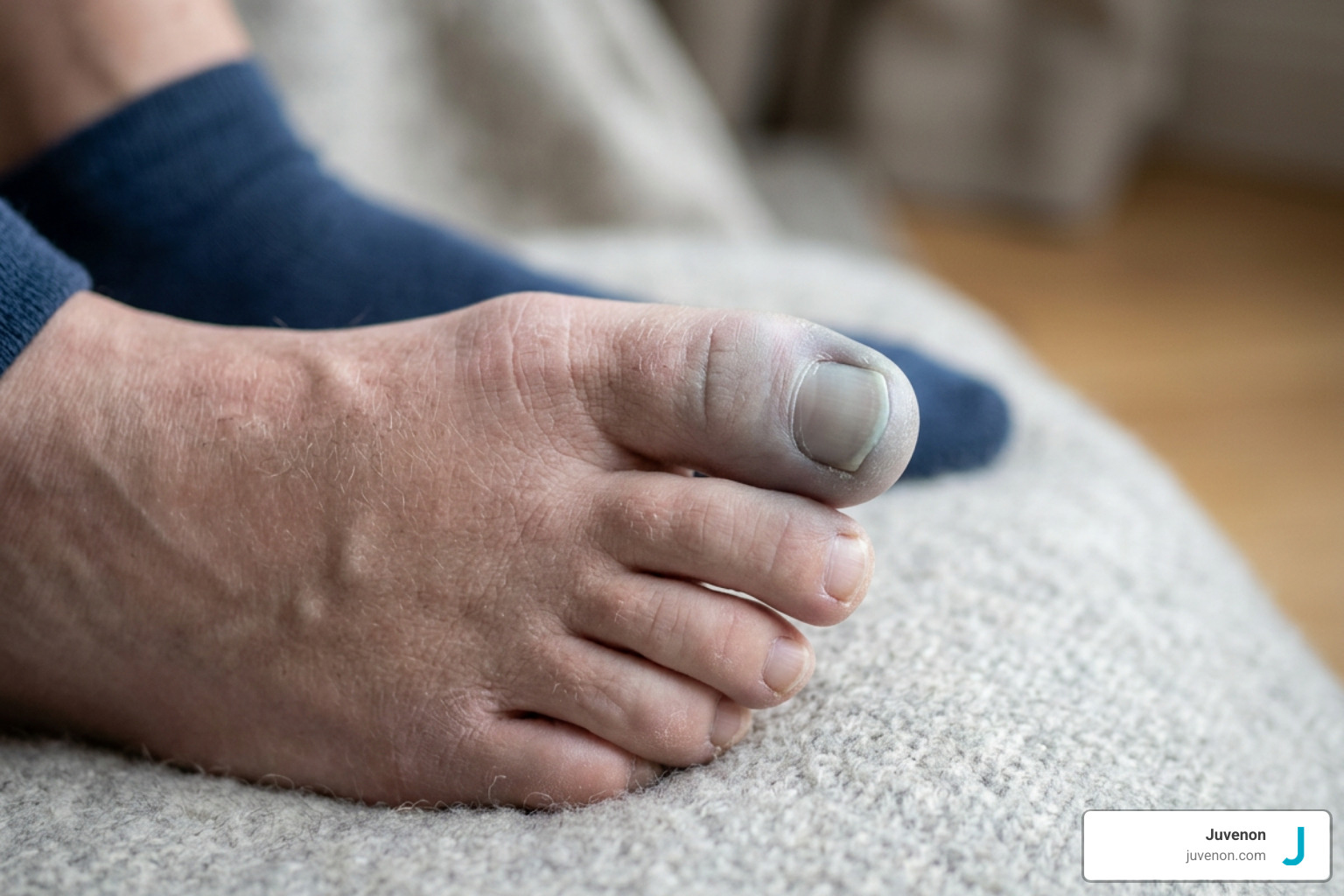
Bad circulation in the big toe can mean that blood is not reaching the toe as well as it should. Common causes include peripheral artery disease (PAD), diabetes-related blood vessel damage, smoking, and cold-triggered vessel spasms from Raynaud's phenomenon. A toe that stays cold, pale, blue, numb, painful, or slow to heal needs medical attention, especially if symptoms are new or worsening.
Because the big toe is far from the heart, it may show early signs of broader blood-flow problems. Not every cold or numb toe is a circulation problem, though. Gout often causes sudden heat, redness, swelling, and intense pain, while nerve damage tends to feel like burning, tingling, or electric shocks.
I am Michelle M. Henson, a health content leader and legal compliance editor with more than two decades of experience translating complex wellness topics into clear, practical guidance. In this guide to bad circulation in big toe, I will help you recognize meaningful warning signs, understand likely causes, and know when home care is not enough.
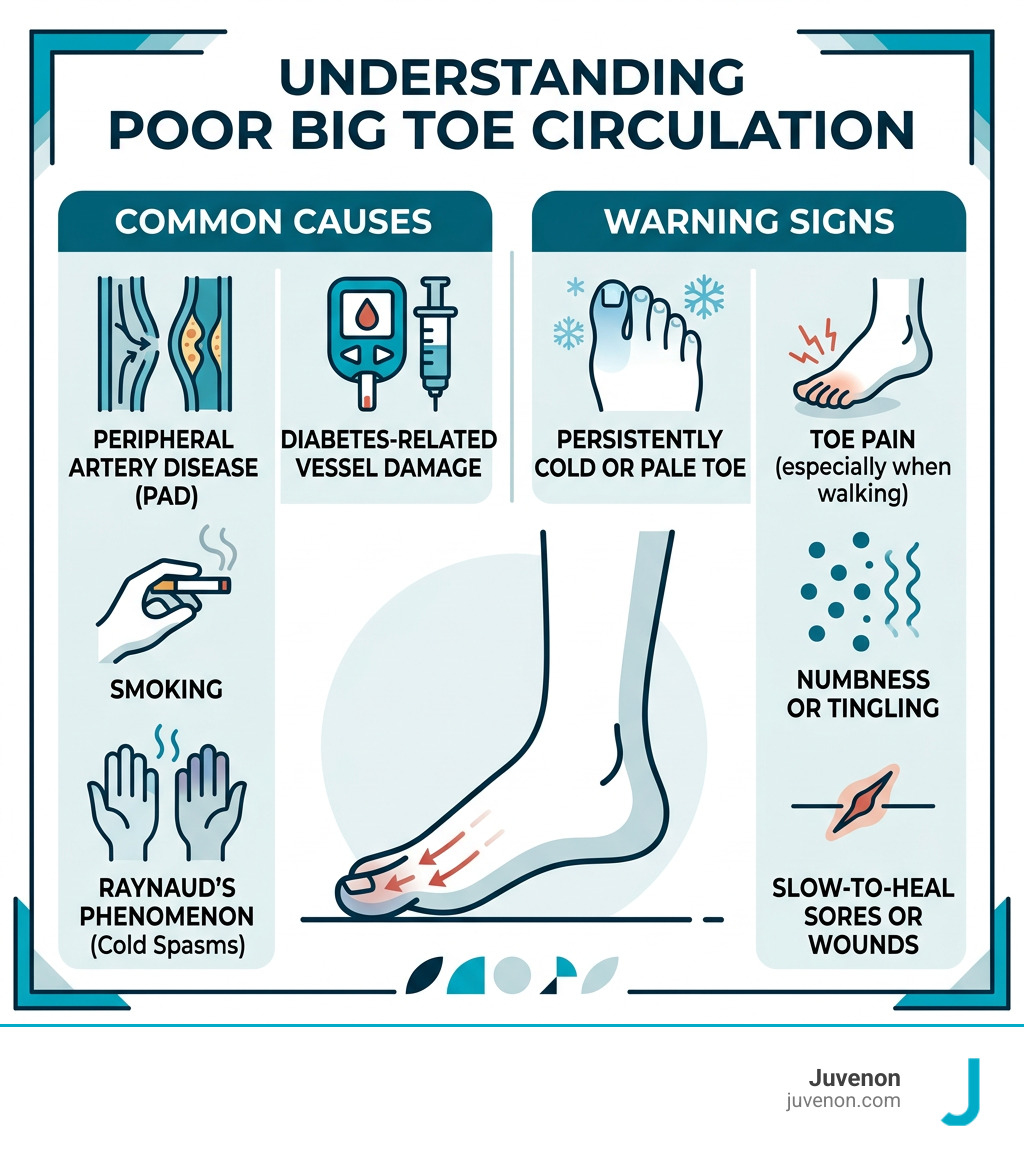
Handy bad circulation in big toe terms:
Warning Signs of Bad Circulation in Big Toe
Your feet are often considered the marathon runners of your circulatory system—they operate the farthest from your heart, meaning any systemic drop in arterial pressure or blood vessel elasticity shows up here first. When oxygenated blood struggles to reach the distal extremities, your big toe sends distinct warning signals.
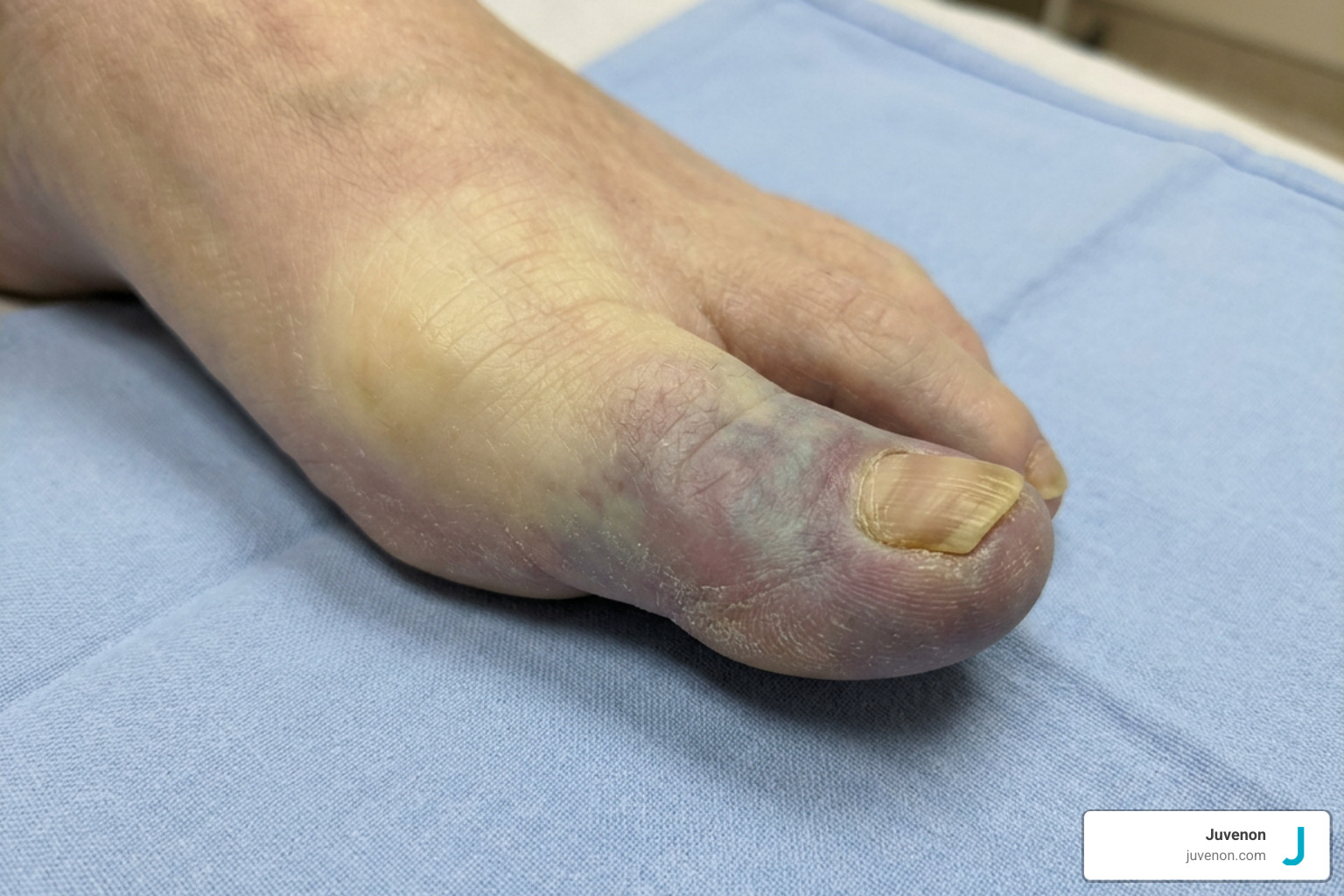
Recognizing early signs of localized vascular issues helps prevent long-term tissue injury. The primary indicators include:
- Skin Pallor and Cyanosis: A healthy toe maintains a pink, warm undertone. Poor blood flow causes the skin to turn ghostly white (pallor) or distinctly bluish-purple (cyanosis) as oxygen levels plummet.
- Persistent Coldness: While cold feet happen occasionally, an isolated icy sensation in one toe despite a warm room indicates reduced microvascular perfusion.
- Slow Nail and Hair Growth: Arterial blood carries vital nutrients. Reduced delivery results in thickened, brittle, slow-growing toenails and loss of hair over the joint.
- Aching or Intermittent Discomfort: Reduced flow can produce ischemic rest pain—a dull, nagging ache that often intensifies when your feet are elevated in bed.
Home Checks for Bad Circulation in Big Toe
You can perform a few simple, non-invasive checks at home to assess microvascular responsiveness in your big toe:
- Capillary Refill Time: Press firmly on the fleshy pad of your big toe for five seconds until the skin blanches white. Release and count the seconds. In healthy vessels, normal pink color returns in under two to three seconds. A delay beyond three seconds points to delayed microvascular refill.
- Skin Temperature Assessment: Compare the surface temperature of your big toe against your ankle or the opposite foot using the back of your hand. A noticeable temperature drop specifically at the toe tip can signal local blood vessel constriction.
- Elevation Pallor vs. Dependent Rubor (Buerger’s Test): Lie flat and elevate your legs at a 45-degree angle for one minute. If your big toe turns stark white, lower it over the edge of the bed to hang down. If it takes longer than 15 to 20 seconds to regain color, or if it turns deep, purplish-red (dependent rubor), arterial flow may be restricted.
Distinguishing Vascular Issues from Gout and Nerve Damage
Big toe pain often leads to confusion between vascular deficiency, acute gout flares, and peripheral nerve compression. Because treatments differ significantly, identifying these hallmark characteristics is essential:
| Characteristic | Vascular Insufficiency | Gout Flare | Peripheral Neuropathy |
|---|---|---|---|
| Primary Sensation | Dull ache, coldness, cramping | Intense, throbbing, hot pain | Burning, tingling, "pins & needles" |
| Skin Temperature | Cold or cool to the touch | Hot, inflamed, radiating heat | Normal to variable |
| Visual Appearance | Pale, bluish, or mottled skin | Bright red, glossy, swollen | Normal skin tone; possible dryness |
| Onset Pattern | Gradual and progressive | Sudden (often overnight in 12–24h) | Chronic, worse with light touch |
| Key Mechanism | Arterial narrowing / ischemia | Uric acid crystal deposition | Nerve fiber irritation / damage |
When evaluating symptoms, understanding the diagnostic overlap in vascular toe pain is critical, as ischemic rest pain can occasionally cause a paradoxical red appearance that resembles an inflammatory joint issue.
Underlying Causes of Digital Ischemia and Vessel Narrowing
When blood vessels lose elasticity or accumulate fatty deposits, microvascular blood delivery slows. Understanding these root mechanisms helps target effective lifestyle and medical interventions.
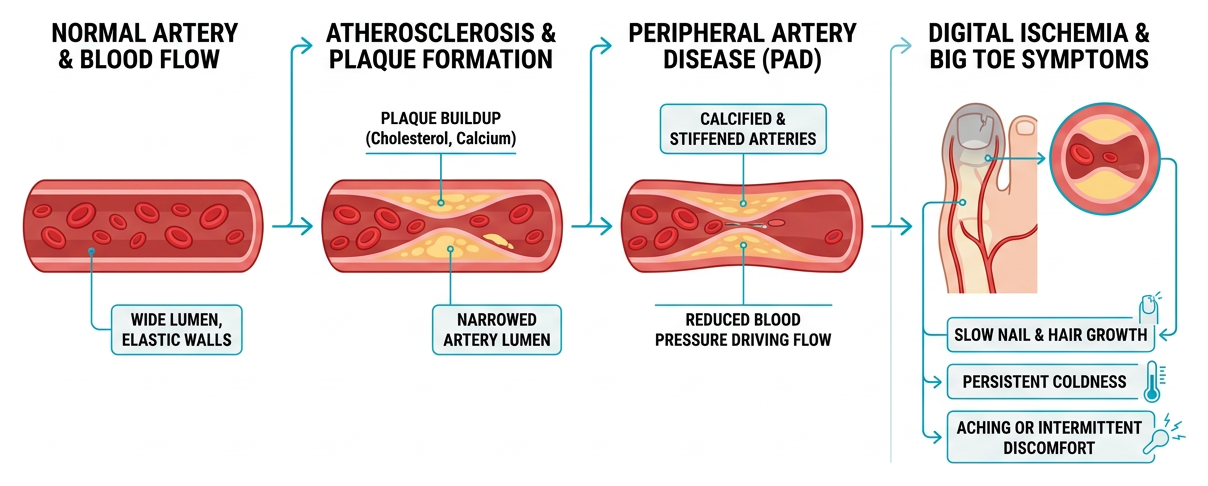
Peripheral Artery Disease and Atherosclerosis
Atherosclerosis occurs when cholesterol, calcium, and fibrous tissue form plaque inside the arterial walls. Over time, this narrows the arterial lumen, reducing poor blood flow to the lower extremities.
Peripheral artery disease (PAD) is especially prevalent in adults over 50, though smokers and individuals with metabolic challenges face heightened risks much earlier. When arteries calcify and stiffen, the force necessary to drive blood through the micro-vessels of the big toe diminishes, causing fatigue, cramping, and ischemic pain during movement or rest.
Diabetic Vascular Changes and Raynaud's Phenomenon
Diabetes contributes to both vascular narrowing and nerve dysfunction. Chronically elevated blood glucose damages the delicate endothelial lining of capillaries, leading to microangiopathy. Identifying early signs of poor foot circulation allows for timely management before ulcers develop.
In contrast, Raynaud’s phenomenon involves transient, reversible vasospasms of the small digital arteries:
- Primary Raynaud’s: Most common in women living in cold climates, usually starting between ages 15 and 30, with no underlying systemic disease.
- Secondary Raynaud’s: Typically appears around age 40 and is linked to connective tissue disorders like scleroderma, lupus, or rheumatoid arthritis.
During a Raynaud's episode, sudden cold exposure or emotional stress triggers severe arterial constriction, turning the big toe white, then blue, and finally red with throbbing warmth as circulation returns.
Blue Toe Syndrome and Embolic Blockages
Blue toe syndrome is an acute, localized form of digital ischemia. Unlike gradual plaque accumulation, it occurs when tiny microemboli—small fragments of cholesterol plaque or blood clots—break loose from upstream arteries (such as the aorta or femoral artery) and travel downstream, occluding the small vessels of the toe.
This condition can arise spontaneously from ulcerated plaques or occur following vascular procedures like angiograms. Exploring the clinical causes of blue toe syndrome highlights why sudden, patchy purple or blue discoloration requires prompt vascular evaluation.
Evidence-Based Remedies and Daily Management
Supporting microvascular health involves a combination of targeted physical movement, environmental care, and proactive daily habits.
Lifestyle Strategies to Relieve Bad Circulation in Big Toe
Improving vascular function does not always require strenuous workouts. Regular, low-impact habits encourage collateral blood vessel formation and support arterial flexibility:
- Daily Calf and Leg Stretches: A 2020 study revealed that simple leg stretches performed consistently over 12 weeks help improve vascular dilation and decrease arterial stiffness.
- Low-Impact Aerobic Walking: Walking encourages natural muscle-pump action, propelling venous blood back toward the heart while stimulating fresh arterial supply downward.
- Targeted Circulation Support: Incorporating healthy movement alongside targeted circulation support provides the body with the structural and nutritional foundation necessary for long-term lower-limb comfort.
- Smoking Cessation: Nicotine acts as a potent vasoconstrictor and accelerates plaque formation. Quitting smoking remains one of the single most effective ways to restore peripheral blood delivery.
Nutrition, Footwear, and Daily Foot Care
Protecting your toes requires consistent daily habits:
- Choose Footwear with a Wide Toe Box: Narrow, pointed shoes compress digital arteries and pinch lateral nerves, worsening numbness and poor flow.
- Maintain Stable Thermal Regulation: Avoid extreme cold. Wear moisture-wicking wool socks or insulated footwear in winter, and never apply direct, high-heat heating pads to numb toes to avoid accidental burns.
- Stay Well Hydrated: Adequate fluid intake prevents blood viscosity from rising, easing microvascular transit.
- Inspect Feet Daily: Look for minor abrasions, blisters, or skin cracks between the toes, especially if peripheral sensation is reduced.
Clinical Treatments and When to Seek Immediate Care
While proactive self-care supports baseline vessel health, structural blockages and severe ischemia require professional evaluation.
Podiatrists and vascular specialists utilize several objective tests:
- Ankle-Brachial Index (ABI) and Toe-Brachial Index (TBI): Non-invasive blood pressure comparisons between your arms and toes to evaluate arterial obstruction.
- Doppler Ultrasound: Assesses the velocity and volume of blood flowing through lower-extremity vessels.
- Pulse Volume Recording (PVR): Measures volume changes in the extremities with each heartbeat.
Medical and Surgical Interventions
When conservative lifestyle modifications are insufficient, medical treatments target vessel dilation and plaque reduction:
- Prescription Vasodilators: Calcium channel blockers (such as nifedipine) or targeted agents help relax spastic arterial walls in conditions like Raynaud's.
- Antiplatelet and Lipid Therapy: Medications like aspirin, clopidogrel, and statins help stabilize arterial plaques and reduce the risk of clot formation.
- Endovascular Revascularization: Minimally invasive balloon angioplasty or stent placement opens narrowed arteries, restoring direct pulsatile blood flow to the foot.
- Surgical Bypass: In advanced arterial occlusion, a vascular surgeon creates a detour around blocked vessels using a healthy vein or synthetic graft.
Risks of Untreated Peripheral Ischemia
Ignoring persistent circulation issues in the big toe can lead to severe tissue complications. Chronic oxygen deprivation weakens skin defenses, turning minor cuts into non-healing ischemic ulcers.
If untreated, critical limb ischemia can progress to tissue necrosis (gangrene), requiring surgical debridement or partial amputation. Early diagnosis and proactive management are key to preventing these outcomes.
Frequently Asked Questions About Toe Circulation
Why is my big toe cold and numb only on one side?
Unilateral numbness or coldness on one side of the big toe typically points to localized mechanical compression rather than systemic arterial failure. The digital nerves run along the medial and lateral margins of the toe. Structural changes like bunions, tight shoe seams, or localized microvascular constriction can press against a single nerve branch, resulting in isolated numbness.
Can tight footwear cause lasting circulation problems in the big toe?
Wearing restrictive shoes for hours forces small digital capillaries to compress, temporarily halting microcirculation. While occasional use rarely causes permanent harm, chronic constriction can damage delicate micro-vessels, accelerate structural deformities (like hallux rigidus), and compress sensory nerves. Choose footwear with at least half a thumb's width of clearance beyond your longest toe.
When does toe discoloration require emergency medical care?
Seek immediate medical attention if you experience:
- Sudden, severe pain accompanied by a dark blue, purple, or black toe tip.
- Rapidly spreading redness, swelling, warmth, or red streaks traveling up the foot.
- Skin ulcerations or sores draining fluid that show no healing progress after several days.
- A cold, pale foot paired with sudden weakness or loss of mobility.
Conclusion
Your big toe plays a critical role in posture, balance, and natural movement—and it serves as a sensitive early indicator of your overall cardiovascular wellness. Whether symptoms stem from cold-induced Raynaud's spasms, metabolic vascular shifts, or progressive arterial narrowing, recognizing warning signs early allows you to protect your long-term mobility.
At Juvenon, we believe maintaining resilient, flexible blood vessels is fundamental to healthy aging. By pairing sensible footwear and daily physical movement with proven ways to increase blood flow, you can support your body's circulation from head to toe. If your symptoms persist or worsen, consult a qualified healthcare provider for a thorough vascular assessment.