Understanding the Root Causes of Circulation Problems in Feet
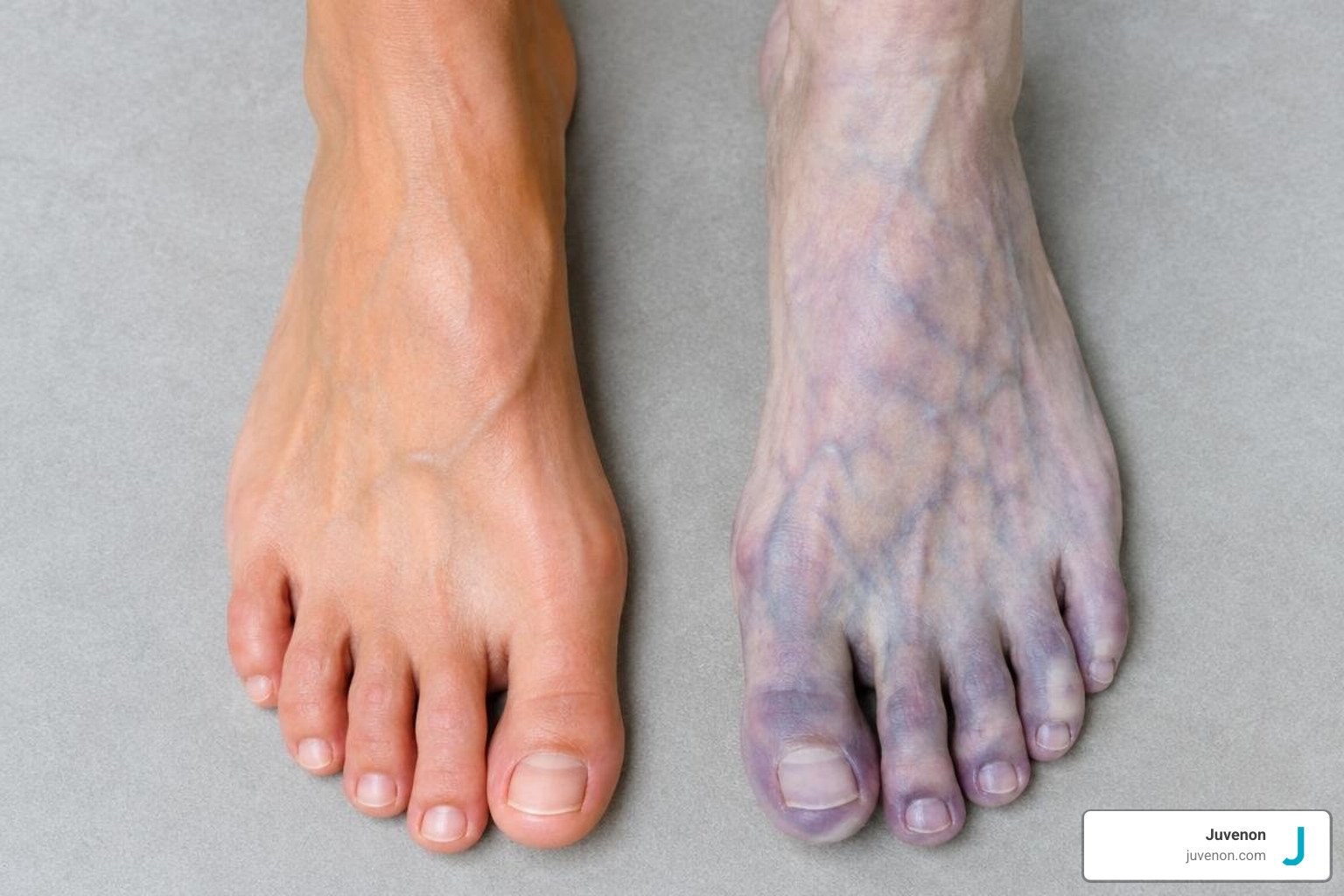
Circulation problems in feet are most often caused by arterial narrowing from peripheral artery disease (PAD) or by faulty vein valves that lead to chronic venous insufficiency. The primary signs include cold feet, cramping or aching during activity, swelling around the ankles, skin color changes, and slow-healing sores. Recognizing these patterns early can help you address reduced blood flow before it progresses.
Our vascular network functions as a vast delivery and return system. Arteries transport oxygen-rich blood away from the heart toward the farthest reaches of our extremities, while veins transport deoxygenated blood back upward against the pull of gravity. When structural bottlenecks or functional failures disrupt this rhythm, our lower limbs experience the brunt of the burden.
A widespread cause of systemic flow resistance is arterial narrowing. Over time, fatty deposits and calcified plaques accumulate along the inner arterial walls. This progressive narrowing restricts the volume of arterial blood that can reach the peripheral tissue beds. Conversely, when the one-way valves in our leg veins become weak or damaged, fluid begins pooling in the lower extremities, causing poor circulation in ankles and feet.
Sedentary habits compound these structural issues. Without active muscle contractions in our calves—often referred to as our "second heart"—blood and interstitial fluids stagnate around our ankles and feet. In severe situations, prolonged immobility or vessel damage can trigger a deep vein thrombosis (DVT), a localized blood clot that obstructs venous return and presents immediate clinical risks.
Peripheral Artery Disease and Arterial Blockages
Peripheral Artery Disease (PAD) is one of the most clinically significant drivers of reduced lower-limb blood supply. PAD affects roughly 8 to 12 million people in the United States, including approximately 12% to 20% of adults over the age of 60.
PAD develops as atherosclerosis stiffens and narrows the peripheral conduits. When arterial diameter decreases, muscles in the feet and calves become starved of oxygen and essential nutrients during exertion. This manifests as intermittent claudication: a reproducible cramping, aching pain in the calves, thighs, or buttocks that occurs during walking and subsides with rest.
As arterial blockages advance, individuals may experience ischemic rest pain—a severe, burning ache in the toes and forefoot that frequently disrupts sleep. In advanced stages, diminished arterial supply leads to absent pedal pulses and critical limb ischemia. Comprehensive scientific research on lower extremity blood flow highlights that identifying arterial plaque early is essential to prevent permanent tissue damage.
Chronic Venous Insufficiency and Ankle Edema
While arterial disease is an issue of supply, chronic venous insufficiency (CVI) is an issue of drainage. Inside our veins are delicate, one-way bicuspid valves designed to prevent blood from flowing backward toward the earth. When these valves stretch, weaken, or suffer structural damage, blood flows retrogradely and pools in the lower legs.
This failure of venous return elevates hydrostatic pressure within the capillaries, forcing plasma out of the blood vessels and into the surrounding interstitial tissues. The observable result is dependent edema—swelling that worsens as the day goes on, especially after prolonged standing or sitting. Over time, patients experience aching heaviness, skin hyperpigmentation (hemosiderin staining), and bulging varicose veins. Exploring natural solutions for swollen or painful legs and feet can help manage these uncomfortable pressure imbalances before skin breakdown occurs.
Diabetes and Microvascular Impairment
Diabetes creates a challenging dual threat to lower extremity health. Chronic hyperglycemia causes systemic endothelial dysfunction, stiffening large blood vessels and destroying microscopic capillary networks. Diabetic patients are four times more likely to develop PAD than individuals without diabetes.
Compounding this vascular impairment is diabetic peripheral neuropathy. When sensory nerves become damaged, patients lose the protective sensation that signals blisters, cuts, or foreign objects in their shoes. Because microvascular flow is impaired, the body cannot deliver the white blood cells, oxygen, and nutrients needed to repair minor surface injuries. Understanding how diabetes causes poor circulation to the lower extremities is crucial: more than 50% of diabetes-related lower limb amputations are preceded by a non-healing foot ulcer.
Warning Signs and Symptoms in the Lower Extremities
Recognizing circulatory decline early allows for proactive lifestyle adjustments and clinical interventions. Because the feet are farthest from the heart, they often display subtle early warning signs long before major vascular events occur.
Common clinical signs of compromised lower extremity blood flow include:
- Temperature Asymmetry: One foot feels noticeably colder to the touch than the other, independent of room temperature.
- Dependent Rubor: The foot turns a deep, dusky red or purplish color when dangling off a chair, but becomes pale and blanched when elevated.
- Exertional Cramping: A tightness or aching sensation in the arch of the foot or calf that begins during exercise and resolves within minutes of resting.
- Trophic Skin Changes: Loss of hair on the toes and lower shins, along with brittle, slow-growing toenails and unusually thin, shiny skin.
- Delayed Healing: Minor scrapes, cuts, or friction rubs from shoes that persist for two weeks or longer without noticeable improvement.
Recognizing Early Circulation Problems in Feet and Toes
The initial onset of reduced blood flow rarely feels like severe pain. Instead, it frequently presents as paresthesia—a persistent sensation of pins and needles, mild prickling, or localized numbness across the toes.
When arterial delivery drops, the sweat and oil glands in our feet receive fewer metabolic resources, leading to chronic skin dryness, cracking, and fissuring around the heels. You may also observe structural changes in your toenails; deprived of consistent capillary perfusion, they can become thickened, discolored, and prone to secondary fungal infections.
Arterial vs. Venous Symptoms
Distinguishing between an arterial flow limitation and a venous drainage issue is essential for taking the right therapeutic steps.
| Clinical Feature | Arterial Insufficiency (PAD) | Venous Insufficiency (CVI) |
|---|---|---|
| Primary Pain Sensation | Sharp, cramping pain (claudication) or burning at rest | Dull, heavy, throbbing ache that worsens toward evening |
| Response to Elevation | Pain worsens when elevated; improves when dangling | Pain and swelling improve when legs are elevated |
| Swelling (Edema) | Minimal to none, unless advanced heart failure is present | Moderate to severe swelling around the ankles and calves |
| Skin Temperature & Color | Cool to cold; pale upon elevation, dusky red when dependent | Warm to normal; bronze or brown hemosiderin staining |
| Skin Texture | Thin, shiny, taut, dry skin with complete hair loss | Thick, hardened (lipodermatosclerosis), weeping skin |
| Pedal Pulses | Weak, diminished, or clinically absent | Present and normal (though sometimes obscured by edema) |
| Ulcer Characteristics | Deep, "punched-out" sores on toes, heels, or pressure points | Shallow, irregular sores around the medial malleolus (inner ankle) |
Diagnostic Procedures for Vascular Assessment
Accurate diagnosis begins with a dedicated physical examination. A clinician starts by palpating the pedal pulses: the dorsalis pedis pulse on the top of the foot and the posterior tibial pulse behind the inner ankle bone. A weak or absent pulse indicates significant upstream resistance.
Physicians also evaluate capillary refill time by pressing firmly on the tip of the big toe until the skin turns white, then measuring the seconds it takes for healthy pink color to return. A refill time exceeding two to three seconds suggests microvascular or macrovascular compromise. According to clinical guidelines for vascular evaluations, comprehensive testing moves from these manual checks to non-invasive acoustic and imaging technologies.
Ankle-Brachial Index (ABI) Testing
The Ankle-Brachial Index (ABI) is the gold-standard non-invasive screening tool for identifying peripheral artery disease. This test compares the systolic blood pressure measured at the ankle to the systolic blood pressure measured in the upper arm using a standard inflatable cuff and a continuous-wave Doppler ultrasound probe.
$$\text{ABI Ratio} = \frac{\text{Highest Systolic Blood Pressure at the Ankle (Dorsalis Pedis or Posterior Tibial)}}{\text{Highest Systolic Blood Pressure in the Arm (Brachial Artery)}}$$
An ABI score below 0.90 is diagnostic for PAD. When vessels become severely calcified and rigid—a common occurrence in long-standing diabetes—the vessels resist compression, yielding falsely elevated ratios over 1.40. In these instances, clinicians utilize a Toe-Brachial Index (TBI), as digital arteries in the toes are less prone to heavy medial wall calcification.
Self-Assessment vs. Clinical Testing
While formal diagnoses require specialized clinical equipment, proactive daily self-monitoring at home establishes a strong baseline of personal vascular awareness. Learning how to check blood circulation at home can help you identify subtle vascular changes between doctor appointments.
Medical Treatments and Daily Self-Care Practices
Managing circulation issues in the lower limbs requires a combined approach that integrates medical oversight with consistent daily habits. Conventional clinical treatments focus on risk factor modification: antiplatelet agents (such as low-dose aspirin) prevent arterial blood clots, statins stabilize atherosclerotic plaques, and antihypertensive medications reduce endothelial wall stress. For advanced arterial obstructions, interventional procedures such as balloon angioplasty, vascular stenting, or surgical bypass grafting physically restore blood flow to ischemic tissues.
On the venous side, graduated compression therapy serves as a foundational management strategy. Compression socks apply structured external pressure—strongest at the ankle and gradually tapering up the calf. This helps narrow distended vein diameters, restore valve closure, and assist the calf muscle pump in returning stagnant fluid to the central circulation.
Caution: Individuals with moderate-to-severe arterial disease (ABI < 0.70) must consult a vascular physician before wearing compression stockings, as excess external compression can dangerously restrict compromised arterial inflow.
Daily Lifestyle Habits to Relieve Circulation Problems in Feet
- Structured Walking Regimens: Supervised walking therapy is an effective non-surgical intervention for arterial claudication. Walking to the point of moderate discomfort, resting until the ache subsides, and repeating this cycle for 30 to 45 minutes several days a week stimulates the development of collateral blood vessels—natural arterial detours that bypass blockages.
- Strategic Leg Elevation: For chronic venous swelling, elevate your feet above the level of your heart for 15 to 20 minutes two to three times daily. This harnesses gravity to drain pooled interstitial fluids and ease venous tension.
- Smoking Cessation: Tobacco use is one of the most potent modifiable risk factors for vascular disease; smokers are 3 to 5 times more likely to develop PAD than non-smokers. Nicotine constricts peripheral arterioles, spikes blood pressure, and damages endothelial linings. Stopping smoking initiates vascular recovery almost immediately.
- Hydration and Nutrition: Proper hydration prevents hemoconcentration (excessive blood thickness). Pairing hydration with 5 circulation boosting foods—such as dietary nitrates from beets and leafy greens, citrus bioflavonoids, and omega-3 fatty acids—nourishes the vascular endothelium and helps maintain supple arterial walls.
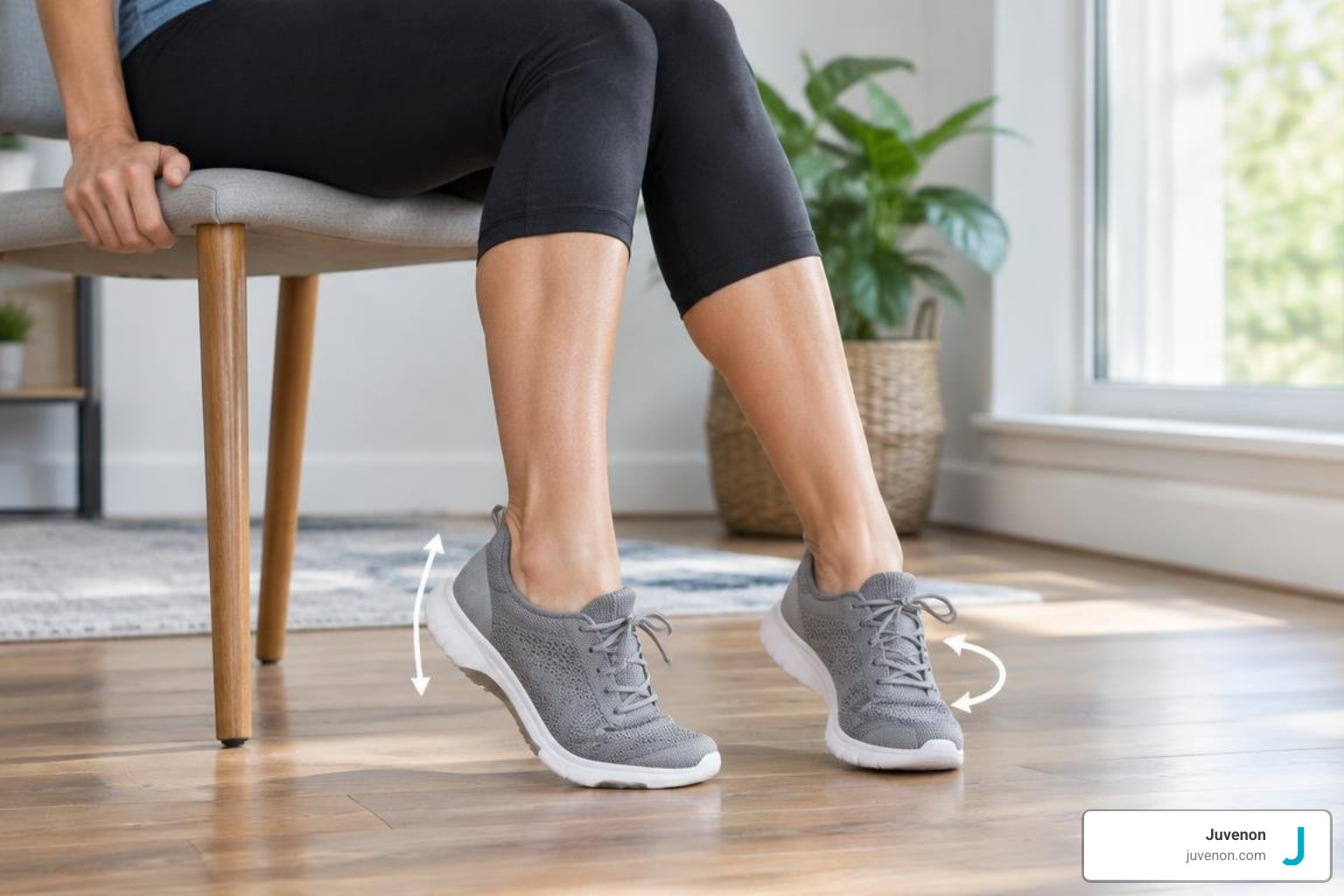
- Dynamic Foot and Calf Mobility: Perform simple seated movements throughout the workday: 20 ankle alphabets, 30 seated calf raises, and periodic toe flexions. These motions contract the soleus and gastrocnemius muscles, activating the venous pump even during desk-bound hours.
Targeted Nutritional Support for Vascular Health
Beyond foundational lifestyle modifications, nutritional compounds can provide targeted biochemical support for vascular function and microcirculation. Our vascular endothelium relies on a vital signaling molecule known as nitric oxide (NO) to instruct the smooth muscle cells lining arterial walls to relax, expand, and accommodate healthy blood volume.
As we age, natural endothelial production of nitric oxide declines, contributing to increased arterial stiffness and reduced peripheral perfusion. Supplementing with specific amino acid precursors such as L-arginine and L-citrulline, combined with concentrated botanical extracts like beetroot and pine bark, helps maintain endogenous nitric oxide synthesis. Integrating targeted nitric oxide supplements help blood flow by supporting vascular elasticity, optimizing nutrient delivery to distal extremities, and maintaining microvascular integrity.
Frequently Asked Questions About Foot Circulation
Why do my feet feel cold even when the room is warm?
Persistent coldness in the feet when the surrounding environment is warm typically indicates reduced arterial blood delivery or heightened vasospastic activity. In vascular conditions like PAD, mechanical blockages reduce the volume of warm, oxygenated blood reaching the extremities.
In other instances, cold feet result from Raynaud’s phenomenon—an exaggerated vasospasm of the small digital arterioles triggered by mild temperature shifts or emotional stress. Systemic factors such as an underactive thyroid (hypothyroidism), iron-deficiency anemia, or autonomic nerve dysregulation can also diminish peripheral blood flow and alter temperature perception.
What is the difference between neuropathy and poor circulation?
While peripheral neuropathy and poor circulation share symptoms like numbness, burning, and tingling, they represent distinct physiological problems:
Because diabetes frequently damages both delicate microvascular beds and peripheral nerve fibers simultaneously, these conditions often coexist, requiring comprehensive medical evaluation.
When is foot swelling considered a medical emergency?
While gradual swelling in both ankles after a long flight is common, certain presentations require immediate medical evaluation. Seek urgent emergency care if you experience:
- Sudden, severe swelling occurring in only one leg or foot.
- Deep tenderness, warmth, or noticeable redness localized to the calf muscle (classic indicators of Deep Vein Thrombosis).
- Foot swelling accompanied by sudden chest pain, shortness of breath, coughing up blood, or lightheadedness (critical warning signs of a Pulmonary Embolism).
- A rapid onset of pale, cold, pulseless skin in an extremity accompanied by severe pain (signs of Acute Limb Ischemia).
- A foot sore exhibiting rapid spreading redness, red streaks tracking up the leg, foul-smelling drainage, or an accompanying fever.
Conclusion
Managing lower extremity vascular health requires sustained attention to the subtle signals our bodies send us. From recognizing the differences between arterial claudication and venous pooling to adopting daily protective habits, early action helps protect your long-term mobility and quality of life. Left unchecked, small circulatory issues can progress into chronic discomfort, slow-healing wounds, and serious vascular complications.
At Juvenon, we believe in supporting lifelong vitality through scientifically backed, proactive health habits. Supporting vascular wellness involves a multi-layered approach: pairing daily physical movement, smoking cessation, and targeted foot hygiene with scientifically researched nutritional compounds that support endothelial elasticity and microvascular blood flow.
Taking consistent care of your circulation today protects your independence and mobility for tomorrow. Learn more practical strategies by exploring circulation ways to increase blood flow and take confident, proactive steps toward lasting lower extremity health.