What Is Vegan Collagen and How Does It Support Skin Health?

The best vegan collagen for skin depends on your target outcome: ingestible powders provide deep, systemic structural support and long-term elasticity, while topical serums offer immediate surface barrier hydration and plumping. To understand how plant-based alternatives work, we have to look at what happens beneath the surface. Natural collagen synthesis begins slowing down in our mid-twenties, decreasing by approximately 1% per year. Year after year, our cellular machinery produces less of this structural protein, leading to fine lines, slower cellular turnover, and reduced dermal elasticity. Traditional supplements use animal connective tissues to provide collagen peptides, but plant-based formulas take an entirely different—and innovative—path.
Plants do not naturally contain collagen. Instead, our bodies build the complex triple-helix structure of skin collagen from specific amino acids—primarily glycine, proline, and hydroxyproline—assisted by essential micronutrients. Plant-based solutions deliver these exact precursors directly to your cells alongside vital anti-aging vitamins like vitamin C. As detailed by biomedical research on collagen structure and synthesis, the availability of these specific substrates directly determines how effectively human dermal fibroblasts can manufacture new matrix proteins.
When we supply our bodies with the right building blocks, our cellular factories (fibroblasts) have everything they need to maintain healthy tissue architecture. Rather than introducing foreign animal proteins, vegan formulas optimize your body's intrinsic biological pathways by fueling endogenous collagen creation and preventing existing matrix degradation.
True Plant-Derived Peptides vs. Collagen Builders
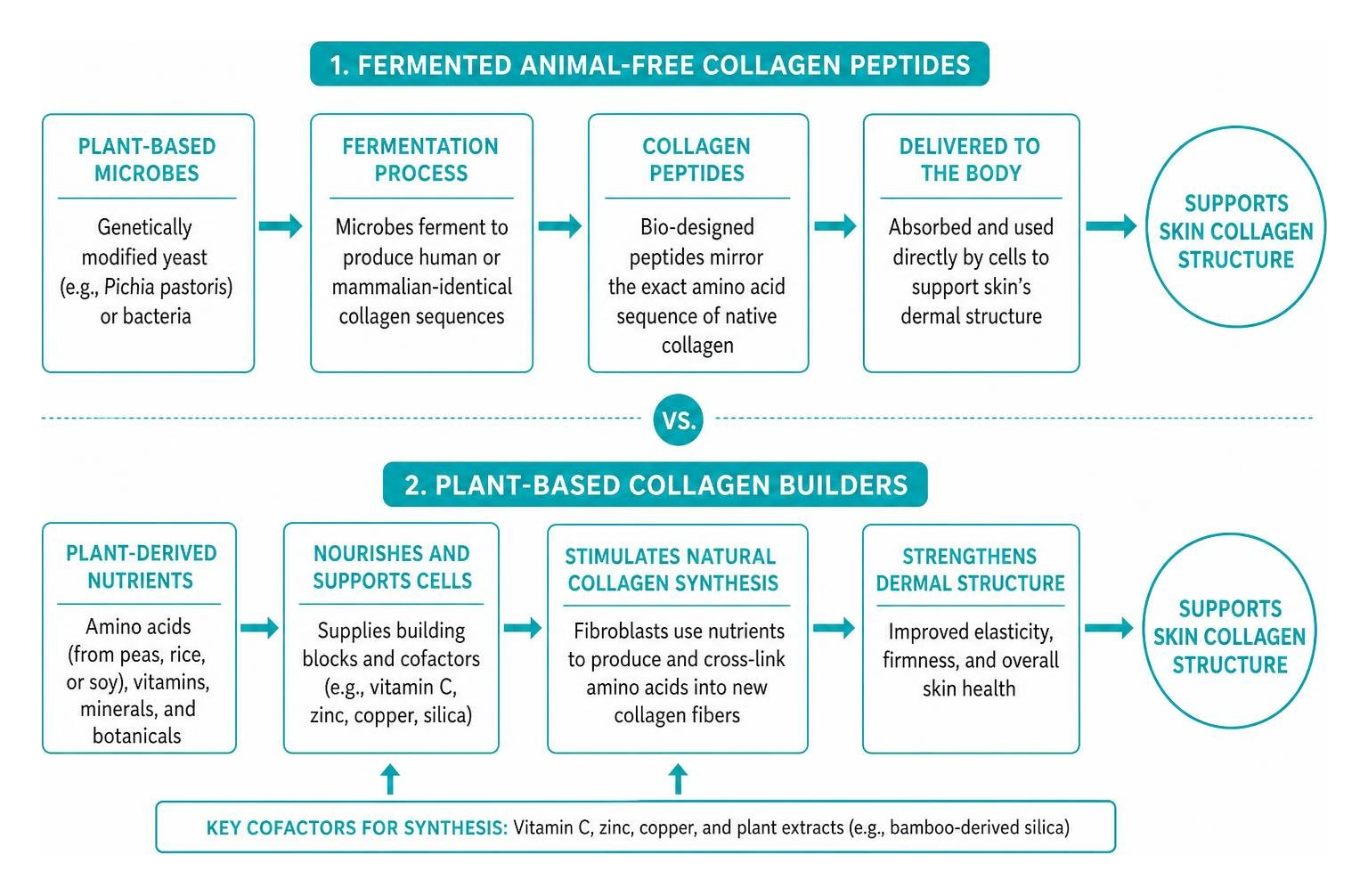
In the modern wellness space, you will encounter two distinct categories of vegan collagen:
- Fermented Animal-Free Collagen Peptides: Scientists use genetically modified yeast (such as Pichia pastoris) or bacteria to ferment genuine human or mammalian-identical collagen sequences. These bio-designed proteins mirror the exact amino acid sequence of native collagen without using any animal tissue.
- Plant-Based Collagen Builders: These botanical complexes combine targeted amino acids (from peas, rice, or soy), trace minerals, and plant extracts that encourage your body to synthesize its own structural proteins. Pairing these formulas with whole foods that help you look younger provides full-spectrum nutritional support.
How Plant-Based Boosters Stimulate Natural Synthesis
Your fibroblasts require specific cofactors to cross-link amino acids into sturdy collagen fibers. Without adequate vitamin C, the enzymes prolyl hydroxylase and lysyl hydroxylase cannot function, stalling new collagen formation entirely. Plant boosters also supply zinc, copper, and specialized botanicals like bamboo-derived silica to reinforce connective tissue integrity. This multi-pathway support provides a foundational strategy for anyone exploring how to reduce wrinkles that come with age.
Choosing the Best Vegan Collagen for Skin: Powders vs. Topical Serums
Choosing between an ingestible powder and a topical serum comes down to whether you want deep, systemic support or instant surface hydration. Both offer distinct physiological benefits:
| Feature | Vegan Collagen Powder | Topical Vegan Collagen Serum |
|---|---|---|
| Primary Mechanism | Systemic nutrient delivery via digestion | Epidermal barrier hydration and surface smoothing |
| Active Target | Deep dermis fibroblasts and whole-body tissue | Stratum corneum (outer skin layer) |
| Key Ingredients | Amino acid complexes, Vitamin C, Zinc, Silica | Plant peptides, Hyaluronic acid, Botanical extracts |
| Onset of Visible Results | 4 to 12 weeks of daily nutritional support | Immediate plumping and surface barrier hydration |
| Best For | Structural elasticity, firmness, systemic aging | Dehydrated skin, fine surface lines, radiant glow |
Essential Nutrients in the Best Vegan Collagen for Skin Powders
Ingestible powders provide whole-body support by delivering high concentrations of amino acids straight to your bloodstream. When evaluating the best oral collagen alternatives, look for clean formulas that include:
- Isolated Plant Amino Acids: Pure glycine, proline, and lysine derived from fermented legumes or grain proteins that fuel fibroblast activity directly.
- Organic Vitamin C: Sourced from acerola cherry or amla fruit to stimulate enzymatic synthesis and safeguard newly formed collagen fibrils.
- Natural Bamboo Silica: A bioavailable mineral that promotes hair, nail, and skin resilience by stabilizing the extracellular matrix.
- Biotin and Zinc: Essential micronutrients that protect cellular DNA, support tissue repair, and encourage healthy keratin formation.
Consistently consuming these nutrients allows you to experience the systemic benefits of collagen supplements while staying 100% plant-based and avoiding animal-derived additives.
What to Look for in the Best Vegan Collagen for Skin Serums
While oral powders nourish the deep dermis from within, a dedicated serum guards the skin barrier against transepidermal water loss and external oxidative stress. Top-tier topical formulations utilize biomimetic plant peptides and vegetable-derived collagens that create a breathable moisture seal over the stratum corneum.

For targeted external care, selecting the best topical collagen for skin can transform a lackluster complexion by optimizing hydration and smoothing surface texture. Clinical trials on high-performance topical options demonstrate remarkable real-world performance:
- 90% of women in a consumer trial reported smoother, better-hydrated skin after their very first application.
- 87% stated their skin felt significantly less dry and tight throughout the day.
- 80% noticed their complexion looked noticeably more radiant and rested.
- Laboratory tests showed that the plant-derived collagen protein outperformed a standard 1% animal-derived soluble collagen solution for moisture binding at ambient humidity levels below 60%.
By layering a topical serum over clean skin morning and evening, you lock in moisture while oral supplements work beneath the surface.
Key Formulations and Nutrients to Look for in Plant Collagen
Achieving healthy, glowing skin requires a comprehensive approach. Integrating your supplements into a routine of inside-out skin care ensures you address dermal health from every angle.
When reviewing product labels, prioritize the following synergy:
- Hyaluronic Acid: A master humectant that holds up to 1,000 times its weight in water, cushioning skin cells from within and enhancing plumpness.
- Ascorbic Acid (Vitamin C): The essential catalyst for collagen remodeling and a potent antioxidant that shields cells from UV-induced free radicals.
- Polyphenols and Anthocyanins: Bioactive plant antioxidants from berries, pomegranate, and green tea that neutralize oxidative stress before it degrades existing collagen matrix proteins.
- Targeted Mineral Complexes: Bioavailable zinc and copper to activate lysyl oxidase, an enzyme essential for cross-linking elastin and collagen fibers, which is especially beneficial when selecting collagen for women over 50.
Experts recommend pairing these targeted formulas with five to nine daily servings of fresh fruits and vegetables to supply a steady stream of protective antioxidants and phytonutrients. Consistency matters more than intensity here: a modest but daily intake of these nutrients, sustained over months, produces far better results than sporadic high doses. Many people find it helpful to track their supplement and produce intake for a few weeks to identify any gaps in their routine.
Beyond diet and supplementation, lifestyle factors such as adequate sleep, stress management, and sun protection play a significant supporting role in how efficiently your body uses these nutrients. Chronic stress elevates cortisol, which can accelerate the breakdown of existing collagen fibers, while poor sleep limits the overnight repair window your skin relies on for cellular turnover. For a deeper understanding of how these nutrients work together to support overall vitality, explore the benefits of collagen supplements and how they support whole-body vitality.
Frequently Asked Questions About Vegan Collagen
How long does it take to see results from vegan collagen supplements?
Oral plant-based collagen boosters work gradually through biological pathways. Most individuals notice enhanced skin hydration, improved softness, and noticeable radiance after 4 to 6 weeks of daily use. Structural benefits like firmer skin, softened fine lines, and improved dermal elasticity generally become evident around the 8-to-12-week mark, aligning with the natural 28-to-40-day skin cell regeneration cycle. Topical serums provide immediate surface hydration and subtle plumping within minutes of application. Many brands recommend running a dedicated 30-day trial period, tracking hydration and texture changes with weekly photos, so you can objectively evaluate whether a specific formula is delivering visible skin elasticity improvements before committing to a longer-term routine.
Can vegan collagen work as effectively as animal collagen?
Yes. While animal collagen supplies pre-formed animal peptides that your digestive system must break down into basic amino acids, plant-based boosters supply the precise amino acids and enzymatic cofactors your body uses directly to produce its own human collagen. Furthermore, plant-derived proteins and peptides have been shown to match or outperform animal collagen in surface moisture retention during low-humidity conditions without risking common digestive sensitivities. Consumer satisfaction surveys consistently echo these clinical findings, with a majority of users reporting comparable or superior hydration and smoothness when switching from animal-derived formulas to plant-based alternatives.
Are there any side effects when taking plant-based collagen boosters?
Plant-based collagen boosters are generally very well-tolerated. Minor side effects are rare but may include mild digestive adjustments if a powder contains high amounts of prebiotic fiber, resistant starches, or specific botanical extracts. Always check ingredient labels for potential personal allergens (such as soy, wheat, or tree nuts) and consult your healthcare provider before beginning a new supplement regimen, especially if you are pregnant, nursing, or managing a medical condition. Choosing formulas with clean, minimally processed ingredient lists can further reduce the likelihood of unwanted reactions while maximizing nutrient absorption.
Conclusion
Whether you choose a nutrient-dense powder, a high-performance botanical serum, or a dynamic combination of both, supporting your skin with plant-based alternatives is an effective way to maintain long-term radiance and firmness. By providing your body with clean amino acids, essential vitamin catalysts, and deep hydration, you can effortlessly support your skin and joint vitality at every stage of life.