Why Blood Flow in the Lower Legs Matters

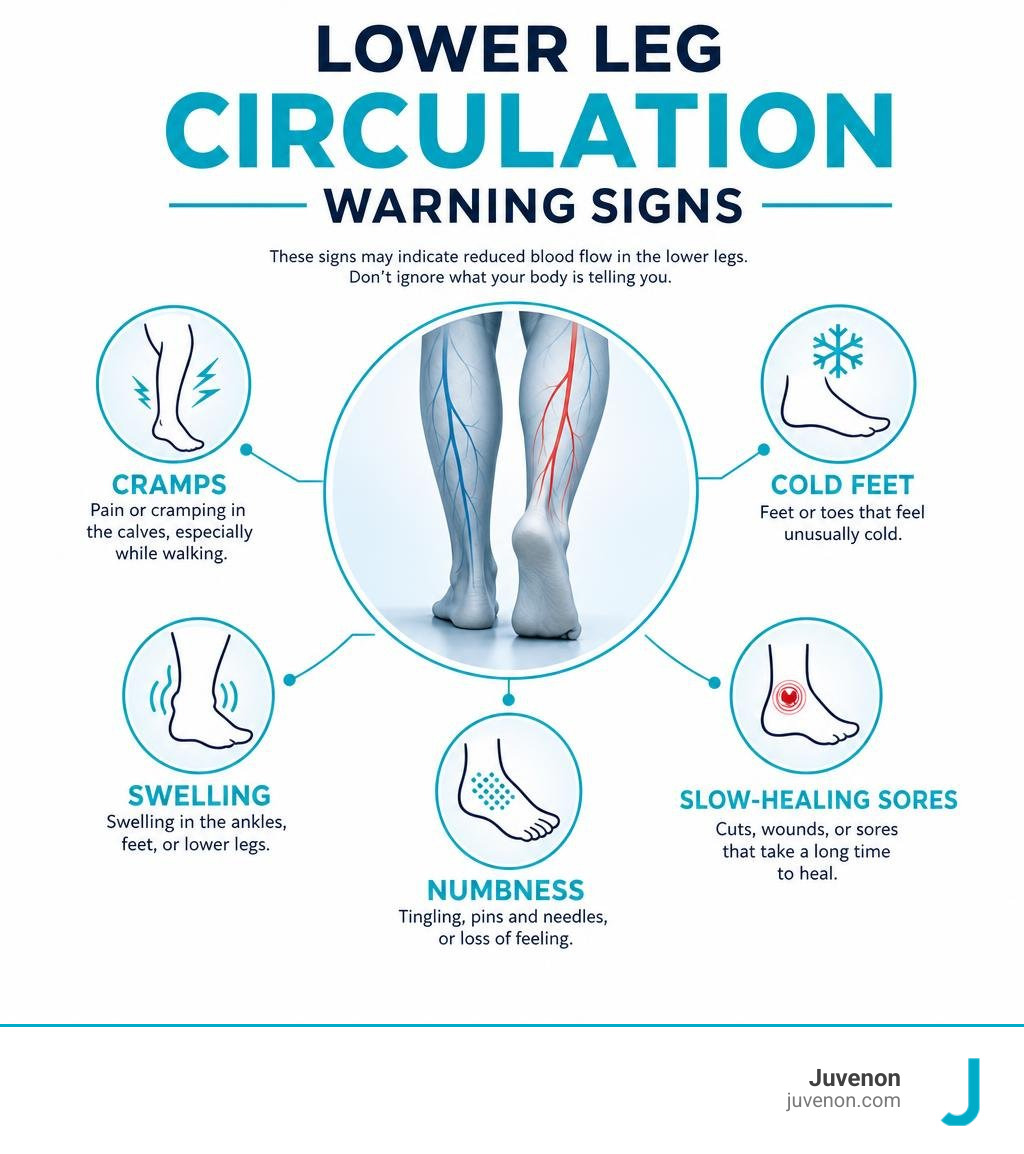
Blood flow lower legs can decrease when arteries become narrowed, veins do not return blood well, or a clot blocks circulation. Common warning signs include cold feet, calf cramps during walking, numbness, swelling, skin color changes, weak pulses, and sores that heal slowly.
| Possible sign | What it may suggest |
|---|---|
| Cramping or aching with walking that improves with rest | Peripheral artery disease (PAD) |
| Swelling, heaviness, or bulging veins | A vein problem, such as chronic venous insufficiency |
| One leg suddenly swollen, warm, red, or painful | A possible blood clot that needs urgent care |
| Foot pain at rest, pale or blue skin, or a non-healing sore | Severely reduced circulation and prompt medical evaluation |
Leg circulation is not just about comfort. Your arteries bring oxygen-rich blood to the muscles, skin, and feet. Your veins must then carry blood back toward the heart. When either part of this system struggles, everyday symptoms can be an early signal of a vascular condition.
PAD is one of the most important causes of reduced arterial flow. It usually develops when fatty plaque narrows leg arteries. Yet symptoms are not always obvious: up to 4 in 10 people with PAD may have no leg pain. That makes new coldness, exercise-related cramps, skin changes, or slow-healing cuts worth taking seriously.
This guide will help you understand what changes in blood flow in the lower legs can mean and which warning signs deserve attention.
Understanding Vascular Health and Restricted Blood Flow Lower Legs
To understand how restricted circulation develops, we first need to look at how blood travels through the lower extremities. Your circulatory system relies on a continuous, two-way highway.
Oxygen-rich blood travels away from your heart through high-pressure vessels called arteries. These arteries divide into smaller vessels and microvascular capillaries, delivering oxygen, glucose, and essential nutrients to the skeletal muscles and skin tissue of your calves and feet.
Once your tissues extract these nutrients, carbon dioxide and cellular waste products are collected by low-pressure vessels called veins. Your veins must then push blood back upward against the force of gravity to return it to the heart and lungs.
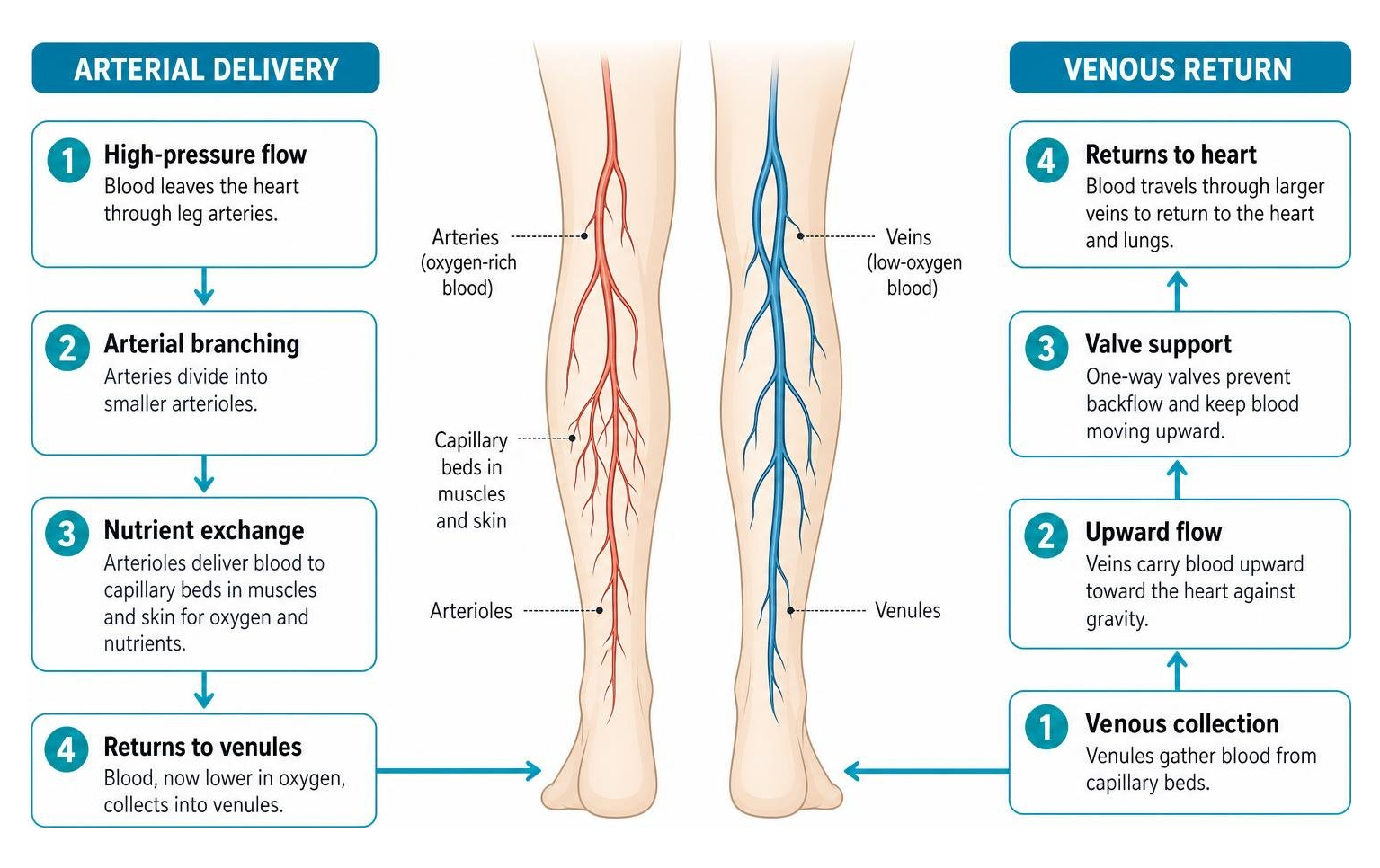
When this balanced mechanism encounters obstacles, vascular resistance rises, and peripheral tissue perfusion declines. Understanding poor blood circulation starts with identifying whether the issue lies within the arterial delivery system, the venous return pathway, or both.
Systemic conditions like atherosclerosis gradually restrict arterial passageways, making it difficult for nutrient-rich blood to reach lower limb tissues during activity or rest.
Primary Causes of Poor Leg Circulation
Reduced arterial and venous function in the lower extremities typically stems from several distinct underlying conditions:
- Atherosclerosis and Plaque Buildup: Atherosclerosis is the primary driver of arterial narrowing. Over time, elevated cholesterol, calcium, and cellular debris form hardened deposits called plaque inside the inner lining of leg arteries. This narrowing increases resistance, restricts oxygen delivery, and leads to peripheral artery disease.
- Peripheral Artery Disease (PAD): PAD is the clinical manifestation of severe arterial narrowing in the limbs. It restricts blood flow lower legs need during physical effort, causing tissue hypoxia and localized muscle fatigue.
- Deep Vein Thrombosis (DVT): A blood clot formed deep within lower leg veins physically obstructs blood returning to the heart. DVT causes sudden localized swelling, warmth, and pain, and poses a serious medical risk if the clot dislodges and travels toward the lungs.
- Diabetes Complications: Chronic hyperglycemia damages the delicate endothelial lining of microvascular capillaries and promotes arterial stiffness. Diabetes also causes peripheral neuropathy, which can mask the pain signals normally triggered by poor circulation.
- Varicose Veins and Venous Insufficiency: When one-way venous valves inside the calves become damaged or stretched, blood flows backward and pools in superficial veins. This venous stasis causes high pressure in lower leg veins, leading to swelling, skin discoloration, and visible varicose veins.
How the Calf Muscle Pump Supports Blood Flow Lower Legs
Because blood returning from your feet to your heart must travel uphill against gravity, your body relies on a specialized physical pump located in your lower extremities: the calf muscle pump.
Often referred to by vascular specialists as the "secondary heart," the deep muscle compartments of the calf—primarily the gastrocnemius and soleus muscles—contract around deep intramuscular veins whenever you flex your ankles or take a step.
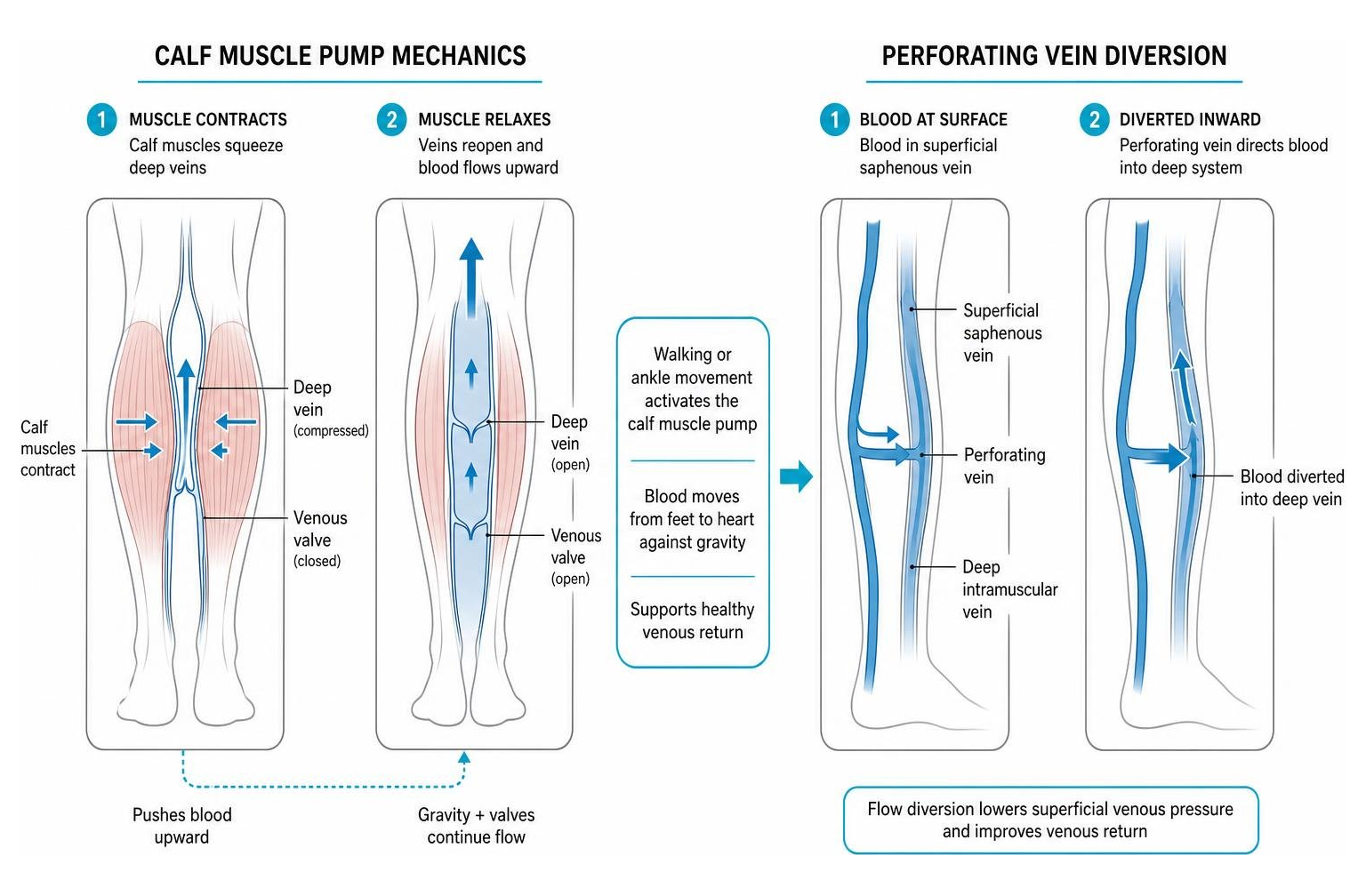
Recent vascular research highlights that the human lower leg muscle pump functions primarily as a flow diverter pump. During movement, contraction of the calf muscles compresses internal deep veins, while relaxation creates a pressure gradient.
Perforating veins, which connect superficial saphenous veins to deep intramuscular veins, direct blood horizontally inward from the surface into the deep system. According to a landmark scientific study on lower leg muscle pump mechanics, this continuous flow-diversion mechanism lowers superficial venous pressure dramatically during exercise.
In healthy individuals, walking or dynamic heel-raising drops lower leg ambulatory venous pressure by more than 60% compared to standing still, reaching low mean values of 30 to 40 mmHg. When physical inactivity, vein damage, or calf muscle weakness impairs this pump, blood pools in the lower extremities, leading to chronic venous congestion and tissue strain.
Warning Signs and Risk Factors of Reduced Leg Circulation

When lower extremity arterial or venous channels narrow, your body provides clear signals that tissues are being deprived of adequate circulation. Recognizing these signs early allows for effective lifestyle and medical interventions before permanent tissue damage occurs.
Recognizing Common Symptoms and Risk Factors
The symptoms of restricted circulation range from mild discomfort during exertion to noticeable physical changes in your skin, nails, and feet.
- Intermittent Claudication: This hallmark symptom of PAD causes localized leg muscle cramps, aching, tightness, or deep fatigue in the calves, thighs, or buttocks during walking or stair climbing. The pain predictably subsides after a few minutes of standing still or resting, as metabolic demand decreases.
- Persistent Cold Feet and Lower Legs: When blood flow is restricted, lower extremities lose their primary source of warmth. You may notice one foot or calf feeling substantially colder to the touch than the other.
- Numbness, Tingling, or Weakness: Inadequate oxygen supply disrupts peripheral nerve function, producing a "pins and needles" sensation or weakness in the feet and calves.
- Skin and Hair Changes: Impaired microvascular perfusion causes lower leg skin to appear smooth, thin, pale, or unusually shiny. Hair growth on the calves, ankles, and toes may slow down significantly or stop altogether.
- Weak or Absent Pulses: Vascular clinicians assessing lower leg blood flow often find diminished or unpalpable pulses at the top of the foot (dorsalis pedis pulse) or behind the inner ankle (posterior tibial pulse).
Certain demographics and lifestyle habits dramatically elevate your vulnerability to vascular disease. According to an official CDC report on peripheral arterial disease, PAD affects approximately 6.5 million adults aged 40 and older in the United States alone.
Key risk factors include:
- Age Over 50: Vascular walls naturally lose elasticity and become stiffer as we age, increasing susceptibility to atherosclerosis.
- Smoking History: Tobacco smoke contains toxic compounds that render arterial walls sticky, encouraging plaque buildup, accelerated arterial narrowing, and severe vascular spasm.
- Chronic Health Conditions: High blood pressure (hypertension), elevated LDL cholesterol, and diabetes each cause direct structural damage to arterial vessel walls.
- Sedentary Lifestyle: A lack of regular dynamic movement weakens the calf muscle pump and decreases baseline nitric oxide production, which is necessary for endothelial health and vasodilation.
Untreated Complications and Long-Term Risks
Ignoring early symptoms of impaired leg circulation can lead to severe structural and systemic health issues over time.
When arterial blockages become advanced, blood flow falls below the minimal threshold required to keep tissues alive at rest. This critical stage is known as Critical Limb Ischemia (CLI).
Individuals with CLI suffer from severe, burning rest pain in the toes and feet—frequently worsening at night when lying flat—alongside non-healing arterial ulcers, localized tissue necrosis (gangrene), and a significantly heightened risk of lower extremity amputation.
Beyond local tissue damage, systemic vascular restrictions carry widespread health implications. For instance, reduced arterial blood flow is strongly linked to microvascular and arterial complications throughout the entire body; in fact, PAD is thought to be the underlying cause in roughly 70% of erectile dysfunction cases.
Reading a comprehensive overview of leg circulation complications reinforces why early detection matters. If you are struggling with fluid accumulation alongside reduced flow, exploring natural solutions for leg swelling can offer additional guidance on managing venous pressure.
Medical Evaluation, Diagnostics, and Emergency Warning Signs
If you experience persistent leg pain, coldness, or swelling, obtaining a clinical vascular assessment is essential. Early professional evaluation can pinpoint the precise origin of circulation problems and prevent minor blockages from progressing into advanced vascular disease.
A typical clinical exam begins with physical inspection and pulse palpation. Your doctor will feel the arterial pulses in your groin, behind your knees, at your inner ankles, and on the tops of your feet.
Decreased pulse strength, localized arterial bruits (whooshing sounds heard through a stethoscope), skin pallor when elevating the leg, or delayed capillary refill in the toes provide immediate diagnostic clues. Consult a reliable MedlinePlus medical reference on PAD to learn more about standard vascular examination procedures.
Understanding the underlying mechanisms behind vascular decay is especially important for individuals with metabolic conditions. Reviewing how diabetes causes poor circulation helps clarify how chronic blood sugar elevations accelerate endothelial damage in lower leg vessels.
Diagnostic Tests Used to Assess Blood Flow Lower Legs
To accurately quantify the severity and locations of arterial blockages or venous reflux, healthcare providers employ several non-invasive diagnostic tools:
| Diagnostic Test | What It Measures | Clinical Purpose |
|---|---|---|
| Ankle-Brachial Index (ABI) | Compares systolic blood pressure at the ankle to blood pressure in the upper arm using a specialized Doppler probe. | Evaluates lower limb arterial blockages; an ABI value under 0.90 indicates peripheral artery disease. |
| Doppler Ultrasound | Uses high-frequency sound waves to visualize blood vessel structure and measure the speed and direction of blood flow. | Detects venous clots (DVT), valve insufficiency in varicose veins, and arterial plaque obstructions. |
| Segmental Pressure Testing | Measures blood pressure at multiple levels along the leg (thigh, calf, ankle) using inflatable cuffs. | Pinpoints the exact anatomical location of arterial narrowing in the leg. |
| Angiography (CT, MRA, or Invasive) | Uses contrast dye alongside X-rays, computed tomography, or magnetic resonance to map arterial interiors. | Provides detailed roadmaps of blood vessel blockages prior to surgical or interventional procedures. |
When to See a Doctor or Seek Emergency Care
While many circulation issues develop gradually, certain symptoms represent immediate medical emergencies requiring urgent care:
- Severe Rest Pain: Experiencing persistent burning or aching pain in your toes or feet while lying in bed, especially if hanging your foot over the edge of the bed offers temporary relief.
- Sudden Loss of Feeling or Movement: Experiencing sudden numbness, weakness, or inability to move your foot or toes.
- Rapid Color Changes: A foot or lower leg suddenly turning stark white, dark purple, or mottled blue.
- Signs of Acute Deep Vein Thrombosis: Sudden, rapid-onset swelling in a single leg, accompanied by intense calf tenderness, localized heat, and skin redness.
- Non-Healing Ulcers or Darkened Skin: Any break in the skin, cut, or sore on the foot or leg that shows no sign of healing after two weeks, or skin that appears black or foul-smelling (gangrene).
Effective Ways to Restore Circulation and Prevent Vascular Disease

Fortunately, positive lifestyle choices, target nutritional support, and medical interventions can improve lower extremity circulation, stimulate new blood vessel growth, and lower risks. Applying recommendations from the Cleveland Clinic guide to poor circulation helps build a strong foundation for lifelong vascular resilience.
Lifestyle Modifications and Preventive Daily Habits
At Juvenon, we advocate for proactive, daily habits that strengthen your cardiovascular system naturally. Incorporating these simple habits into your routine can improve blood flow lower legs rely on every day:
- Engage in Structured Walking Routines: Regular walking is the single most effective natural therapy for poor leg circulation. When you walk to the point of moderate claudication discomfort, pause to rest, and resume walking, you stimulate the formation of new microvascular bridges—a biological adaptation called collateral circulation. Aim for 30 minutes of low- to moderate-intensity walking most days of the week.
- Quit Smoking Immediately: Quitting tobacco removes aggressive chemical toxins that cause vasoconstriction and arterial wall stiffness. Heart rate and blood pressure begin normalizing within just 20 minutes of quitting smoking.
- Elevate Your Legs Above Heart Level: When resting at home after a long day, prop your lower legs up on pillows above the level of your heart for 15 to 20 minutes. Gravity helps drain pooled venous blood from your calves, lowering ambulatory venous pressure and reducing tissue edema.
- Stay Well-Hydrated: Adequate daily water intake prevents hemoconcentration (excessively viscous or "thick" blood), allowing blood to flow more smoothly through narrow capillaries.
- Practice Foot and Leg Care Daily: Inspect your feet daily for small cuts, blisters, or dry skin, particularly if you have diabetes. Wear supportive, properly fitted shoes to prevent pressure sores.
- Optimize Your Daily Nutrition: Adopt a heart-healthy diet rich in antioxidant compounds, nitrate-dense vegetables (like beets and leafy greens), and omega-3 fatty acids, while minimizing sodium, trans fats, and added sugars.
Medical Treatments and Interventional Procedures
When lifestyle habits need additional medical support, physicians utilize targeted pharmacotherapy and procedural interventions:
- Antiplatelet Medications: Drugs such as low-dose aspirin or clopidogrel reduce the risk of blood clot formation along narrowed arterial walls.
- Statin Therapy: Cholesterol-lowering statin medications help stabilize existing plaque inside arteries, reducing vascular inflammation and preventing further arterial narrowing.
- Vasoactive Medications: Specific prescription medications, such as cilostazol, help dilate lower extremity arteries and reduce red blood cell aggregation, directly improving painless walking distances for individuals with claudication.
- Compression Therapy: Wearing gradient compression stockings gently compresses superficial leg veins, pushing stagnant venous blood into deep veins and back toward the heart. (Note: Compression stockings must be used under medical supervision, as they are contraindicated in individuals with severe arterial PAD).
- Interventional Procedures: For advanced blockages, vascular specialists can perform minimally invasive angioplasty (using a tiny balloon to stretch open narrowed arteries) with stent placement, or perform surgical bypass surgery to reroute blood flow around blocked vessel segments.
Frequently Asked Questions About Leg Circulation
Can walking improve poor leg circulation?
Yes, regular walking is one of the most effective non-surgical ways to improve lower leg blood flow. When you participate in a structured walking program, alternating periods of walking with brief rest periods, the temporary metabolic demand forces your body to open small auxiliary blood vessels.
Over time, this process creates collateral circulation—a natural bypass network that routes oxygenated blood around clogged leg arteries. Walking also strengthens the calf muscle pump, improving venous return and reducing leg swelling.
Why do my lower legs feel cold at night?
Lower legs often feel colder at night due to changes in posture and baseline physiology. When you lie flat in bed, you lose the gravitational force that helps pull blood down into your lower legs during the day.
If your arteries are narrowed by atherosclerosis or PAD, the lowered driving pressure resting in a horizontal position can reduce microvascular blood flow to your feet even further. Additionally, body temperature naturally drops during sleep, making restricted blood supply more noticeable.
Is coldness in lower legs always a sign of PAD?
No, coldness in the lower legs is not exclusively caused by peripheral artery disease. While PAD is a major cause, cold feet can also result from environmental exposure, peripheral neuropathy (nerve damage that impairs blood vessel constriction controls), chronic venous insufficiency, hypothyroidism, or Raynaud's phenomenon.
However, if one leg or foot is consistently colder than the other, or if coldness is accompanied by pain, skin color changes, or poor wound healing, you should schedule a vascular assessment with a medical professional.
Conclusion
Maintaining healthy blood flow lower legs need is crucial for preserving long-term mobility, independence, and overall cardiovascular well-being. By recognizing early warning signs—such as claudication cramps, cold feet, skin texture changes, or leg swelling—you can take proactive steps long before minor circulation issues turn into severe vascular complications.
From adopting structured walking routines and elevating your legs to quitting smoking and eating a nutrient-rich diet, everyday choices make a meaningful difference in your vascular health.