Simple Ways to Check Blood Circulation at Home

You can check blood circulation at home by comparing both feet and legs for color, warmth, swelling, sensation, and pulse strength. A quick nail-bed test can also help: press a toenail until it turns pale, release, and watch for color to return in under 2 seconds. These checks cannot diagnose a condition, but they can help you spot changes worth discussing with a clinician.
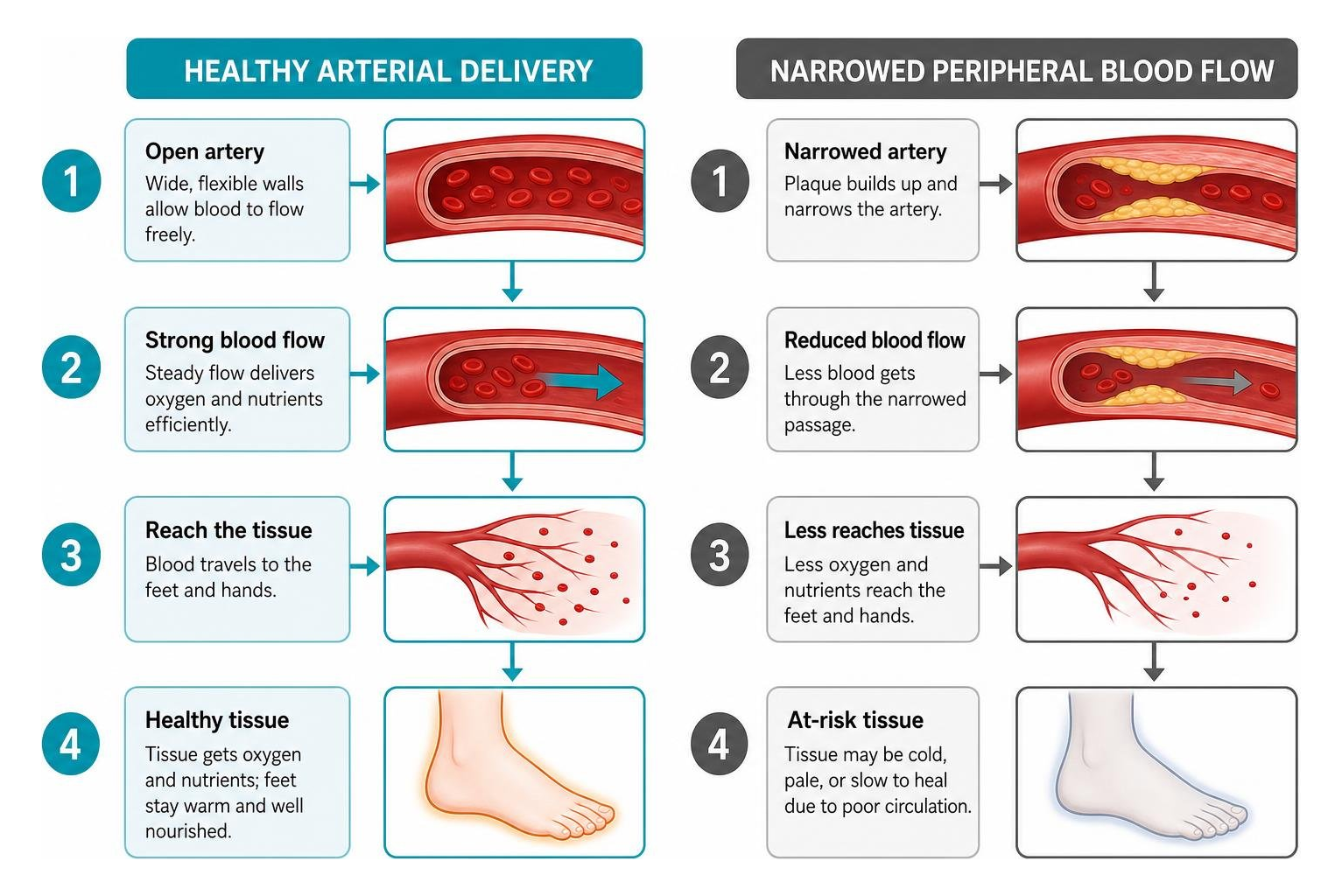
Poor circulation means blood is not moving efficiently enough to deliver oxygen and nutrients to tissue. Problems often show up first in the feet and hands because they are farthest from the heart. Think of blood flow like a delivery route: narrowed arteries, damaged veins, or a clot can slow or block the delivery.
At-home checks matter because peripheral artery disease (PAD) can be quiet. Nearly 40% of people with PAD have no symptoms, yet early warning signs can include cold feet, cramps during walking, skin color changes, or slow-healing sores.
I’m Michelle M. Henson, a copywriting leader and legal compliance editor with more than two decades of experience translating health information into clear, responsible guidance. In this guide to how to check blood circulation at home, I’ll help you use simple observations without treating a self-check as a medical diagnosis.
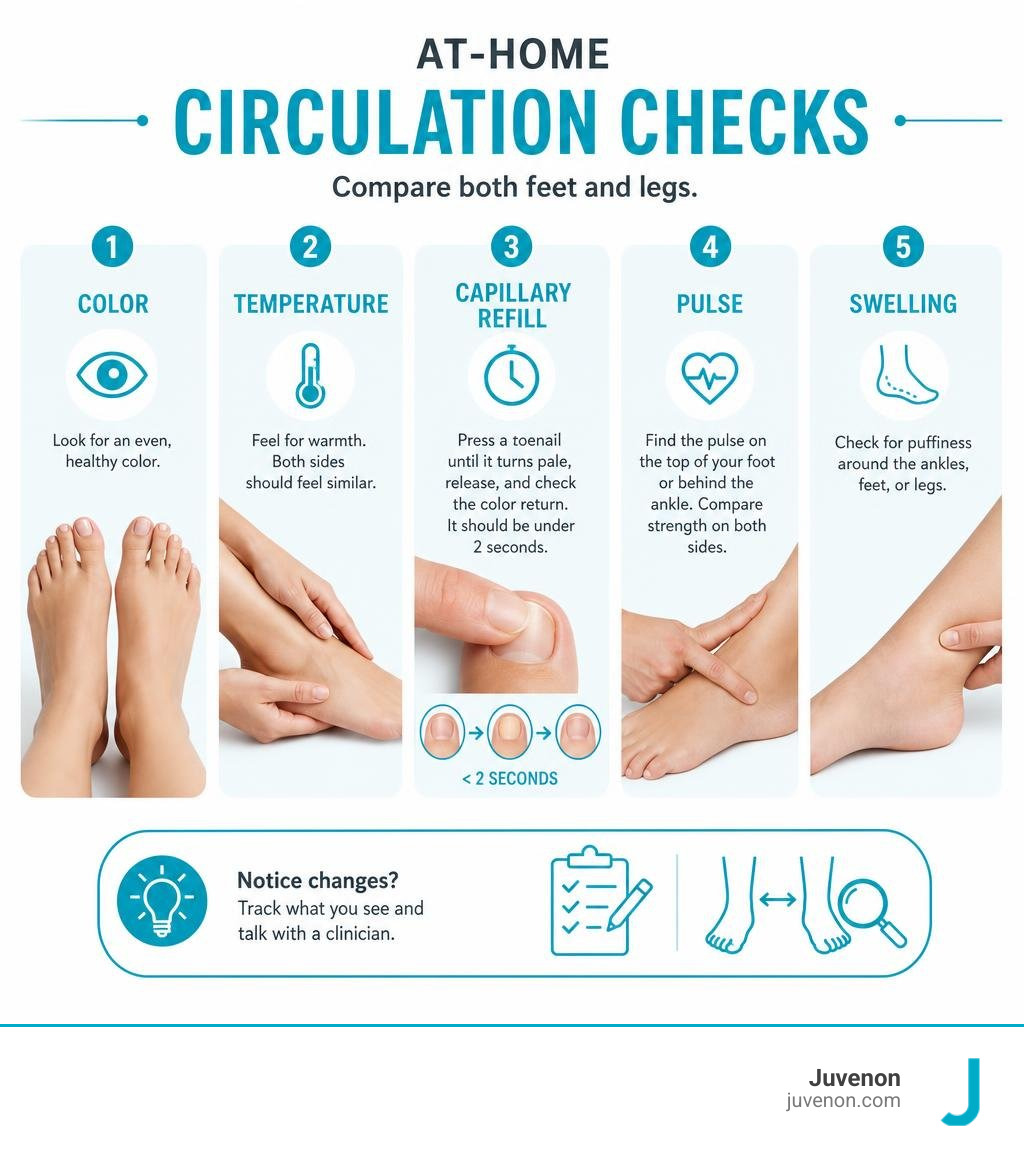
Know your how to check blood circulation at home terms:
Understanding Blood Flow and Who Needs to Monitor It
Our circulatory system is an expansive, 60,000-mile network of vessels that transports oxygenated blood away from the heart through arteries and returns deoxygenated blood back via veins. When everything runs smoothly, cellular waste is removed, energy remains steady, and our limbs feel warm and energized. However, when arterial walls narrow due to plaque or tiny vein valves weaken, peripheral tissue gets deprived of vital resources.
Anyone can experience occasional sluggish blood flow after sitting cross-legged for too long, but certain risk factors demand routine monitoring. Adults older than 40, individuals carrying excess weight, and those with sedentary daily habits face elevated risk for arterial and venous challenges. Understanding how diabetes causes poor circulation to the lower extremities is especially critical, as chronic high blood sugar damages blood vessel linings and numbs nerve endings, masking early vascular damage.
In the United States, Peripheral Artery Disease affects an estimated 8 to 8.5 million adults. Between 12% and 20% of people over age 60 live with some degree of arterial narrowing. Because roughly 40% of those affected experience zero early symptoms, taking five minutes to review understanding poor blood circulation symptoms, causes and treatments and keeping a regular 5 Minute daily circulation checklist helps you take proactive ownership of your cardiovascular health.
Step-by-Step Guide: How to Check Blood Circulation at Home
Before starting any home test, set up a stable testing environment. Sit comfortably on your couch in a room with a moderate, warm temperature. Cold air naturally constricts peripheral vessels, which can skew your results. Rest for 5 to 10 minutes so your breathing and heart rate settle into their baseline rhythms.
The golden rule of home assessment is bilateral comparison: always test both sides of your body. Vascular issues rarely progress at the exact same rate in both limbs, so comparing your left foot against your right foot provides an immediate baseline for spotting asymmetries.
Capillary Refill: How to Check Blood Circulation at Home in Seconds
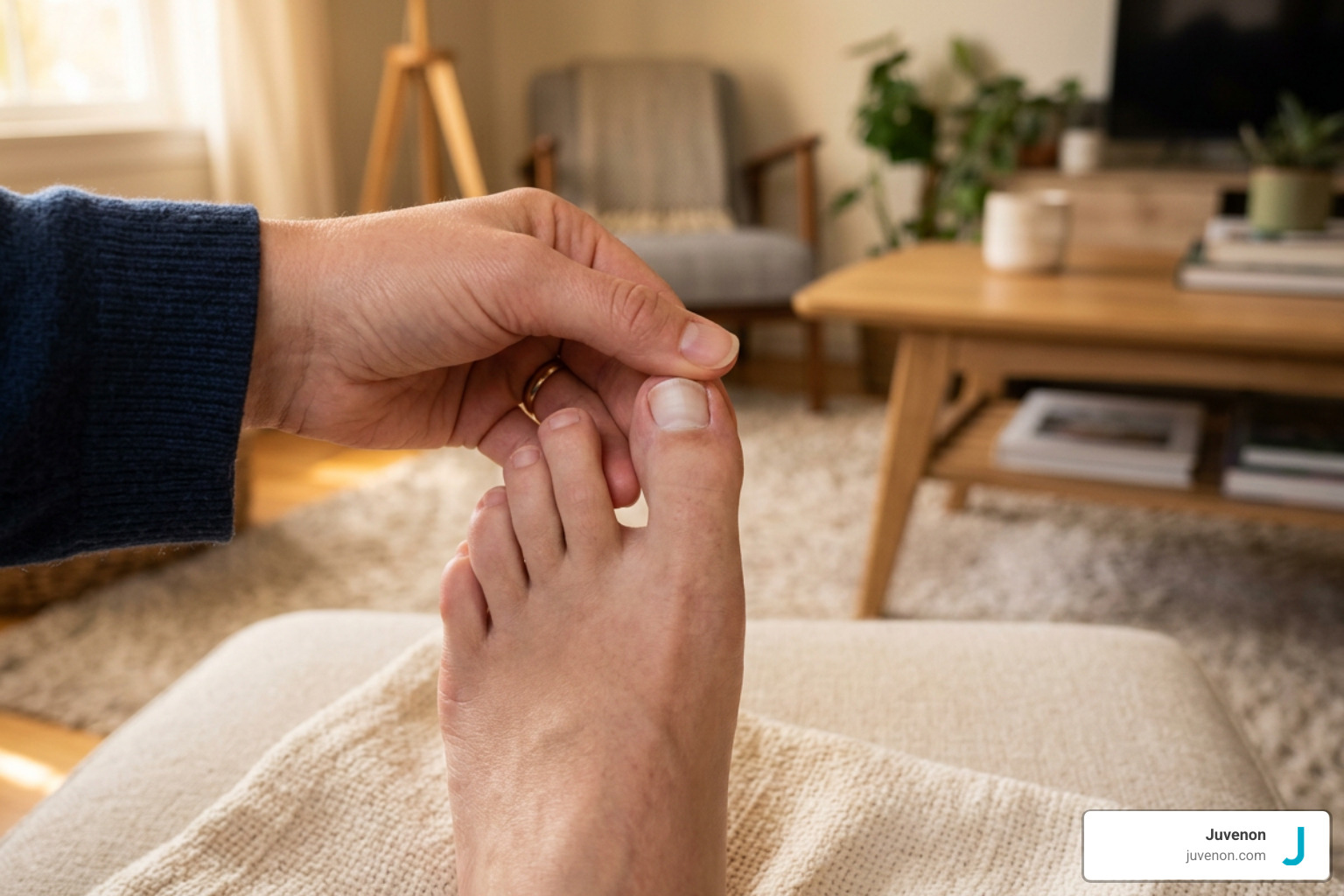
The capillary refill test evaluates microvascular perfusion—how rapidly your tiniest blood vessels refill with blood after being compressed.
- Sit comfortably and bring your bare foot or hand into reach.
- Firmly press down on the center of a fingernail or toenail bed for 5 seconds until the tissue turns pale (blanches).
- Release the pressure instantly and count the seconds it takes for your normal pink tone to return.
In healthy circulation, the flush of color should return in less than 2 seconds. If color takes 3 seconds or longer to reappear, it suggests sluggish microcirculation. While dehydration or chilly fingers can cause temporary delays, learning cold hands ways to improve your circulation at any age can help you restore warmth and optimize microvascular responsiveness.
Pulse Palpation: How to Check Blood Circulation at Home via Foot Pulses
Palpating your peripheral pulses verifies that blood pressure waves are travelling completely down your legs into your feet.
- Dorsalis Pedis Pulse: Place the pads of your index and middle fingers flat against the top of your foot, along the bony ridge running between your big toe and second toe. Press gently until you feel a light, rhythmic beat.
- Posterior Tibial Pulse: Move your fingertips to the inside of your ankle, resting them in the soft groove just behind the prominent ankle bone (medial malleolus).
- Radial Baseline: For comparison, place your fingers on the inside of your opposite wrist beneath your thumb to gauge your baseline pulse strength.
A normal adult resting heart rate sits between 60 and 100 beats per minute (BPM). If your foot pulse feels faint, irregular, or difficult to detect compared to your wrist, note which foot is affected. Tracking circulation in feet across several days will give your doctor valuable diagnostic clues.
The Leg-Elevation and Pillow Drop Test
Also known clinically as a modified Buerger’s test, this posture-based assessment evaluates how well your arteries fight gravity to supply blood.
- Lie flat on your back on the couch and prop both legs up on a stack of pillows at a 45-degree angle.
- Keep them elevated for 60 seconds while gently pointing and flexing your toes.
- Observe the color of your soles: do they remain pink, or do they turn pale, chalky, or white (elevation pallor)?
- Quickly swing your legs over the edge of the sofa so they dangle at a 90-degree angle.
- Time how long it takes for normal color to return.
In healthy arteries, feet retain their healthy color during elevation and recover within 10 to 15 seconds after lowering. If your feet turn white while raised and take more than 20 to 30 seconds to flush into a deep reddish-purple (dependent rubor) when lowered, this suggests reduced arterial inflow. These simple DIY home circulation screening tests offer accessible ways to track changes over time.
Visual and Sensory Screening from Your Sofa
While resting on your sofa, run through this sensory and visual checklist:
- Skin Temperature: Use the back of your hand to feel your thighs, calves, ankles, and toes. A temperature difference greater than 2°C (or 2–3°F) between corresponding limbs warrants a closer look.
- Hair Growth Patterns: Reduced nutrient delivery causes hair follicles on the lower shins and toes to thin out or stop growing entirely, leaving the skin looking unusually smooth or shiny.
- Nail Health: Thick, brittle toenails with ridges can reflect chronically slowed peripheral flow.
- Pitting Edema: Press your thumb firmly into the front of your shin or ankle bone for 5 seconds. If a visible dimple or indentation remains after releasing, fluid retention from venous pooling may be present.
- Sensory Symptoms: Pay attention to chronic tingling, "pins and needles," or frequent nighttime muscle cramps in your calves.
If fluid accumulation or nighttime tightness is causing discomfort, exploring natural solutions for swollen or painful legs and feet can help ease daily strain.
Interpreting Results: From the Ankle-Brachial Index to Red Flags
In clinical settings, doctors evaluate blood flow using the Ankle-Brachial Index (ABI). This non-invasive test divides the systolic blood pressure measured at your ankle by the systolic pressure measured at your upper arm.
$$\text{ABI} = \frac{\text{Ankle Systolic Pressure}}{\text{Arm Systolic Pressure}}$$
A healthy, normal ABI ranges between 1.0 and 1.4. A calculated ratio below 0.9 indicates potential arterial narrowing or peripheral artery disease, while values under 0.5 suggest advanced blockage. While some try to approximate an ABI at home with a standard blood pressure cuff, home cuffs lack the Doppler ultrasound probes used by clinicians. As a result, home ABI measurements are screening estimates rather than formal medical diagnoses.
It is also important to differentiate between ordinary muscle fatigue and vascular claudication. Generalized muscle fatigue feels like a dull ache across both legs after a strenuous workout and fades gradually with rest. Claudication is a specific, cramp-like tightness in the calf, thigh, or buttock that appears predictably after walking a set distance and resolves within minutes of standing still.
| Circulation Check | Normal Finding | Warning Indicator (Discuss with Doctor) |
|---|---|---|
| Capillary Refill | Color returns in under 2 seconds | Color takes 3+ seconds to return |
| Foot Pulses | Strong, rhythmic, easily felt bilaterally | Weak, absent, or noticeable difference between feet |
| Pillow Elevation Test | Feet remain pink; color returns in <15 sec | Marked pallor when raised; dark red/purple when lowered |
| Skin Temperature | Both limbs uniformly warm | One foot or calf distinctly colder than the other |
| Skin & Hair Texture | Consistent hair growth and elastic skin | Shiny, hairless skin on lower legs; slow-healing cuts |
| Tissue Swelling | No persistent indentations after pressure | Deep indentation (pitting) lingering after pressing ankle |
Emergency Red Flags
Home checks help you monitor trends, but certain symptoms require immediate emergency care:
- Sudden loss of sensation or complete numbness in a foot or leg.
- Severe, sudden leg pain that strikes while resting or lying down in bed.
- A foot that becomes abruptly cold, pale, or bluish-black.
- Open sores, dark ulcers, or cuts on the feet that show signs of infection or refuse to heal.
Natural Ways to Boost Peripheral Circulation Daily
If your home checks show mild sluggishness without red flags, targeted lifestyle adjustments can support arterial elasticity and daily vascular health:
- Incorporate Low-Impact Movement: Aim for at least 150 minutes of moderate aerobic activity weekly. A brisk 10-to-20-minute daily walk activates the calf muscle pump, gently compressing deep veins to drive blood back toward the heart.
- Elevate Your Legs: Propping your feet above heart level for 15 to 20 minutes at the end of the day relieves venous pressure and reduces fluid retention.
- Stay Well-Hydrated: Dehydration lowers total blood volume and thickens the blood, making microvascular circulation harder. Drink water consistently throughout the day.
- Nourish with Circulation Foods: Fill your plate with nitrate-rich leafy greens, citrus fruits high in vitamin C, and omega-3 fatty acids from walnuts and fatty fish. Learn how to skyrocket your nitric oxide levels in 5 steps and incorporate proven 5 circulation boosting foods to support blood vessel relaxation.
- Wear Graduated Compression Socks: If you stand or sit for long periods at work, compression stockings prevent blood from pooling around your ankles.
- Eliminate Tobacco: Smoking damages arterial walls and triggers instant vasoconstriction. Within just 20 minutes of quitting, your heart rate and peripheral vascular pressure begin to normalize.
Frequently Asked Questions About Checking Circulation
Can you accurately test your circulation at home with a smart watch?
Smart watches use photoplethysmography (PPG) optical sensors to track heart rate and estimate blood oxygen saturation ($SpO_2$). While wearable technology provides helpful long-term heart rate trends, it cannot assess local arterial narrowing in your lower legs or replace manual pulse palpation and capillary refill tests.
How often should you check blood circulation at home?
For generally healthy adults without cardiovascular symptoms, running through these DIY sofa checks once a month is plenty. If you are managing diabetes, high blood pressure, or a history of smoking, checking your feet weekly and keeping a brief symptom log helps you catch subtle vascular changes early.
What is the difference between arterial and venous circulation issues?
Arterial problems involve difficulty getting oxygen-rich blood down into the limbs, often causing cold skin, pale toes, and sharp cramping pain during activity. Venous issues involve difficulty pumping deoxygenated blood back up to the heart, leading to pooling, swelling, warmth, and heavy, aching legs.
Conclusion
Taking a few minutes to check your capillary refill, feel for pedal pulses, and monitor skin temperature from the comfort of your sofa gives you a clear window into your circulatory wellness. While these DIY techniques never replace a comprehensive medical examination, they empower you to spot early trends before minor vascular sluggishness turns into a larger issue.
At Juvenon, we believe proactive health begins with daily awareness and scientifically backed nutritional support. If you notice persistent coldness, delayed color return, or uneven swelling during your self-checks, log your observations and schedule a consultation with your healthcare provider. For more actionable strategies to support flexible vessels and healthy arterial function, explore our guide on circulation ways to increase blood flow today.