Does Ginkgo Biloba Help Circulation?

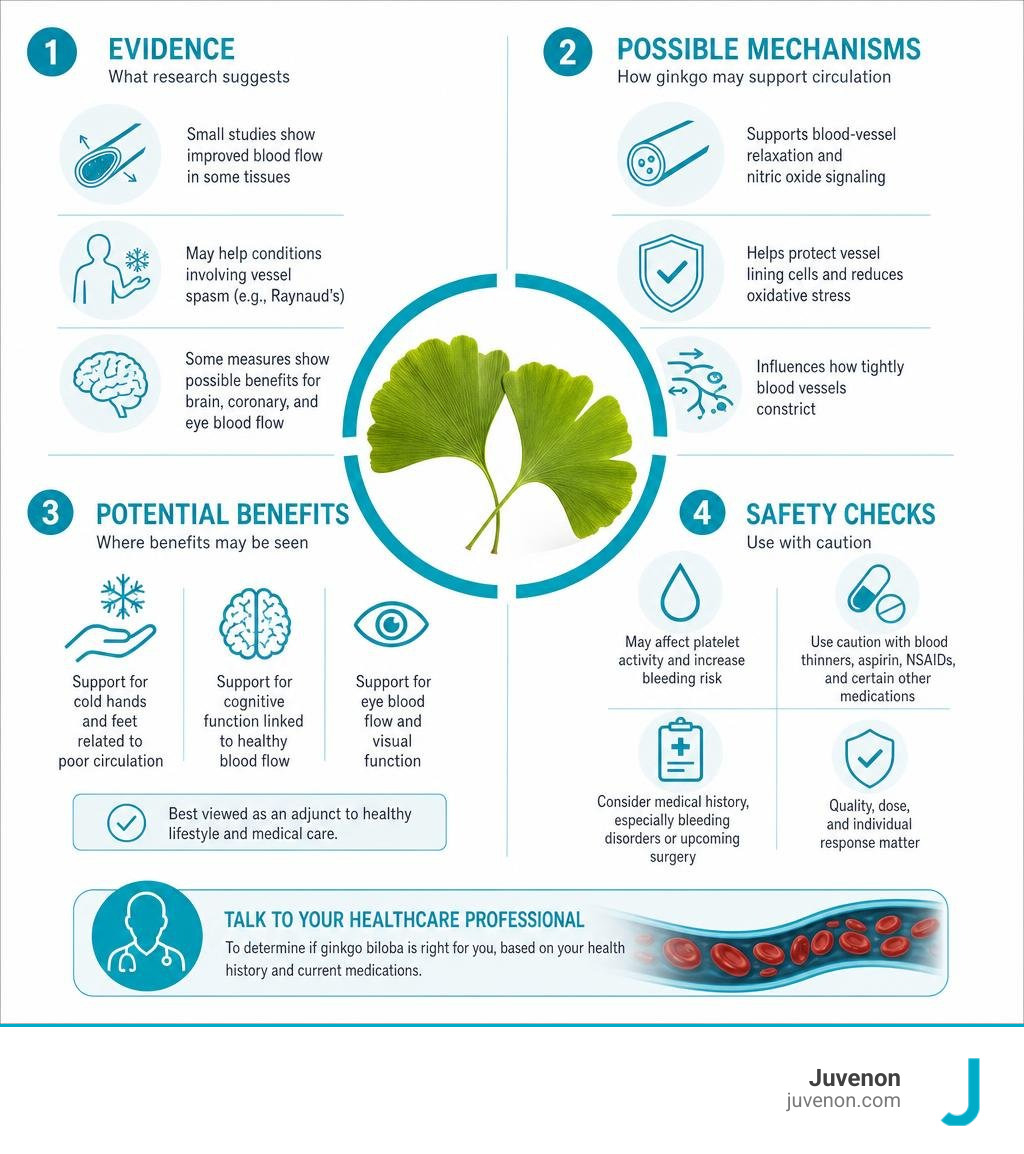
Ginkgo biloba may affect circulation, but the results are not the same for everyone or every part of the body. Research suggests that standardized ginkgo extracts can support blood-vessel relaxation, nitric oxide signaling, and small-vessel blood flow. Small clinical trials have found possible benefits for conditions involving vessel spasm, such as Raynaud's phenomenon, and some measures of brain, coronary, and eye blood flow.
That does not mean ginkgo is a proven treatment for poor circulation, peripheral artery disease, or heart disease. Larger studies, especially for leg pain from claudication, have produced mixed results. It may be best viewed as a possible adjunct to proven basics such as regular walking, not smoking, managing blood pressure and blood sugar, and following medical treatment for diagnosed vascular disease.
Ginkgo is one of the oldest living tree species, but its modern use depends on a carefully prepared leaf extract. Its flavonoids and terpene lactones may help protect vessel lining cells, reduce oxidative stress, and influence how tightly blood vessels constrict. Still, its effects can vary by tissue and by person. In one controlled study of healthy adults, average skin blood flow actually fell after ginkgo extract, even though some individuals had increased flow.
Ginkgo can also affect platelet activity and may raise bleeding risk when combined with blood thinners, aspirin, anti-inflammatory pain medicines, or certain other drugs. Quality, dose, medical history, and medication use matter as much as the ingredient itself.
I am Michelle M. Henson, a copywriting leader and legal compliance editor with more than 20 years of experience translating health research into clear, responsible content. In this guide to ginkgo biloba for circulation, I will separate promising mechanisms and early clinical findings from claims that still need stronger proof.
Ginkgo biloba for circulation terms at a glance:
The Science of Ginkgo Biloba for Circulation: Mechanisms of Action
To understand why researchers have spent decades studying Ginkgo biloba, we have to examine its underlying pharmacology. The therapeutic profile of ginkgo relies primarily on two main classes of bioactive constituents: flavonoid glycosides (such as quercetin, kaempferol, and isorhamnetin) and terpene trilactones (specifically ginkgolides A, B, C, J, and bilobalide).
Together, these compounds act as a multi-target botanical intervention. Rather than targeting a single cellular receptor, they influence vascular tone, cellular metabolism, and hemorheology (the properties of blood flow). In clinical evaluations, Ginkgo biloba extract improves coronary artery circulation by supporting the delicate equilibrium between endogenous vasodilators and vasoconstrictors.
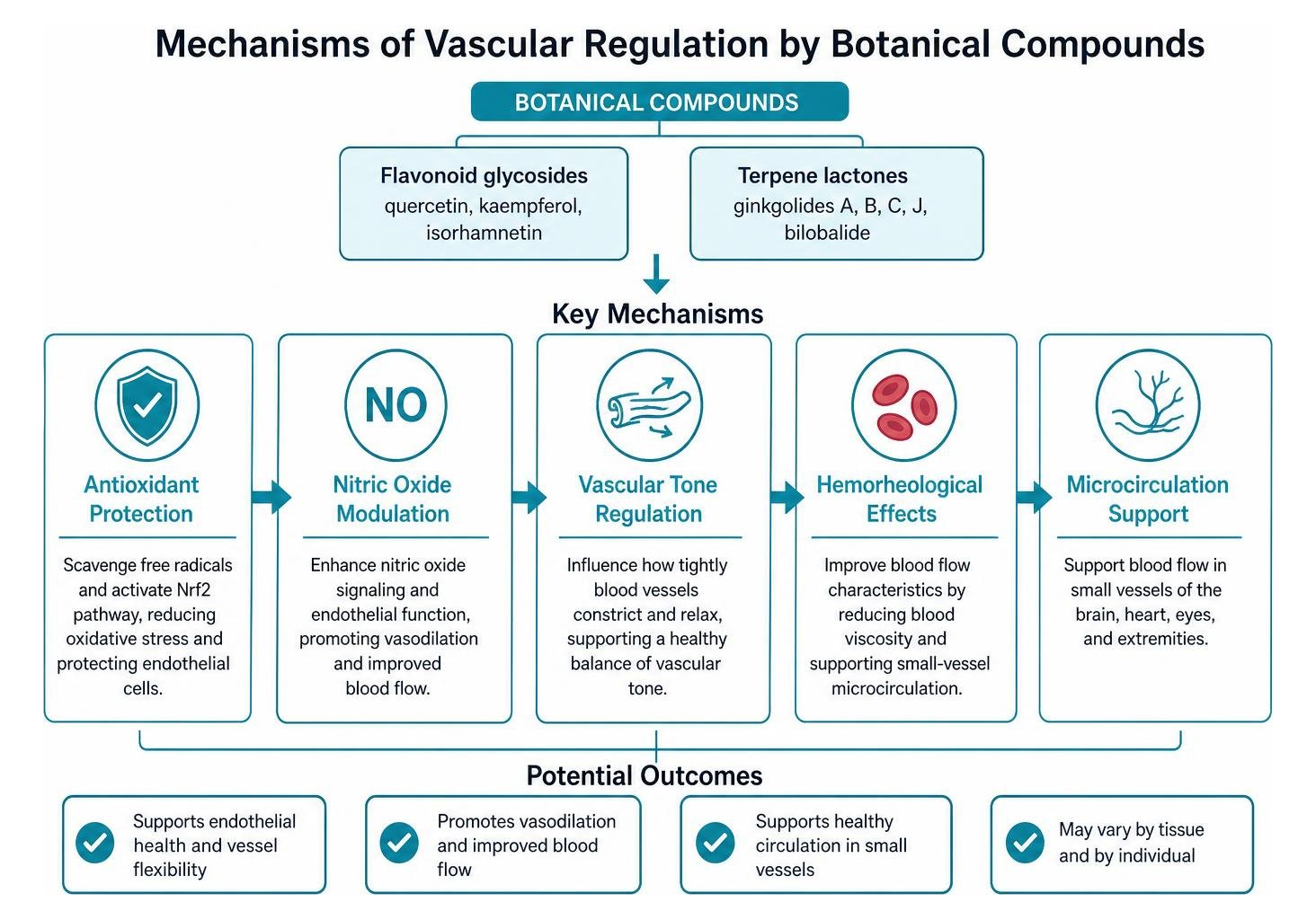
At the cellular level, ginkgo works as a potent free-radical scavenger, reducing oxidative stress within endothelial tissues. By neutralizing reactive oxygen species (ROS) and activating the Nrf2 antioxidant response pathway (Silva & Martins, 2022), the extract helps prevent oxidative damage to blood vessel walls. This antioxidant barrier preserves endothelial integrity, allowing vessels to dilate smoothly in response to physiological demand.
Nitric Oxide Modulation and Endothelial Vasodilation
Endothelial dysfunction—where the smooth inner lining of blood vessels loses its ability to regulate vascular tone—is a key contributor to circulatory stiffness. One of the primary pathways through which ginkgo supports blood flow is the nitric oxide (NO) pathway.
Nitric oxide is a gas synthesized by endothelial cells that signals vascular smooth muscle cells to relax, expanding the blood vessel lumen (vasodilation) and lowering peripheral resistance. In a landmark 2008 clinical study on patients with coronary artery disease:
- Ginkgo extract supplementation resulted in an immediate 12.4% increase in circulating nitric oxide.
- Concurrently, levels of endothelin-1 (ET-1), a potent vasoconstrictor peptide, dropped by 5.8%.
- This shifted the critical NO/ET-1 ratio upward by 19.5%, directly correlating with improved flow velocity in the left anterior descending coronary artery.
As highlighted in a comprehensive review on the Cardiovascular Activity of Ginkgo biloba-An Insight from Healthy Subjects, the extract stimulates endothelial nitric oxide synthase (eNOS) while modulating cyclic guanosine monophosphate (cGMP) pathways. This vasorelaxant effect helps maintain arterial elasticity across various vascular beds (Silva & Martins, 2022).
Platelet-Activating Factor (PAF) Antagonism and Blood Viscosity
Beyond widening the blood vessel channel, ginkgo helps blood move with less resistance by altering its rheological properties. Ginkgolide B is a specific, potent antagonist of Platelet-Activating Factor (PAF).
PAF is a lipid mediator that triggers platelet aggregation (stickiness), inflammation, and smooth muscle contraction. By inhibiting PAF binding to its receptors, ginkgo:
- Reduces abnormal platelet aggregation, making blood less viscous ("sticky").
- Increases erythrocyte (red blood cell) deformability, allowing red cells to bend and navigate through microscopic capillary networks.
- Stabilizes capillary membranes, preventing plasma leakage and reducing microvascular edema.
- Decreases arteriolar spasms, supporting stable microvascular perfusion.
Effects on Specific Vascular Beds and Circulatory Conditions
Circulatory health is not uniform throughout the body; blood flow to the brain operates under different pressures and regulatory mechanisms than blood flow to the fingertips or calves. Clinical investigations show that ginkgo displays a heterogeneous, multi-directional modulating action on tissue perfusion depending on baseline vascular tone, individual elimination pathways, and the specific vascular bed studied (Silva & Martins, 2022).
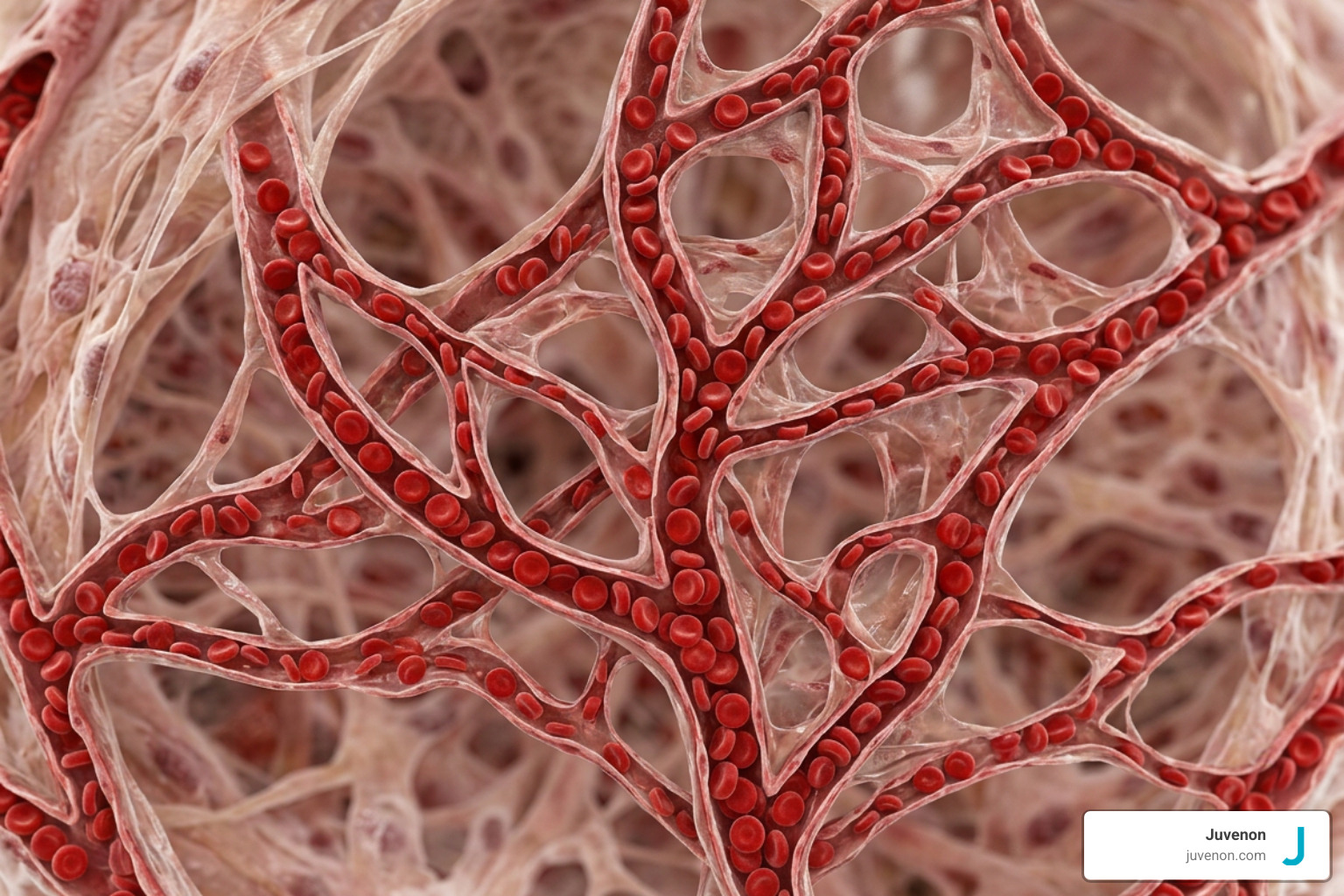
When individuals experience poor blood circulation symptoms—such as cold extremities, brain fog, or muscle fatigue—the issue often stems from localized resistance in specific microvascular beds.
Cerebral Blood Flow and Cognitive Perfusion
The brain demands approximately 20% of the body's resting oxygen supply despite accounting for only 2% of total body mass. Age-related vascular stiffening and microvascular insufficiency can compromise cognitive speed and memory retention.
Quantitative imaging provides objective insights into how ginkgo affects the central nervous system. In a dynamic susceptibility contrast study on cerebral blood flow assessed by MR perfusion, researchers detected measurable increases in global cerebral blood flow after short-term administration of standardized ginkgo extract (Mashayekh et al., 2011). The imaging revealed:
- A mean increase of 12% in cerebral blood flow in targeted regions compared to baseline.
- Enhanced microvascular perfusion in subcortical structures susceptible to ischemic changes.
- Neuroprotective support by facilitating oxygen and glucose uptake in cerebral tissue.
For individuals exploring ways to enhance blood circulation to brain, ginkgo offers physiological benefits by reducing vascular resistance within cerebral micro-vessels.
Clinical Evidence for Ginkgo Biloba for Circulation in Peripheral Arteries
Peripheral artery circulation—especially in the lower extremities and distal digits—is frequently compromised by structural narrowing or vasospastic disorders.
Intermittent Claudication
Intermittent claudication is characterized by cramping pain in the calves or buttocks during physical exertion, caused by arterial obstruction. Clinical trials examining standardized ginkgo extracts (such as EGb 761) for peripheral arterial disease have demonstrated:
- Small, placebo-controlled trials showed a ~30% increase in pain-free walking distance over 12 to 24 weeks.
- However, large-scale systematic reviews note that clinical improvements are modest compared to supervised exercise therapy and standard pharmacological vasodilators.
- Ginkgo may serve as a supportive adjunct for circulation support for lower legs, but it does not replace core medical therapies or daily physical activity.
Raynaud's Phenomenon
Raynaud's phenomenon involves exaggerated vasospasms of small digital arterioles in response to cold temperatures or emotional stress, leaving fingers and toes pale, cold, and painful.
- In a 10-week randomized, double-blind, placebo-controlled trial, participants taking a standardized ginkgo extract experienced a 56% reduction in the frequency of weekly vasospastic attacks, compared to a 27% reduction in the placebo group.
- By blunting arteriolar spasm and lowering blood viscosity, ginkgo provides functional support for individuals seeking ways to improve cold hands.
Ocular, Cochlear, and Microvascular Perfusion
The microvasculature supplying the retina and the inner ear (cochlea) is exceptionally fine and sensitive to pressure fluctuations and oxidative stress. Clinical evaluations indicate that ginkgo improves perfusion in these delicate capillary systems:
- Ocular Perfusion: Studies utilizing ocular color Doppler imaging reveal that ginkgo extract increases end-diastolic velocity in the ophthalmic artery and short posterior ciliary arteries, aiding patients with normal-tension glaucoma and vascular-related retinopathies.
- Cochlear Perfusion: By enhancing microcirculatory flow and cellular glucose utilization in the inner ear, ginkgo has been studied as an adjunctive support for vestibular disorders and sudden sensorineural microvascular disturbances.
- Cutaneous Vascular Nuances: In a double-blind crossover study assessing healthy middle-aged subjects receiving 240 mg/day of EGb 761, overall mean resting skin blood flow measured via laser Doppler flowmetry decreased slightly across the group (Boelsma et al., 2004). However, individual responses were multi-directional: participants with low baseline flow saw increases, while those with high baseline flow saw decreases, demonstrating a homeostatic, vasoregulatory modulation (Boelsma et al., 2004).
| Vascular Bed | Primary Clinical Findings | Typical Onset | Evidence Level |
|---|---|---|---|
| Cerebral | ~12% increase in regional perfusion via MR imaging (Mashayekh et al., 2011); enhanced glucose uptake | 2–4 weeks | Moderate |
| Coronary | 14.6% increase in diastolic peak velocity; 19.5% rise in NO/ET-1 ratio | 2 weeks | Moderate |
| Digital (Raynaud's) | 56% decrease in weekly vasospastic attack frequency | 4–10 weeks | Moderate |
| Peripheral Arteries | Modest gains in pain-free walking distance; mixed large-trial results | 8–12 weeks | Low-Moderate |
| Ocular / Retinal | Increased end-diastolic velocity in ophthalmic microvessels | 4 weeks | Moderate |
Standardization, Dosage Guidelines, and Safety Protocols
Not all botanical products deliver the same biological activity. The therapeutic efficacy observed in clinical trials is tied directly to standardized extracts, most notably the research grade EGb 761. Raw ginkgo leaves contain variable levels of active ingredients along with toxic substances that must be removed during extraction.
When selecting circulatory system supplements, consumers should look for extracts that adhere to strict pharmacopeial specifications:
- 24% Ginkgo Flavone Glycosides (quercetin, kaempferol, isorhamnetin)
- 6% Terpene Lactones (ginkgolides A, B, C and bilobalide)
- Less than 5 ppm Ginkgolic Acids (cytotoxic and allergenic compounds that can cause severe gastrointestinal or dermatological reactions if not purified)
Recommended Dosage of Ginkgo Biloba for Circulation Support
Clinical trials focusing on microvascular perfusion and peripheral vascular health generally utilize the following dosing protocols:
- Standard Daily Dose: 120 mg to 240 mg of standardized extract daily.
- Administration Frequency: Divided into 2 or 3 equal doses (e.g., 60 mg three times daily or 120 mg twice daily) taken with meals.
- Therapeutic Timeframe: While acute increases in nitric oxide and microvascular velocity can occur within 10 to 14 days, structural improvements in walking tolerance and vasospasm reduction generally require 8 to 12 weeks of consistent daily use.
Safety Profile, Drug Interactions, and Contraindications
While standardized ginkgo leaf extract is well-tolerated by most healthy adults, its biological effects require careful safety screening.
- Bleeding Risks and Anticoagulants: Because ginkgolides inhibit platelet-activating factor (PAF), ginkgo has an additive effect when combined with anticoagulants (warfarin, heparin, direct oral anticoagulants) and antiplatelet agents (aspirin, clopidogrel, NSAIDs). Concurrent use increases the risk of spontaneous hematomas or excessive bleeding.
- Surgical Procedures: Ginkgo supplementation must be discontinued at least 2 weeks prior to elective surgical or dental procedures to minimize hemorrhage risks.
- Seizure Disorders: Ginkgo leaves contain trace amounts of ginkgotoxin (4'-O-methylpyridoxine), which can lower the seizure threshold. Individuals with epilepsy or a history of convulsions should avoid ginkgo supplements.
- Cytochrome P450 Metabolism: Ginkgo extracts can induce or inhibit liver enzymes (including CYP2C9, CYP2C19, and CYP3A4), altering the blood concentrations of blood pressure medications (such as nifedipine or diltiazem), antidepressants (SSRIs, MAOIs), and oral hypoglycemic agents.
- Raw Seeds Toxicity: Unprocessed ginkgo seeds are toxic and potentially fatal due to high concentrations of ginkgotoxin. Only purified, standardized leaf extracts should be ingested.
For an extensive analysis of contraindications, consult health resources detailing Ginkgo biloba possible benefits and risks.
Frequently Asked Questions About Ginkgo Biloba and Blood Flow
How long does it take for Ginkgo biloba to improve circulation?
The onset of action depends on the specific vascular outcome being measured:
- Microcirculatory and Biochemical Changes: Increases in circulating nitric oxide and flow velocity in small arterioles can be detected within 10 to 14 days of initiating a daily 120–240 mg regimen.
- Functional Vascular Outcomes: Measurable relief from digital vasospasms (Raynaud's) or improvements in intermittent claudication walking times typically require 8 to 12 weeks of continuous supplementation.
Does Ginkgo biloba interact with blood thinners or prescription medications?
Yes. Ginkgo acts as a mild antiplatelet agent by antagonizing Platelet-Activating Factor (PAF). Taking it alongside prescription anticoagulants (like warfarin or Eliquis), over-the-counter anti-inflammatories (ibuprofen, naproxen), or aspirin significantly increases the risk of bruising and gastrointestinal bleeding. Always consult your prescribing physician before combining ginkgo with prescription therapies.
Can Ginkgo biloba help with cold hands and feet?
Ginkgo may help relieve cold extremities when the cause is functional vasospasm or poor capillary microcirculation (such as in primary Raynaud's phenomenon). By relaxing small digital arterioles and decreasing blood stickiness, it facilitates warmer blood flow to distal capillary beds. However, if cold hands and feet stem from advanced arterial blockage, nerve damage, or thyroid dysfunction, ginkgo alone will not resolve the root cause.
Conclusion
The clinical evidence for Ginkgo biloba demonstrates a versatile, multi-target botanical extract capable of supporting endothelial nitric oxide production, reducing blood viscosity, blunting arteriolar spasms, and enhancing microvascular perfusion in the brain, heart, and extremities (Silva & Martins, 2022).
However, ginkgo is not a magic cure for structural vascular disease. Its clinical effects are modest and nuanced, functioning best as a supportive component within an integrative vascular wellness routine. Maximizing vascular health requires a multi-faceted lifestyle strategy that includes regular physical exercise, balanced nutrition, stress control, and proven clinical therapies.
To learn more about optimizing your cardiovascular health and discovering comprehensive ways to increase blood flow, explore our research-backed guides and targeted nutritional formulas designed for cellular vitality and healthy aging.
References
Mashayekh A, Pham DL, Yousem DM, Dizon M, Barker PB, Lin DD. "Effects of Ginkgo biloba on cerebral blood flow assessed by quantitative MR perfusion imaging: a pilot study.." Neuroradiology, 2011. PMCID PMC3163160. Boelsma E, Lamers RJ, Hendriks HF, van Nesselrooij JH, Roza L. "Evidence of the regulatory effect of Ginkgo biloba extract on skin blood flow and study of its effects on urinary metabolites in healthy humans.." Planta medica, 2004. PMID 15549661. Silva H, Martins FG. "Cardiovascular Activity of Ginkgo biloba-An Insight from Healthy Subjects.." Biology, 2022. PMID 36671707.