Why Improving Blood Circulation to Your Brain Matters More Than You Think

If you've ever wondered how to improve blood circulation to your brain, here's a quick answer before we dive deeper:
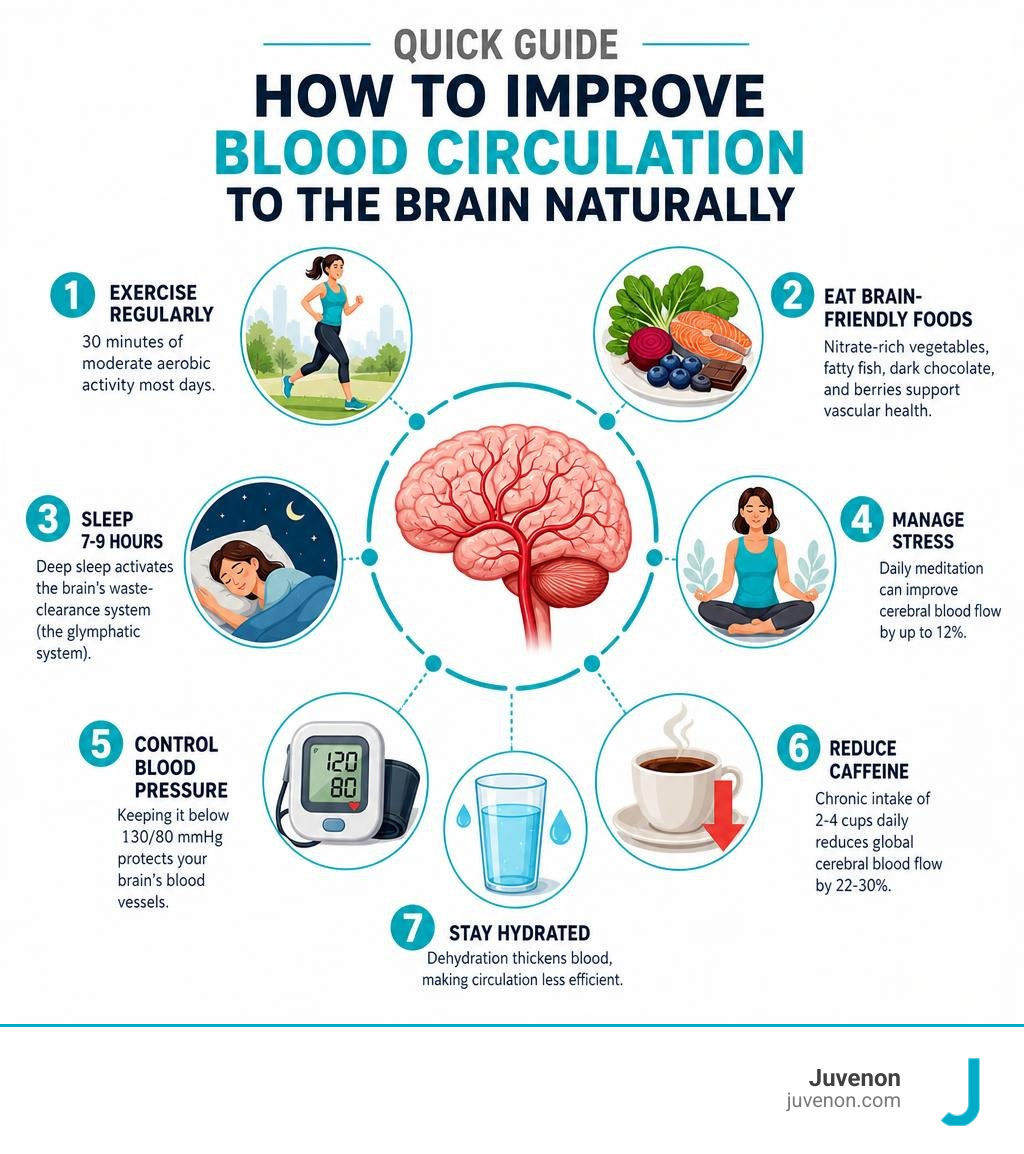
How to Improve Blood Circulation to Your Brain:
- Exercise regularly — 30 minutes of moderate aerobic activity most days increases cerebral blood flow by 10-20%
- Eat brain-friendly foods — nitrate-rich vegetables, fatty fish, dark chocolate, and berries support vascular health
- Sleep 7-9 hours — deep sleep activates the brain's waste-clearance system (the glymphatic system)
- Manage stress — daily meditation can improve cerebral blood flow by up to 12%
- Control blood pressure — keeping it below 130/80 mmHg protects your brain's blood vessels
- Reduce caffeine — chronic intake of 2-4 cups daily reduces global cerebral blood flow by 22-30%
- Stay hydrated — dehydration thickens blood, making circulation less efficient
Your brain is a remarkable organ. It weighs only about 3 pounds — just 2% of your body weight — yet it demands roughly 20% of your body's total oxygen and blood flow just to keep you thinking, remembering, and functioning.
That's an enormous ask from a very small organ.
When blood flow to the brain slows down, everything slows down with it. You might notice it as that frustrating mid-afternoon fog, a word that's right on the tip of your tongue, or a growing difficulty focusing on tasks that used to feel effortless.
Here's the part that should get your attention: reduced blood flow to the brain is the number one brain-imaging predictor that a person will develop Alzheimer's disease. This isn't just about feeling sharper today — it's about protecting your brain for decades to come.
The good news? This is largely within your control.
I'm Michelle M. Henson, Head of Copywriting and Legal Compliance Editor at Juvenon, and over my two decades of experience in health content writing, I've researched how blood circulation to the brain — and how to improve it — sits at the intersection of everyday lifestyle habits and long-term cognitive vitality. Let's walk through exactly what the science says you can do about it.
Understanding Cerebral Blood Flow and Its Impact on Brain Health
To understand how to keep our minds sharp, we first have to look at the plumbing. Cerebral blood flow (CBF) is the continuous delivery of oxygenated blood, glucose, and vital nutrients to the brain's vast network of blood vessels. Because your brain cannot store energy, it is entirely dependent on this constant, second-by-second delivery system.
When blood arrives in the brain, it doesn't just deliver fuel; it also plays a critical housekeeping role. It carries away carbon dioxide, metabolic waste products, and cellular debris. This exchange happens across the blood-brain barrier, a highly selective filter made of specialized endothelial cells that controls what enters and exits the brain's delicate environment.
When your vessels are healthy, this barrier works beautifully. However, as we age, our blood vessels naturally lose some of their elasticity. If circulation slows down, metabolic waste can build up, leading to cellular fatigue, inflammation, and cognitive decline.
Optimal cerebral perfusion is the ultimate key to neurological health. To dive deeper into the mechanics of how this delivery system operates, you can explore the clinical breakdown of Cerebral Blood Flow – Key to Neurological Health. Keeping your vessels flexible and your circulation active is the single best way to preserve your cognitive edge. For a comprehensive look at how this relationship directly affects your cognitive processing, read our guide on how to Boost Your Blood Flow for a Sharper Memory.

Signs and Symptoms of Poor Brain Circulation
How do you know if your brain isn't getting the circulation it needs? The warning signs can be subtle at first, often dismissed as "just getting older."
Common indicators of reduced cerebral blood flow include:
- Frequent brain fog or feeling mentally fatigued even after a full night's rest.
- Temporary memory lapses, such as walking into a room and forgetting why you are there, or losing your train of thought mid-sentence.
- Dizziness or lightheadedness, especially when standing up quickly.
- Cold hands and feet, which often indicate that your systemic circulation is struggling to reach your extremities.
- Difficulty concentrating or a noticeable drop in mental processing speed.
In more severe cases, chronic restriction of blood flow through the major pathways supplying the brain can lead to serious neurological issues. For instance, disruptions in the vertebral and carotid arteries can cause Vertebrobasilar circulatory disorders, which manifest as severe dizziness, loss of balance, coordination problems, and vision changes. Recognizing these early signs is the first step toward taking proactive control of your vascular health.
Blood Circulation to Brain How to Improve: The Power of Physical Activity
If you want to know blood circulation to brain how to improve through a single habit, the undisputed champion is physical activity.
When you engage in cardiovascular exercise, your heart rate rises, pumping more blood throughout your body. But the magic actually happens at the cellular level within your blood vessels. As blood flows more rapidly, the friction against the arterial walls prompts your endothelial cells to release nitric oxide. Nitric oxide is a powerful natural vasodilator; it signals the smooth muscles surrounding your blood vessels to relax, causing the vessels to widen and allow a greater volume of oxygen-rich blood to reach your brain.
The real-world impact of this process was demonstrated in a landmark clinical study conducted by researchers at UT Southwestern. In a year-long randomized controlled trial, scientists followed older adults diagnosed with mild cognitive impairment (MCI). They discovered that regular aerobic exercise directly decreased the stiffness of the blood vessels in the neck (the carotid arteries) and significantly increased overall blood flow to the brain.
Remarkably, the study showed that stretching exercises did not produce these vascular benefits. The improvement in brain circulation was directly linked to the participants' aerobic fitness gains, which included a measurable 6% increase in their VO2 peak. This proves that moving your body does more than burn calories — it literally remodels the pathways carrying fuel to your neurons. You can read the full details of this groundbreaking trial in the published report, Exercise boosts blood flow to the brain, study finds. To start putting these principles into action today, check out our practical breakdown of How to Improve Circulation: 5 Methods That Guarantee Results.
The Best Exercises for Cerebral Perfusion
You don't need to train for a marathon to experience these benefits. During low to moderate intensity aerobic activity, overall cerebral blood flow can increase by 10-20%. The key is choosing activities that keep your heart rate elevated in a moderate, sustainable zone (60-70% of your maximum heart rate) for at least 30 minutes.
Here are the most effective exercises for boosting brain blood flow:
- Brisk Walking: Simple, low-impact, and highly effective. Walking at a brisk pace for 30 to 40 minutes, three to five times a week, is exactly what restored vascular flexibility in the UT Southwestern study.
- Racquet Sports: Playing tennis, squash, or table tennis is incredibly beneficial. These sports combine cardiovascular exercise with rapid hand-eye coordination and cognitive tracking, which stimulates blood flow directly to the prefrontal cortex and hippocampus. In fact, long-term studies have shown that racquet sports players have some of the lowest mortality risks over time.
- Swimming: Swimming provides a full-body workout that promotes deep, rhythmic breathing, which helps maximize blood oxygenation.
- Cycling: Whether outdoors or on a stationary bike, cycling is an excellent way to build cardiovascular endurance and increase your VO2 peak, which serves as a powerful predictor of long-term brain health.
Dietary Strategies and Lifestyle Habits for Vascular Health
While exercise pushes blood to the brain, your daily dietary and lifestyle choices determine the quality of your blood vessels and how easily that blood can travel.
One of the most critical aspects of brain circulation is blood pressure control. High blood pressure (hypertension) acts like a high-pressure hose inside your head, slowly damaging and scarring the delicate capillaries that feed your brain tissue. Over time, this leads to arterial hardening (atherosclerosis) and drastically reduces cerebral perfusion. Keeping your blood pressure in a healthy range — ideally below 130/80 mmHg — is essential for protecting these micro-vessels.
Another quick win for your brain is re-evaluating your relationship with caffeine. While a morning cup of coffee certainly makes you feel alert, it is actually a potent vasoconstrictor. Regular consumption of 2-4 cups of coffee daily has been shown to reduce global cerebral blood flow by 22-30%. If you are constantly battling brain fog, gradually tapering your caffeine intake can help restore natural, unrestricted blood flow to your brain.
To explore how these daily choices shape your cognitive longevity, read about What Lifestyle Habits Support Brain Blood Flow - HelpDementia.com, and discover additional ways to optimize your vascular system with our resource on Circulation: Ways to Increase Blood Flow.
Dietary Changes: Blood Circulation to Brain How to Improve with Nutrition
What you put on your plate has a direct, measurable impact on how well your blood flows. A Mediterranean-style diet — rich in whole grains, lean proteins, vegetables, and healthy fats — is widely considered the gold standard for vascular health.

When designing a menu for optimal brain circulation, focus on these three heavy hitters:
- Dietary Nitrates: Found in abundance in beetroot juice, spinach, arugula, and celery, dietary nitrates are converted by your body into nitric oxide. Clinical trials have shown that drinking beetroot juice can rapidly improve regional blood flow to the frontal lobe, the area of the brain responsible for executive function, focus, and decision-making.
- Flavonoids: These powerful antioxidants are found in berries, green tea, and dark chocolate. Flavonoids stimulate the growth of new blood vessels in the hippocampus and prefrontal cortex. In clinical testing, individuals with high flavanol consumption solved cognitive tests approximately 11% faster than those with low consumption.
- Omega-3 Fatty Acids: Cold-water fatty fish like salmon, sardines, and black cod are packed with EPA and DHA. These essential fatty acids reduce blood viscosity (making it less sticky and easier to pump) and lower endothelial inflammation, keeping your arteries smooth and flexible.
For more expert advice on tailoring your diet to support your veins and arteries, take a look at the 5 Ways To Improve Your Circulation published by the Cleveland Clinic.
Sleep Quality and Stress Management
We often think of sleep as a passive state of rest, but for your brain, it is the most active cleaning shift of the day. During deep, non-rapid eye movement (NREM) sleep, your brain cells actually shrink slightly, allowing cerebrospinal fluid to rush through the tissue. This process is managed by the glymphatic system, which acts like a dishwasher to flush out metabolic waste, including the amyloid-beta and tau proteins associated with cognitive decline.
If you are sleep-deprived, this cleaning cycle is cut short, and the resulting waste buildup can impair vascular function. Aim for 7 to 9 hours of quality sleep in a cool, dark room to keep this system running efficiently.
Similarly, chronic stress is a major enemy of healthy circulation. When you are constantly stressed, your body releases high levels of cortisol and adrenaline, which trigger the sympathetic nervous system and cause your blood vessels to constrict.
By practicing stress-reduction techniques like meditation, yoga, or deep diaphragmatic breathing for just 15 to 20 minutes a day, you can activate your parasympathetic nervous system. This simple shift relaxes your blood vessels, lowering your heart rate and improving cerebral blood flow by up to 12%. Learn more about building these protective routines with 7 Daily Habits to Boost Circulation | UPMC HealthBeat.
Supplements and Medical Interventions for Brain Circulation
While lifestyle changes form the foundation of vascular health, targeted nutritional supplements can provide powerful, clinically backed support to help you achieve optimal results.
As we age, our cells also experience a natural decline in NAD+ (nicotinamide adenine dinucleotide), a coenzyme essential for cellular energy and vascular repair. Supporting your body's cellular energy pathways is a brilliant way to protect your blood vessels from the inside out. You can learn more about this cutting-edge science in our article, Brain Gains Ahead: How NAD Supports Cognitive Function and Neuroprotection.

Supplements and Vitamins: Blood Circulation to Brain How to Improve with Targeted Nutrients
If you are looking to supplement your diet, several natural compounds have been extensively studied for their ability to enhance microcirculation and support vasodilation:
- Resveratrol: This antioxidant compound, found in red grapes and berries, has been shown in clinical research to improve overall brain blood flow by approximately 30%. It works by directly supporting endothelial function and promoting nitric oxide production.
- Ginkgo Biloba: Perhaps the most famous herb for memory, Ginkgo biloba works by dilating blood vessels and reducing blood stickiness. You can read the quantitative clinical evidence of its direct vascular benefits in this study on the Effects of Ginkgo biloba on cerebral blood flow assessed by quantitative ....
- Essential Vitamins: Vitamins like B-complex (especially B6, B9, and B12) help manage homocysteine levels, an amino acid that can damage arterial linings when elevated. Additionally, Vitamin C and E work synergistically to protect nitric oxide from breaking down prematurely. For a detailed guide on which vitamins are most effective, read our article on the Essential Vitamins for Enhanced Blood Flow and Circulation.
Frequently Asked Questions About Brain Circulation
How quickly can you improve blood flow to the brain?
You can experience both immediate (acute) and long-term improvements. Within 30 to 45 minutes of drinking beetroot juice or engaging in a brisk walk, your blood vessels dilate, providing an immediate boost in oxygen and mental clarity.
However, long-term vascular remodeling — such as reducing the stiffness of the arteries in your neck and growing new capillaries in the brain — takes consistent effort. Clinical studies show that significant, structural improvements in cerebral perfusion typically take 8 to 12 weeks of regular exercise and dietary changes. To learn more about this timeline, explore How to Increase Cerebral Blood Flow Naturally – neuronstudy.com.
Does drinking water immediately improve brain circulation?
Yes, dehydration has a direct and immediate impact on your cardiovascular system. When you are dehydrated, your blood volume drops, and your blood becomes thicker and more viscous. This increased viscosity makes it harder for your heart to pump blood through the tiny capillaries in your brain.
Drinking a glass of water, especially first thing in the morning, helps quickly restore blood volume, lowers blood viscosity, and allows your circulatory system to transport oxygen to your brain cells more efficiently.
Why does caffeine make me feel alert if it reduces brain blood flow?
This is one of the great paradoxes of human biology! Caffeine works by blocking adenosine receptors in your brain. Adenosine is a chemical that builds up throughout the day to make you feel sleepy. By blocking these receptors, caffeine tricks your brain into feeling highly alert and awake.
However, at the very same time, caffeine causes your cerebral blood vessels to constrict, reducing overall blood flow. This means your brain is forced to be highly active and work harder, even though it is receiving less oxygen and fuel. This unsustainable combination is why a caffeine crash often leaves you feeling incredibly foggy and fatigued later in the day.
Conclusion
Improving blood circulation to your brain is not about a single magic cure; it is about creating a healthy lifestyle synergy. By combining regular physical activity, a nutrient-dense Mediterranean diet, restorative sleep, and proper stress management, you can actively protect your blood vessels and keep your mind sharp for years to come.
At Juvenon, we are dedicated to helping you navigate your healthy aging journey with scientifically backed, premium supplements. Our patented formulas are designed to target cellular health, promote natural nitric oxide production, and support overall vascular vitality. We stand behind our products with a 60-day money-back guarantee and offer exclusive discounts for our subscribers in the United States and Canada.
If you are ready to take your vascular health to the next level and experience the power of enhanced microcirculation, we invite you to Support your vascular health with BloodFlow-7. Here's to a clearer, brighter, and sharper tomorrow!