Why Skin Collagen Matters for Healthy-Looking Skin

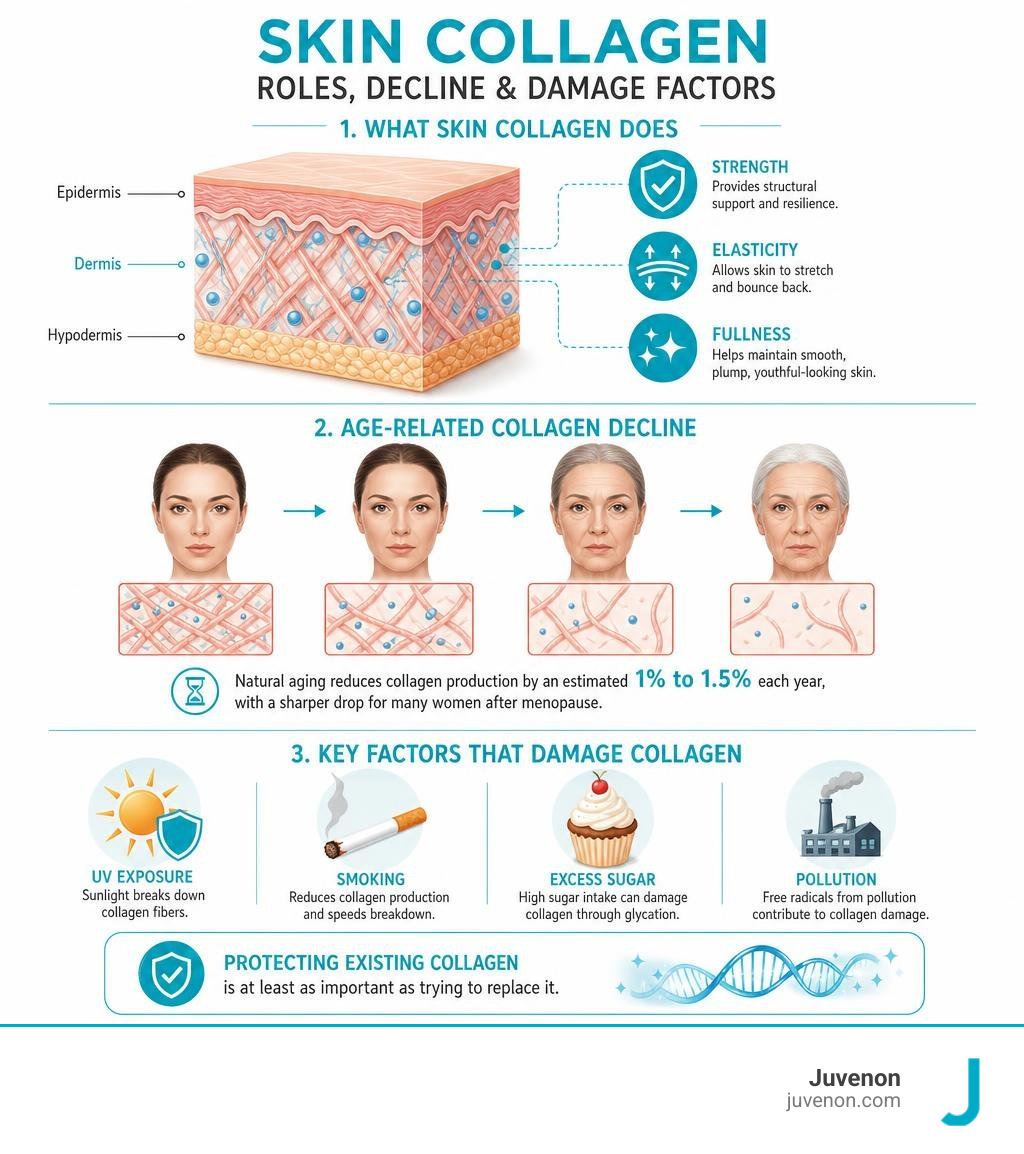
Skin collagen is the structural protein that helps keep skin firm, smooth, and resilient. It forms much of the skin's supportive framework, but production gradually slows with age while sun exposure, smoking, and excess sugar can speed its breakdown.
- What it does: Supports skin strength, elasticity, and a fuller appearance.
- Why it declines: Natural aging reduces collagen synthesis by an estimated 1% to 1.5% each year, with a sharper drop for many women after menopause.
- What matters most: Protecting existing collagen is at least as important as trying to replace it.
- What to know about products: Oral collagen studies have mixed results, especially when study quality and industry funding are considered. Topical collagen can moisturize the surface but does not reliably reach the deeper dermis where structural collagen is made.
Collagen is the body's most abundant protein, accounting for roughly 30% of total protein. Type I and Type III collagen are especially important to skin, where they help create the dense network that supports its texture and shape.
I am Michelle M. Henson, a copywriting leader and legal compliance editor with more than 20 years of experience translating health and wellness research into clear, responsible content. In this guide to skin collagen, I will help separate useful, science-based habits from marketing claims as we look at what affects this essential protein.
What Is Skin Collagen and Why Does It Decline?
To understand how to care for our skin, we first need to look at what is happening beneath the surface. Skin collagen acts like the scaffolding of our skin architecture. It makes up over 90% of dry skin mass, creating a dense, organized extracellular matrix in the middle layer of skin known as the dermis. This matrix gives skin its mechanical strength, smooth appearance, and elasticity.
When we are young, specialized cells called fibroblasts continuously manufacture fresh collagen fibers. These fibers intertwine with elastin (which allows skin to snap back after stretching) and proteoglycans like hyaluronic acid (which holds onto water molecules to keep skin plump). Together, this network keeps our complexions firm, hydrated, and bouncy. However, as time ticks on, this scaffolding undergoes natural degradation.
The Biological Function and Structure of Skin Collagen
From a biochemical standpoint, collagen is a masterpiece of biological engineering. There are at least 28 identified types of collagen in the human body, but over 90% of human collagen consists of Type I and Type III. Type I is the powerhouse responsible for structural rigidity in skin, bones, and tendons, while Type III provides supple elasticity in skin, blood vessels, and internal organs.
At the microscopic level, collagen molecules form a tight, fibrous triple helix structure. This triple helix is composed of repeating amino acid sequences, primarily:
- Glycine: Occupies every third position in the amino acid chain. Because glycine is the smallest amino acid, it allows the protein chains to pack tightly together.
- Proline: Provides structural stability and rigidity to the spiral helix.
- Hydroxyproline: Formed from proline inside fibroblasts, this amino acid stabilizes the triple-helical structure through hydrogen bonding.
Inside fibroblasts, procollagen molecules are assembled with the help of critical cofactors. Once secreted outside the cell, these molecules are trimmed into tropocollagen and bound together by an enzyme called lysyl oxidase. This process creates high-tensile-strength collagen fibrils. For a deeper scientific look at these biochemical mechanisms, you can review the detailed analysis in Biochemistry, Collagen Synthesis - StatPearls - NCBI Bookshelf.
How Age and Menopause Accelerate Collagen Depletion
Starting in our mid-to-late 20s, our body's natural collagen factory begins to slow down. On average, natural skin collagen synthesis declines by 1% to 1.5% every year. By the time we reach age 60, a noticeable reduction in overall collagen density is completely universal.
This gradual slope becomes significantly steeper for women during menopause. Due to the rapid decrease in circulating estrogen—a hormone that stimulates fibroblast activity and preserves dermal thickness—women can lose up to 30% of their dermal collagen during the first five years following menopause.
As collagen synthesis slows down, existing fibers become fragmented and disorganized. Fibroblasts collapse due to a loss of mechanical tension, further reducing their ability to produce new collagen. The visible result of this biological process includes:
- Thinning of the epidermal and dermal layers.
- Increased skin fragility and dryness.
- Deepening of facial expression lines into permanent wrinkles.
- Visible skin sagging along the jawline and cheekbones.
Factors That Damage Skin Collagen and Accelerate Depletion
While intrinsic biological aging is inevitable, extrinsic lifestyle and environmental factors play a massive role in how fast our collagen degrades. In fact, premature skin aging—often called photoaging—is largely driven by preventable habits.
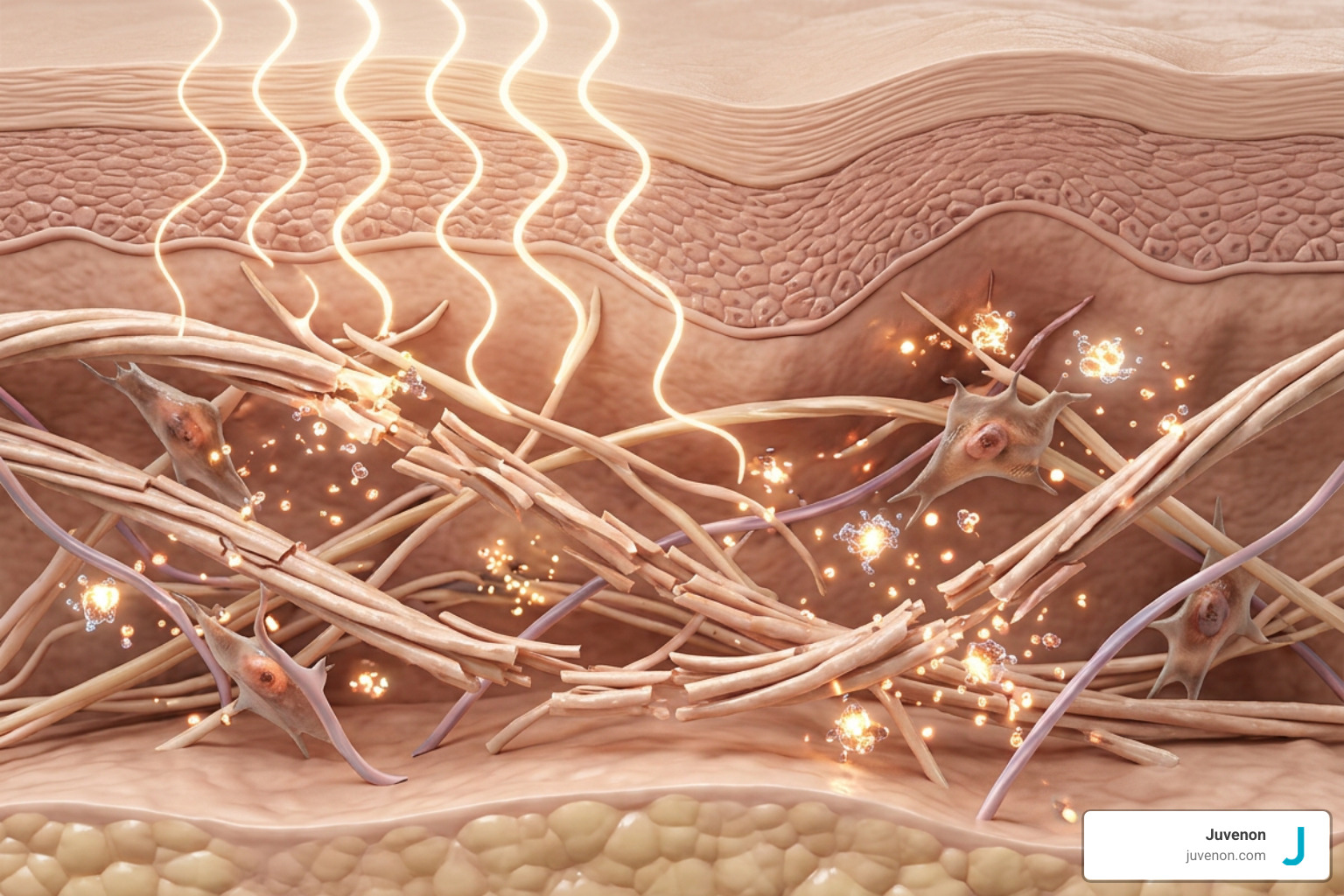
Here are the main culprits responsible for breaking down your skin's vital matrix:
- Ultraviolet (UV) Radiation: Broad-spectrum UV rays from the sun are the absolute single greatest threat to skin collagen. UV light generates reactive oxygen species (free radicals) that trigger enzymes called matrix metalloproteinases (MMPs). MMPs actively chew up and fragment existing collagen fibers while simultaneously suppressing new synthesis.
- Advanced Glycation End Products (AGEs): Consuming excessive amounts of refined sugar and high-fructose corn syrup causes excess sugar molecules to bind to proteins in the bloodstream, a process called glycation. This forms rigid cross-links within collagen fibers, turning flexible, springy tissue brittle and stiff.
- Cigarette Smoke: Smoking introduces thousands of toxic chemical compounds into the body. These toxins constrict microvascular blood vessels in the dermis, starving skin cells of oxygen and essential nutrients. Furthermore, chemical compounds in tobacco smoke directly deactivate fibroblasts and double the rate of collagen breakdown.
- Chronic Stress and Elevated Cortisol: Prolonged mental or physiological stress elevates the hormone cortisol. Elevated cortisol levels break down structural proteins throughout the tissue matrix and inhibit normal cellular repair cycles.
Do Oral Collagen Supplements and Topical Creams Really Work?
Walk down any beauty aisle or scroll through social media, and you will find an endless variety of collagen powders, gummies, beauty drinks, and facial creams promising to erase wrinkles overnight. But do these products deliver on their bold marketing promises? We need to separate marketing claims from clinical research.
The Science Behind Oral Supplements and Study Quality
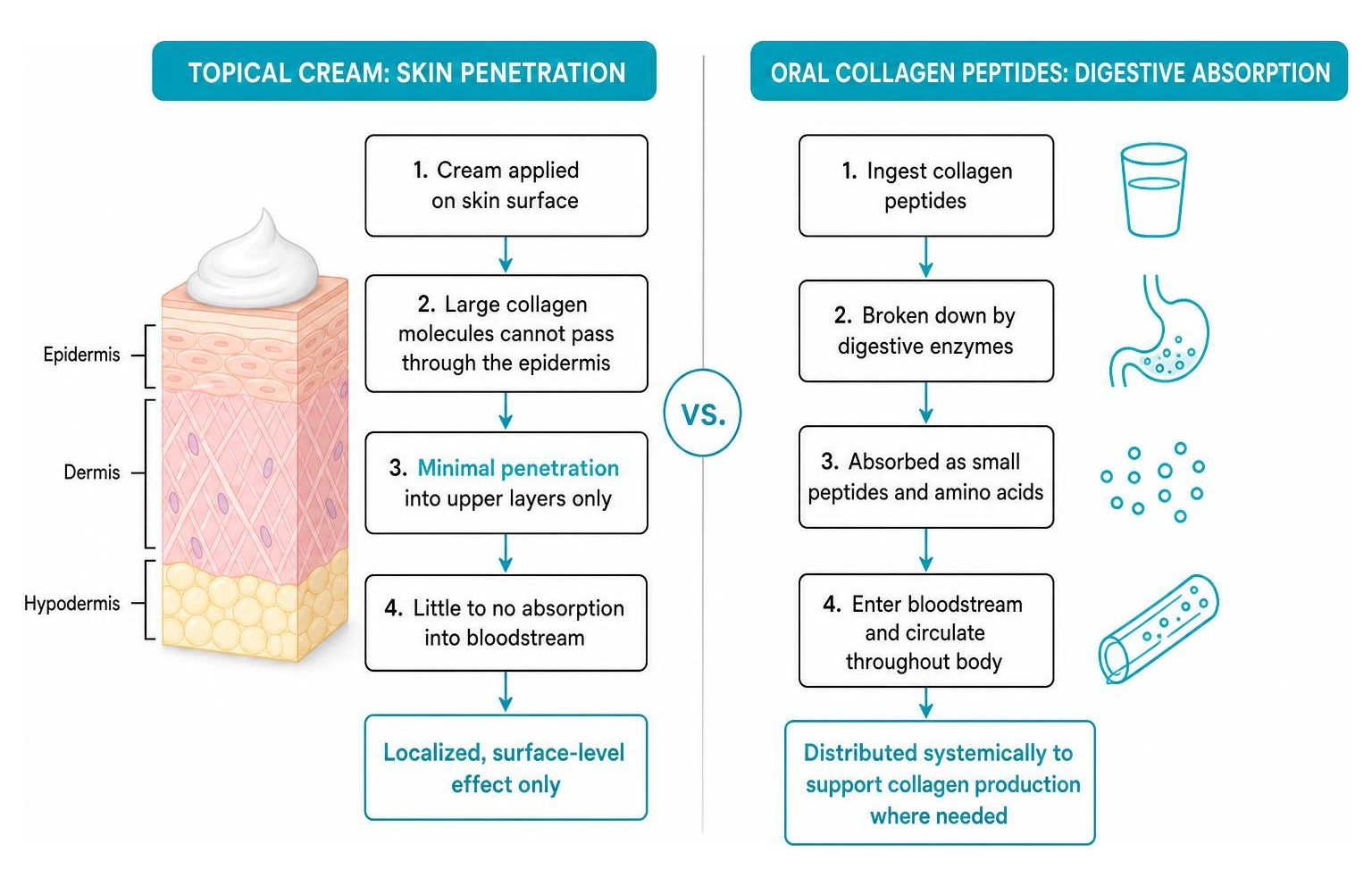
When we consume oral collagen supplements—typically available as hydrolyzed collagen peptides or collagen hydrolysates—our digestive system breaks those long protein chains down into smaller peptides and individual amino acids (like proline, glycine, and hydroxyproline). These absorbed amino acids enter the bloodstream and are distributed throughout the body wherever protein is needed.
A major systematic review and meta-analysis published in The American Journal of Medicine evaluated 23 randomized controlled trials (RCTs) involving a total of 1,474 participants to assess whether oral supplements truly improve skin hydration, elasticity, and wrinkles.
While taking an aggregate look at all trials combined seemed to suggest modest improvements, a deeper dive into the methodology revealed two key findings:
- Funding Bias: Studies directly funded or sponsored by commercial collagen manufacturers consistently reported statistically significant improvements in skin elasticity and moisture. However, when researchers looked exclusively at high-quality, non-pharmaceutical-funded studies, collagen supplements showed no statistically significant effect on skin hydration, elasticity, or wrinkle reduction.
- Study Quality: High-quality trials with rigorous double-blind methodologies generally found negligible clinical benefits, whereas lower-quality trials with higher risks of bias reported positive outcomes.
Additionally, the FDA does not regulate dietary collagen supplements with the strict pharmaceutical testing required for prescription medications. Manufacturers are not required to prove clinical efficacy before bringing products to market. While taking collagen peptides is generally safe and free of severe adverse side effects, science shows that ingested amino acids cannot be artificially directed specifically to facial skin—your body uses those raw building blocks wherever protein is required.
Why Topical Creams Fall Short for Boosting Skin Collagen
If drinking collagen has scientific limitations, what about applying creams and serums directly onto the skin? Unfortunately, topical collagen formulations face a fundamental obstacle: physics and human biology.
The primary function of the outermost layer of our skin (the stratum corneum) is to act as a barrier, keeping foreign substances out and locking hydration in. Native collagen molecules have an exceptionally large molecular weight (around 300,000 Daltons). To penetrate the protective skin barrier and reach the deeper dermis where active fibroblasts live, a molecule generally needs to be smaller than 500 Daltons.
Applying full-sized or even partially hydrolyzed collagen directly to the face means the molecules simply sit on the upper surface layer. While topical collagen creams excel at acting as humectants—drawing moisture to the outer skin layer to temporarily smooth out fine lines—they do not penetrate into the dermis to rebuild structural skin collagen.
Proven Science-Backed Strategies to Support Skin Collagen Naturally
While over-the-counter collagen creams and heavily marketed supplements may not be magic fixes, dermatologists and medical researchers agree on several proven strategies to protect existing collagen and stimulate new production naturally.
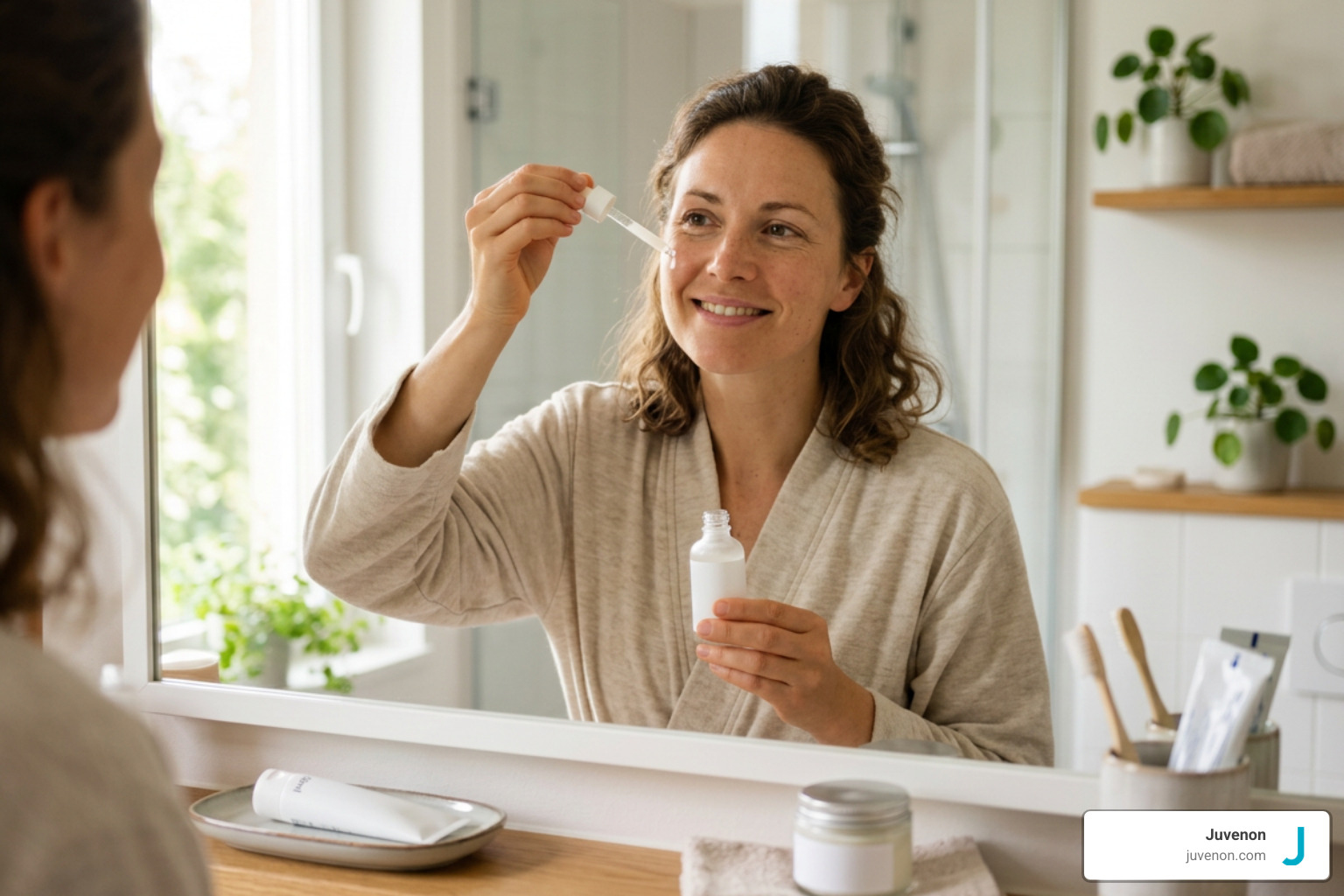
To build a reliable anti-aging regimen, consider implementing these evidence-based practices:
- Wear Broad-Spectrum Sunscreen Daily: Sunscreen is the undisputed foundation of any collagen preservation plan. Applying a broad-spectrum sunscreen with SPF 30 or higher every single morning—rain or shine—shields your dermal matrix from collagen-destroying UVA and UVB rays.
- Incorporate Topical Retinoids: Vitamin A derivatives, such as prescription tretinoin or over-the-counter retinol, are among the most thoroughly researched topical anti-aging ingredients in modern dermatology. Retinoids work at the cellular level by binding to retinoic acid receptors in the skin, turning on genes that stimulate fibroblasts to manufacture new Type I and Type III collagen while blocking the action of collagen-degrading MMP enzymes.
- Apply a Morning Vitamin C Serum: Vitamin C (L-ascorbic acid) serves a dual purpose in skin care. First, it acts as a potent antioxidant, neutralizing free radicals caused by sunlight and pollution before they can damage structural matrix fibers. Second, vitamin C acts as an essential chemical cofactor required by enzymes that stabilize the collagen triple helix.
- Prioritize Restorative Sleep: During deep sleep cycles, the body releases growth hormone, triggering cellular repair mechanisms and stimulating systemic protein synthesis across dermal tissues.
For a complete look at taking a comprehensive, balanced approach to skin care from the inside out, check out A Quick Guide to Restoring Your Skin Through Inside Out Skin Care.
Nutrition and Nutrients That Fuel Natural Collagen Synthesis
Rather than relying solely on packaged powders, we can optimize our body's internal collagen factory by consuming a nutrient-dense diet rich in protein and key micronutrients. Collagen synthesis is a complex enzymatic process that requires specific amino acid building blocks alongside critical vitamin and mineral cofactors.
Here is a breakdown of the core nutritional cofactors required for internal collagen synthesis and where to find them in whole foods:
| Nutrient | Biological Role in Collagen Synthesis | Primary Dietary Sources |
|---|---|---|
| Proline | Forms the structural repeating units of the procollagen triple helix. | Egg whites, dairy products, cabbage, mushrooms, poultry, beef. |
| Glycine | Fills every third position in the collagen peptide chain, allowing tight helix folding. | Bone broth, gelatin, chicken skin, pork skin, legumes, fish. |
| Vitamin C | Acts as an essential cofactor for prolyl hydroxylase and lysyl hydroxylase enzymes. | Citrus fruits, bell peppers, strawberries, broccoli, kale, kiwi. |
| Copper | Serves as a key component of lysyl oxidase, the enzyme that cross-links tropocollagen into strong fibrils. | Organ meats, shellfish, cashews, sesame seeds, dark chocolate, lentils. |
| Zinc | Stimulates fibroblast proliferation and supports structural matrix proteins. | Oysters, beef, pumpkin seeds, chickpeas, lentils, hemp seeds. |
Eating a balanced diet containing high-quality proteins alongside antioxidant-rich fruits and vegetables ensures your body has an abundant pool of raw materials for repair. If you want to explore more dietary choices that support youthful vitality, read our guide on 11 Foods That Help You Look Younger.
Frequently Asked Questions About Skin Collagen
Can eating collagen-rich foods directly rebuild skin collagen?
When you consume collagen-rich foods—such as slow-simmered bone broth, meat with connective tissue, or gelatin—your digestive system breaks down those whole proteins into basic amino acids and small peptides using stomach acid and digestive enzymes.
Your body cannot distinguish whether an amino acid came from a pot of bone broth, a chicken breast, or a bowl of lentils. Once absorbed into the bloodstream, these amino acids are pooled together and dispatched based on immediate metabolic needs—whether that means repairing muscle tissue, supporting joint cartilage, producing hormones, or synthesizing new skin collagen. Therefore, eating collagen-rich foods provides the raw building blocks for protein synthesis, but it does not guarantee targeted collagen deposition in facial skin.
How long does it take to see improvements in skin elasticity?
Because dermal collagen remodeling is a slow biological process, visible changes in skin texture, moisture levels, and elasticity require time. The natural skin cell turnover cycle takes roughly 28 to 40 days in adults, and structural dermal matrix synthesis occurs over months rather than days.
Clinical studies evaluating interventions like topical retinoids, vitamin C formulations, or targeted dietary adjustments typically measure outcomes over an 8- to 12-week minimum timeframe. Consistency with daily sun protection, topical treatments, and optimal nutrition over several months is essential to observe real changes in skin firmness.
What is the most important daily step to protect existing collagen?
Hands down, the single most critical daily habit to protect your existing skin collagen is applying a broad-spectrum sunscreen with SPF 30 or higher every day.
Because up to 80% of visible facial aging is driven by extrinsic UV exposure (photoaging), protecting your dermal matrix from solar radiation prevents the activation of collagen-destroying MMP enzymes. Even the most advanced anti-aging routines cannot keep pace with unshielded daily sun damage. Pairing daily sun protection with healthy lifestyle choices—like avoiding smoking, minimizing refined sugar, managing stress, and staying hydrated—is the single best strategy for preserving youthful skin density.
Conclusion
Caring for our skin collagen is not about chasing magic fixes or falling for overhyped cosmetic claims. Science demonstrates that maintaining firm, radiant skin requires a holistic, inside-out approach. While oral supplements and topical collagen creams have limitations, protecting your existing matrix through daily sunscreen, topical retinoids, antioxidant protection, and balanced, nutrient-dense nutrition gives your body everything it needs to thrive.
At Juvenon, we believe in supporting lifelong health, vitality, and cellular wellness through rigorous research and high-quality formulas. Taking proactive care of your physical health today lays the groundwork for vibrant longevity tomorrow.
To learn more about how collagen works throughout your entire body, explore our detailed article on From Skin to Joints Here's What Collagen Can Do For You.