What Is Nicotinamide Riboside and How Does It Work?

Nicotinamide riboside (NR) is a specialized form of vitamin B3 that serves as an efficient precursor to nicotinamide adenine dinucleotide (NAD+). NAD+ is a critical coenzyme found in every living cell, responsible for facilitating fundamental biological processes such as turning nutrients into cellular fuel, maintaining circadian rhythms, and enabling cellular defense systems. As we grow older, natural NAD+ levels decline, leading many to explore targeted nutritional strategies. You can learn more about this foundational molecule in our deep-dive guide on what is a NAD supplement.
When you consume nicotinamide riboside, your cells process it primarily through what biochemists call the "salvage pathway." Specific enzymes inside human cells—known as nicotinamide riboside kinase 1 and 2 (NRK1 and NRK2)—directly phosphorylate NR to produce nicotinamide mononucleotide (NMN). From there, another enzyme (NMNAT) converts NMN directly into NAD+. To better understand the exact biological functions powered by this coenzyme, check out our resource explaining what NAD does for your body.
While nicotinamide riboside occurs naturally in trace amounts within foods like cows' milk, yeast, and beer, these dietary amounts are tiny. Achieving the concentrations tested in clinical trials through whole foods alone is virtually impossible, which is why isolated supplementation has gained widespread attention.
How Nicotinamide Riboside Differs From Other Vitamin B3 Forms
Vitamin B3 isn't a single compound, but rather a family of molecules that includes nicotinic acid (niacin), nicotinamide (niacinamide), and nicotinamide riboside. While all three contribute to the body's total B3 pool, they differ significantly in how they behave in the body:
- Nicotinic Acid (Niacin): High doses of classic niacin are well-known for causing uncomfortable skin flushing—a hot, red, itchy sensation triggered by the activation of GPR109A receptors in the skin's blood vessels. NR does not activate this receptor and does not cause flushing.
- Nicotinamide (NAM): Standard nicotinamide is effective at generating NAD+, but at elevated doses, it can inhibit key longevity enzymes known as sirtuins through feedback inhibition.
- Nicotinamide Riboside (NR): NR bypasses early rate-limiting steps in NAD+ synthesis, delivering a bioavailable precursor without triggering skin flushing or sirtuin inhibition.
When researchers track how NR moves through the digestive tract, they note that oral NR is partially broken down in the gut by enzymes like CD157 and transformed by intestinal bacteria before reaching systemic circulation. Clinical findings published in Nature Communications demonstrate that despite this gastrointestinal metabolism, oral NR uniquely elevates blood NAD+ metabolome levels and leads to a dramatic spike in nicotinic acid adenine dinucleotide (NAAD), an exceptionally sensitive biological marker confirming active NAD+ repletion.
Tissue Bioavailability and the NAD+ Salvage Pathway
Understanding where supplementation actually works inside the body is essential. Human trial data reveal distinct differences in how different tissues process oral NR:
- Whole Blood & Immune Cells: Oral NR consistently elevates NAD+ and related metabolites in human whole blood and peripheral blood mononuclear cells (PBMCs) by 60% or more.
- Liver: Animal models show robust hepatic uptake, where NR rapidly boosts liver NAD+ and NADP+ pools to support detoxification and metabolic health.
- Skeletal Muscle: Interestingly, clinical studies in humans show that while oral NR elevates blood markers, it generally does not raise NAD+ concentrations or enhance mitochondrial respiration directly in healthy skeletal muscle tissue.
- Brain Tissue: Emerging clinical data indicate that high-dose NR supplementation can cross or influence central pathways, altering cerebral metabolites in specific neurological conditions.
For a broader analysis of how different formulations perform across the body, explore our breakdown on the science behind NAD supplements.
Health Benefits of Nicotinamide Riboside Supplementation
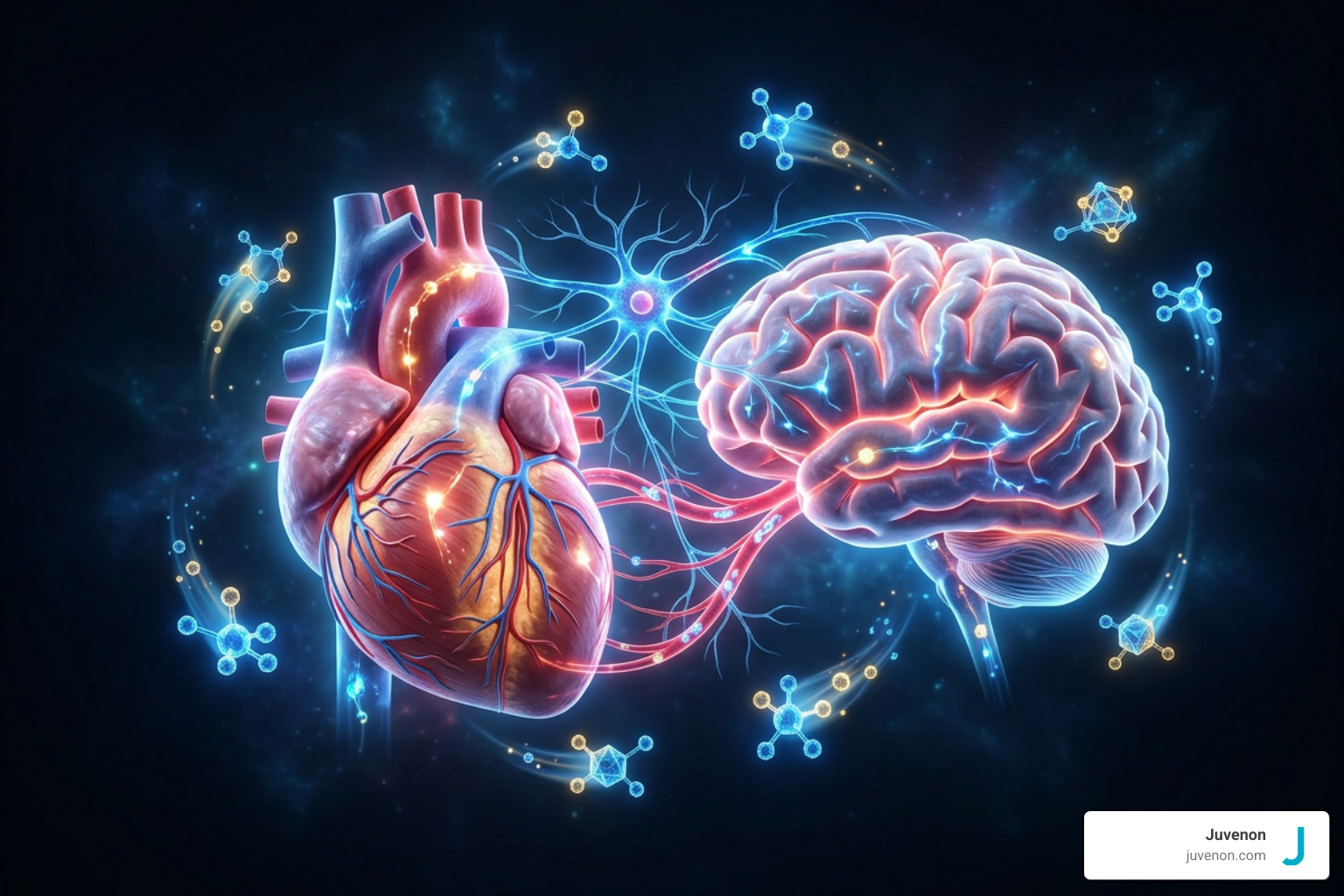
The primary reason scientists and health enthusiasts focus on nicotinamide riboside is its ability to fuel NAD+-dependent enzymes. Elevated NAD+ levels activate sirtuins (enzymes that regulate cellular health, gene expression, and stress responses) and PARP proteins (which repair damaged DNA). Detailed scientific reviews, such as those available on PubMed Central, outline the emerging therapeutic roles of NR across metabolic, cardiovascular, and neurological domains. For a practical summary, read our overview on NAD supplements and what they are good for.
Cellular Anti-Aging and Mitochondrial Bioenergetics
Mitochondria are the powerplants of our cells, generating ATP to fuel everyday life. When NAD+ supplies dwindle, mitochondrial efficiency drops, increasing the production of damaging reactive oxygen species (oxidative stress). NR supplementation helps restore the cellular NAD+ pool, supporting PGC-1-alpha—a protein that controls mitochondrial biogenesis and protects cells against oxidative damage. By maintaining mitochondrial output and enabling continuous DNA repair through PARP activation, NR plays a clear supportive role in basic cellular energy maintenance. Learn more about these underlying mechanics in our guide on what NAD does to slow down the aging process.
Cardiovascular and Brain Health Support
Cardiovascular health relies heavily on clear, flexible blood vessels and steady cellular energy. In a groundbreaking human study published in Nature Communications, middle-aged and older adults taking 1,000 mg of NR daily for 6 weeks experienced elevated cellular NAD+ levels. In exploratory analyses, participants with elevated baseline blood pressure saw an average reduction of ~9 mmHg in systolic blood pressure, pointing to potential vascular benefits that warrant larger follow-up trials.
In terms of brain health, maintaining central NAD+ levels is vital for protecting neurons from metabolic strain and axonal injury. Preclinical models demonstrate that NR can protect against chemotherapy-induced peripheral nerve damage and neuroinflammation. To discover how raising NAD+ levels supports overall mental clarity and cognitive resilience, dive into our article on brain gains and cognitive neuroprotection.
Reduction of Systemic Inflammation
Chronic low-grade inflammation—often referred to as "inflammaging"—is a key driver of functional decline as we age. Clinical trials assessing NR have measured noticeable suppressions in systemic inflammatory markers. Supplementation has been shown to downregulate circulating inflammatory cytokines (such as IL-6, IL-2, and TNF-alpha) and dampen hyperactive type I interferon signaling in immune cells. To understand why controlling micro-inflammation matters for your overall vitality, read our overview on cellular health and why it is important.
Scientific Evidence and Anti-Aging Human Research
When evaluating anti-aging supplements, it is vital to separate mouse model breakthroughs from verified human clinical results. While rodent studies frequently demonstrate dramatic lifespan extensions, tissue rejuvenation, and rapid reversal of metabolic disorders, human trials reveal a more nuanced reality.
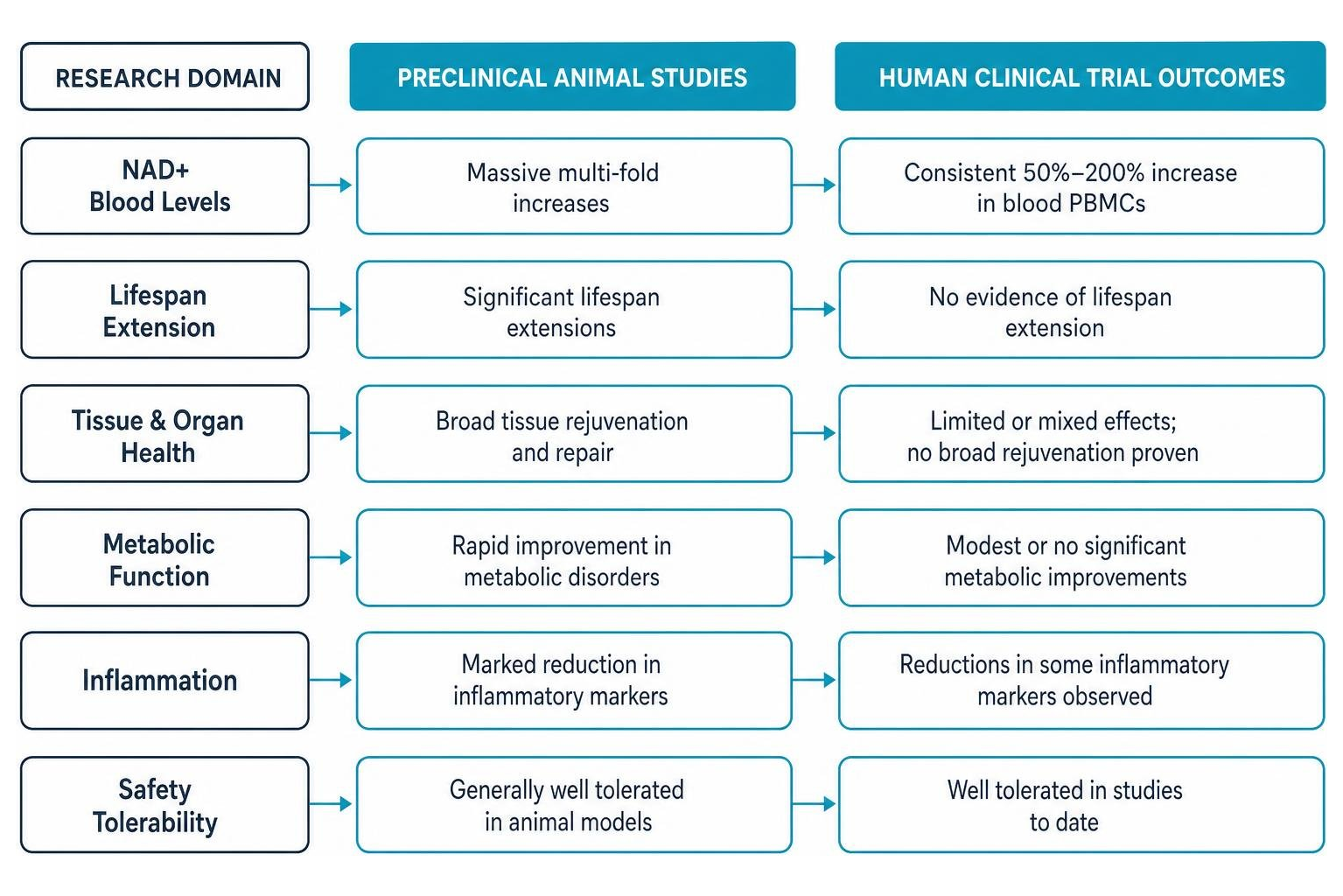
As highlighted in a comprehensive review on PubMed Central, published clinical literature indicates that while oral NR reliably elevates blood NAD+ metabolites in human subjects, it has displayed relatively few dramatic clinical health changes in young, healthy populations. There is a recognized tendency in general popular media to exaggerate mouse study results when describing human potential.
| Research Domain | Preclinical Animal Findings | Human Clinical Trial Realities |
|---|---|---|
| NAD+ Blood Levels | Massive multi-fold increases | Consistent 50%–200% increase in blood PBMCs |
| Skeletal Muscle | Restored stem cell function & mitochondrial density | No significant increase in tissue NAD+ or muscle function |
| Blood Pressure | Reversals of age-related vascular stiffness | Modest (~9 mmHg) reduction in SBP specifically in hypertensive subjects |
| Metabolic Rate | Complete protection from high-fat diet obesity | No substantial change in resting metabolic rate or weight loss |
Research Limitations and Human Trial Gaps
Why do these gaps between animal models and human trials exist? Scientific assessments point to several clear limitations in existing human research:
- Short Study Durations: Most human trials last between 2 weeks and 6 months—too short to capture true long-term healthy aging outcomes.
- Small Sample Sizes: Pilot studies often enroll 10 to 60 individuals, limiting statistical power.
- Intestinal Breakdown: Extensive breakdown by gut bacteria and intestinal enzymes converts much of oral NR into standard nicotinamide or nicotinic acid before reaching peripheral organs like skeletal muscle.
- Baseline Health Status: Healthy volunteers with normal baseline NAD+ levels rarely show dramatic performance enhancements compared to clinical populations suffering from severe metabolic or neurological strain.
Recommended Nicotinamide Riboside Dosage and Safety Profile

Determining the right daily amount depends on individual goals, age, and regulatory guidelines. Most commercially available dietary supplement brands recommend taking 250–300 mg per day, which typically translates to 1–2 capsules daily.
In intensive clinical trials, human participants have routinely taken 1,000 mg per day (often split into 500 mg twice daily) for up to 6 weeks, or up to 2,000 mg daily in specialized short-term protocols, exhibiting no serious adverse events. For tailored dosing strategies across different age groups, refer to our guide on how much NAD you should take.
Evaluating Side Effects of Nicotinamide Riboside
Human safety evaluations consistently show that nicotinamide riboside is well-tolerated. Unlike classic niacin, it does not trigger flushing. However, a small percentage of sensitive individuals may experience mild, transient side effects, including:
- Mild nausea or stomach discomfort
- Occasional fatigue
- Headaches
- Diarrhea or loose stool
Detailed clinical reviews on WebMD confirm that oral NR exhibits a remarkably clean safety profile when taken within standard daily parameters. To learn more about identifying minor side effects across all precursor formats, see our article on NAD side effects and safety considerations.
Regulatory Status and Market Availability
The regulatory classification of nicotinamide riboside varies by region, shaping how supplements are labeled and sold:
- United States: In the U.S., specific patented forms of nicotinamide riboside chloride are marketed widely as dietary supplement ingredients. Products are manufactured under Current Good Manufacturing Practice (cGMP) regulations for general adult wellness support.
- European Union: In 2020, the European Commission formally authorized nicotinamide riboside chloride as a Novel Food for use in food supplements for adults. In 2022 and 2023, regulatory updates extended its approved use to meal replacement products under Commission Regulation (EU) 2023/1065.
- Safety Thresholds: European Food Safety Authority (EFSA) evaluations concluded that synthetic NR chloride is safe for healthy adults at doses up to 300 mg per day. For pregnant or lactating women, EFSA established a conservative safe upper limit of 230 mg per day.
Frequently Asked Questions About Nicotinamide Riboside
Does nicotinamide riboside cause skin flushing like niacin?
No. Skin flushing caused by traditional niacin (nicotinic acid) occurs when the compound binds to GPR109A receptors on blood vessels in the skin. Nicotinamide riboside does not interact with these receptors, so it elevates NAD+ levels without causing uncomfortable red flushing or skin warmth.
How long does it take for nicotinamide riboside to raise NAD+ levels?
Human pharmacokinetic trials show that oral NR begins absorbing rapidly, with circulating NAD+ metabolites spiking within 2 to 8 hours after a single dose. Sustained daily supplementation typically elevates blood cellular NAD+ levels to a steady state within 1 to 2 weeks.
Can you get sufficient nicotinamide riboside from food sources?
While trace amounts of nicotinamide riboside are naturally present in milk, yeast, and beer, these quantities are extremely small (measured in microgram amounts per serving). To obtain the 250 mg to 1,000 mg daily doses used in human clinical trials, supplementation is necessary.
Conclusion

Nicotinamide riboside stands out as one of the most thoroughly researched NAD+ precursors available today. Clinical human trials clearly confirm that daily oral supplementation reliably raises NAD+ metabolome levels in blood cells, helps reduce specific inflammatory markers, and may offer support for blood pressure in individuals with elevated baselines—all without the uncomfortable skin flushing linked to traditional niacin.
While science continues to explore whether elevating NAD+ can extend human healthspan, maintaining robust cellular bioenergetics remains a smart strategy for overall vitality as we age. At Juvenon, we build our health formulations around rigorous scientific research, utilizing patented ingredients, transparent dosages, and a 60-day money-back guarantee to ensure your total satisfaction.
To explore how advanced cellular nutrition can support your personal wellness journey, explore our full guide on what is a NAD supplement and its benefits for optimal health.