Why an NAD+ Supplement Is One of the Most Talked-About Tools for Healthy Aging

If you're researching an nad+ supplement, here's the quick answer:
| Factor | What You Need to Know |
|---|---|
| Best forms | Nicotinamide Riboside (NR) and Nicotinamide Mononucleotide (NMN) |
| Why take it | NAD+ declines 10–80% with age, reducing cellular energy and DNA repair |
| Evidence | NR and NMN reliably raise NAD+ levels; functional benefits are promising but still emerging |
| Who benefits most | Adults 40+ with metabolic, cardiovascular, or neurological health goals |
| Safety | Generally well tolerated up to 2,000 mg/day in clinical studies |
| Caution | Consult a doctor if you have cancer history, liver disease, or are pregnant |
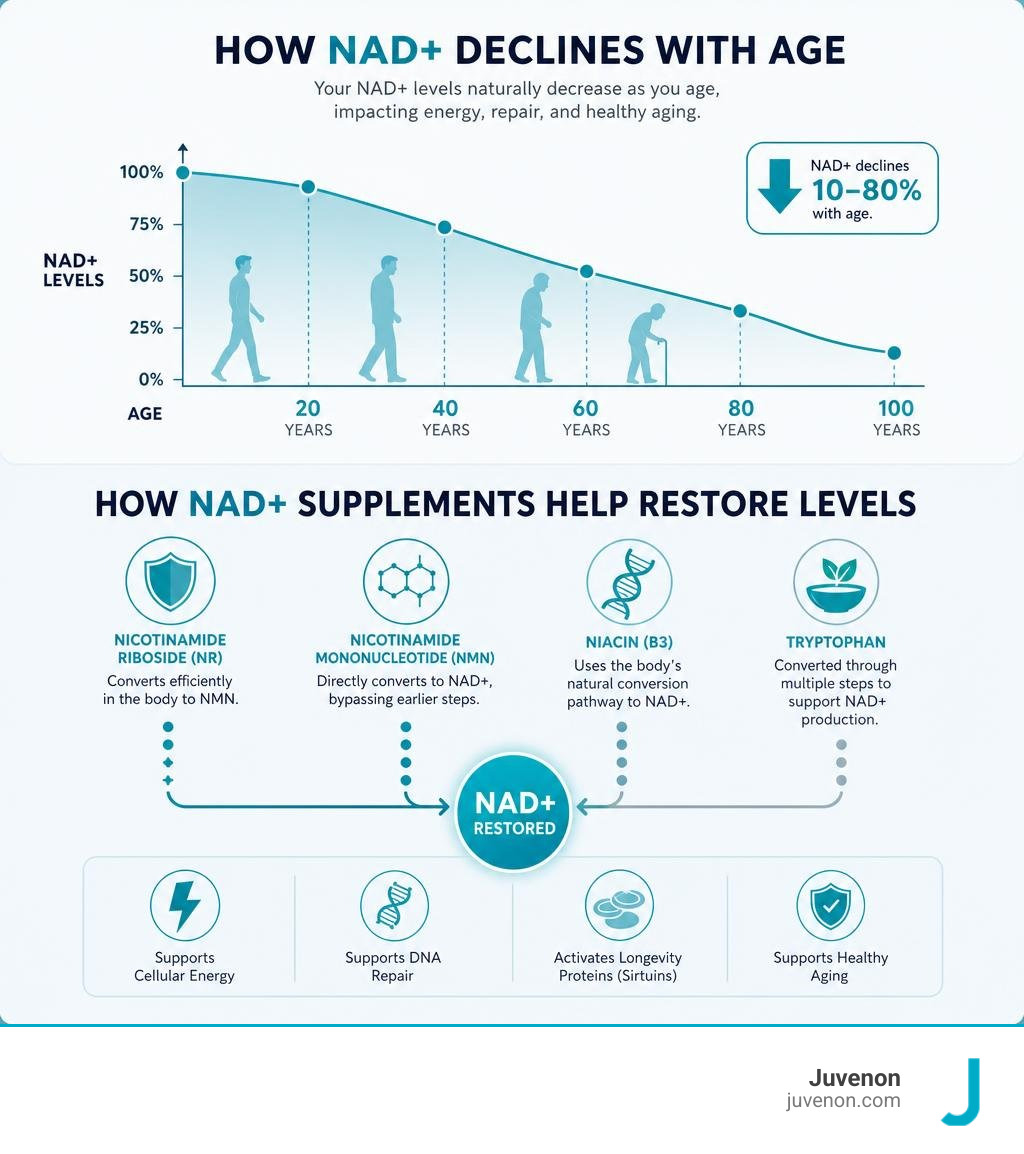
Every cell in your body runs on NAD+. It powers your mitochondria, repairs your DNA, and activates proteins linked to longevity. But here's the problem: your NAD+ levels drop significantly as you age — research shows a decline of anywhere from 10% to 80% over a lifetime.
That decline is tied to lower energy, slower recovery, and increased vulnerability to the chronic conditions that come with aging.
The supplement market has responded with a wave of NAD+ precursor products — and not all of them are worth your money. Knowing the difference between solid science and marketing hype is critical before you spend a dollar.
I'm Michelle M. Henson, Head of Copywriting and Legal Compliance Editor at Juvenon, where I've spent years translating the complex science behind NAD+ supplement research into clear, honest guidance for health-conscious adults. In this roundup, I'll walk you through the best options based on real clinical evidence — so you can make a confident, informed choice.
Simple nad+ supplement word guide:
Science and Health Benefits of an NAD+ Supplement
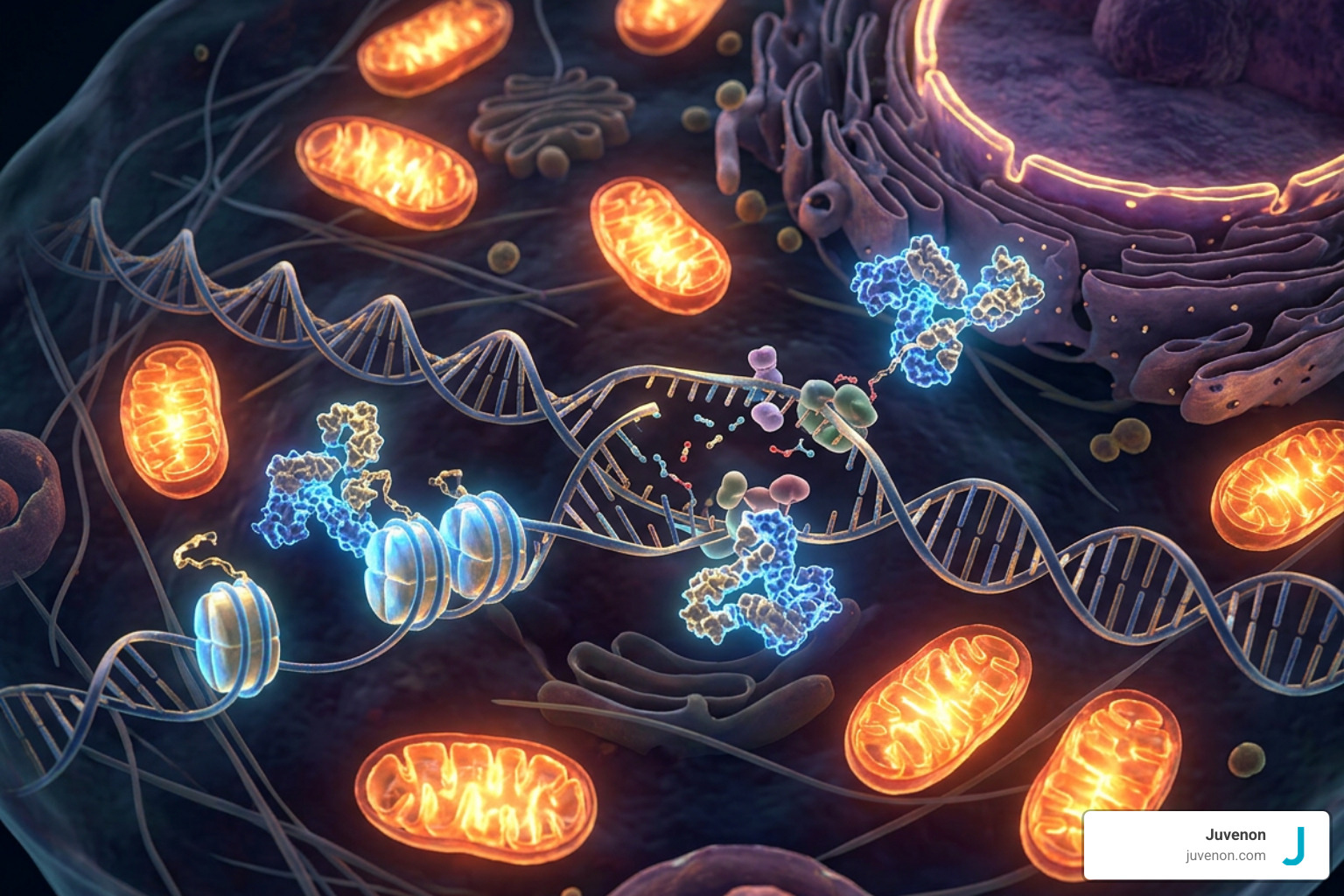
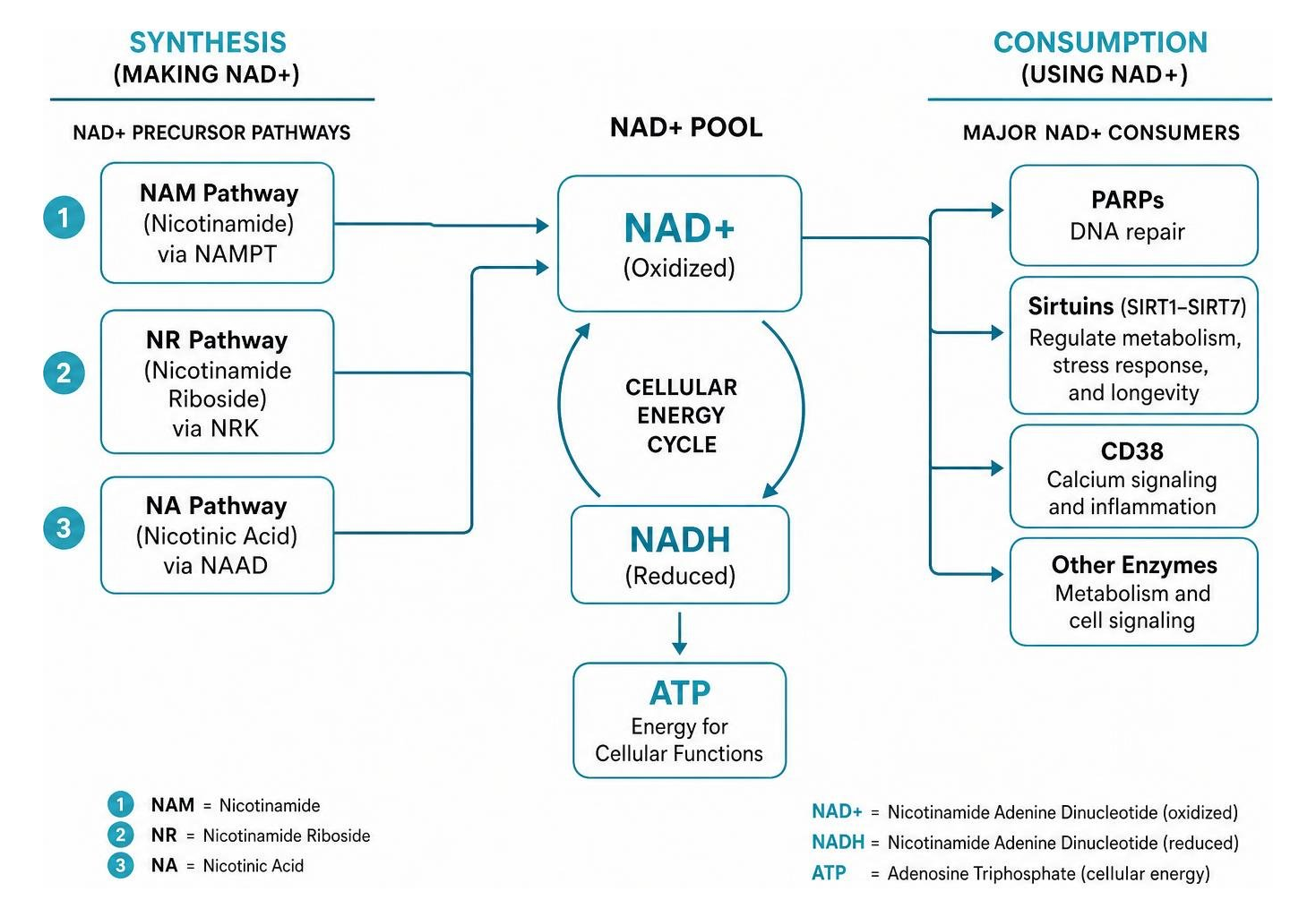
When we look inside human cells, nicotinamide adenine dinucleotide (NAD+) sits at the center of cellular life. It exists in two primary states: NAD+ (the oxidized form) and NADH (the reduced form). Together, they drive cellular bioenergetics by enabling mitochondria to convert nutrients into adenosine triphosphate (ATP)—the primary energy currency powering everything from brain function to heart contractions.
Beyond energy production, elevated cellular NAD+ fuels critical longevity enzymes known as sirtuins (SIRT1–SIRT7). Sirtuins regulate cellular homeostasis, repair damaged DNA, support metabolic equilibrium, and help mitigate age-related inflammation. To learn more about how these biochemical mechanisms work in daily life, read our deep dive on What Is a NAD Supplement.
How Cellular NAD+ Declines and What It Does for the Body
As we age, our bodies face a double whammy: natural NAD+ production slows down, while cellular consumption increases sharply. Enzymes like PARP (poly-ADP-ribose polymerase)—which repairs damaged DNA—and CD38 (an inflammatory enzyme that increases with age) continuously break down NAD+.
Research demonstrates that tissue concentrations of NAD+ in humans drop anywhere from 10% to 80% with advancing age. This systemic decrease directly compromises mitochondrial bioenergetics, leaving cells with less energy to perform basic maintenance and self-repair.
When NAD+ levels drop:
- Mitochondrial bioenergetics decline, resulting in lower cellular ATP synthesis and feelings of physical or cognitive fatigue.
- DNA repair becomes less efficient, allowing cellular damage to accumulate faster.
- Sirtuin enzymatic activity decreases, reducing the cell's natural defenses against metabolic stress and systemic inflammation.
For a comprehensive breakdown of these biological pathways, explore our article on What Does NAD Do for Your Body.
Precursor Ingredients Found in an NAD+ Supplement
Direct NAD+ molecules are too large and unstable for efficient direct absorption in the gastrointestinal tract. Therefore, high-quality dietary formulations utilize precursor molecules that your cells readily take up and transform into active NAD+.
- Nicotinamide Riboside (NR): A unique form of Vitamin B3 that enters cells directly through specialized transporters. Clinical trials confirm that NR elevated peripheral blood mononuclear cell NAD+ levels by ~60% at 1,000 mg/day over 6 weeks and increased whole-blood NAD+ by up to 139% in overweight adults over 8 weeks.
- Nicotinamide Mononucleotide (NMN): A direct intermediate compound located one step closer to NAD+ in the salvage pathway. Studies show NMN supplementation (600 mg/day for 60 days) can lead to an approximate 6-fold increase in blood NAD+ concentrations among midlife and older adults.
- Niacin (Nicotinic Acid): A traditional B3 precursor. While effective at elevating NAD+, standard niacin frequently triggers cutaneous flushing—a intense, uncomfortable skin warmth and redness—which causes high drop-out rates in clinical trials and user non-compliance.
- Nicotinamide (NAM): A common, low-cost B3 precursor that elevates NAD+ but can inhibit sirtuin activity at very high doses.
To reliably track whether these precursor ingredients are actually working inside human tissue, researchers measure Nicotinic Acid Adenine Dinucleotide (NAAD). NAAD acts as a highly sensitive biomarker that confirms successful oral bioavailability and pathway utilization.
| Precursor Ingredient | Cellular Bioavailability | Primary Biomarker Increase | Common Side Effects / Considerations |
|---|---|---|---|
| Nicotinamide Riboside (NR) | High (direct transporter uptake) | Whole-blood NAD+ (+60% to 139%), NAAD (~7-fold) | Very rare mild stomach upset; no flushing |
| Nicotinamide Mononucleotide (NMN) | High (rapid conversion) | Blood NAD+ (~6-fold elevation) | Well tolerated in human trials up to 1,250 mg/day |
| Niacin (Nicotinic Acid) | Moderate | Systemic NAD+ | Frequent cutaneous flushing, heat sensations |
| Nicotinamide (NAM) | Moderate | Systemic NAD+ | High doses can potentially inhibit sirtuins |
Clinical Evidence for Cardiovascular, Cognitive, and Metabolic Health
Human clinical research surrounding oral nad+ supplement options has expanded rapidly. A 2026 systematic review of 33 human intervention studies revealed that oral NR and NMN consistently achieve target engagement—meaning they successfully raise circulating and cellular NAD-related metabolites in human subjects over weeks and months.
Here is what peer-reviewed human clinical trials demonstrate across key health areas:
- Cardiovascular Function & Blood Pressure: In a clinical trial involving 24 participants, daily supplementation with NR (500 mg twice per day) significantly reduced casual systolic blood pressure and decreased arterial stiffness. The most dramatic improvements were observed in individuals with baseline systolic blood pressure of 120 mmHg or higher. In a separate study of 30 patients with heart failure, taking up to 2,000 mg/day of NR over 12 weeks approximately doubled whole-blood NAD+ levels while reducing inflammatory gene expression in immune cells.
- Metabolic Health & Body Composition: In overweight or obese adults, 6 weeks of NR supplementation at 1,000 mg/day led to a 4% reduction in fat mass and a 2% increase in fat-free mass. Additionally, clinical trials investigating postmenopausal prediabetic women found that NMN supplementation significantly improved muscle insulin sensitivity.
- Cognitive & Neurological Support: Early human trials show promising bioenergetic support. In newly diagnosed Parkinson's disease patients, 1,000 mg/day of oral NR for 30 days elevated central nervous system NAD+ levels, enhanced brain tissue bioenergetics, and lowered neuroinflammatory markers in spinal fluid.
For a full breakdown of the peer-reviewed clinical research, check out the systematic literature on Dietary Supplementation With NAD+-Boosting Compounds ... - PMC as well as our detailed synthesis in The Science Behind NAD Supplements: Do They Really Work.
Comparing Delivery Methods, Dosages, and Research Limitations

While the preclinical data in rodent models shows sweeping improvements across mitochondrial, inflammatory, and lifespan metrics, human clinical trials show more nuanced, endpoint-specific outcomes. Understanding how research is conducted helps set realistic expectations for your wellness journey.
Oral Capsules vs Intravenous (IV) Administration
A frequent debate in longevity centers is whether oral capsules or parenteral methods (like IV drips or injections) work better.
- Oral Precursor Capsules (NR / NMN): Backed by dozens of double-blind, randomized controlled trials (RCTs). Oral supplements provide sustained, steady target engagement over weeks to months, driving consistent elevations in whole-blood and tissue NAD+ without invasive procedures.
- Intravenous (IV) Infusions: Despite heavy promotion in commercial wellness clinics, systematic reviews confirm that zero eligible outcome clinical trials exist proving IV or IM NAD+ infusions offer anti-aging or healthspan benefits over oral precursors. Furthermore, IV administration bypasses natural metabolic checkpoints and can be costly and inconvenient.
When it comes to validated scientific backing and ease of daily use, oral precursors like NR and NMN remain the gold standard.
Key Features of a Quality NAD+ Supplement
Because the supplement market is vast, selecting a formula backed by clinical standards is vital. Here is what we advise looking for:
- Pure Precursors: Look for clearly stated Nicotinamide Riboside (NR) or Nicotinamide Mononucleotide (NMN) rather than generic B-complex mixtures.
- Avoid Proprietary Blends: Steer clear of brands that group active ingredients into a secret "blend" without listing the exact milligram dose of each compound.
- Third-Party Testing & Batch Certification: Choose companies that utilize independent laboratory verification to guarantee purity, heavy metal compliance, and exact potency.
- Transparent Labeling: Ensure the label details safe, effective clinical dosing amounts matching trial protocols.
To learn more about verifying product quality, review our practical guide on NAD Supplementation: How to Get It Right.
Safety Profiles, Side Effects, and Ideal Candidates
Human intervention studies lasting from 4 weeks to 5 months demonstrate that oral precursors like NR and NMN are generally safe and well tolerated. For instance, a 4-week trial in 31 healthy adults using 1,250 mg/day of oral NMN reported zero serious adverse events.
However, as with any bioactive dietary compound, mild, temporary side effects can occasionally occur.
- Common Mild Effects: Mild headache, short-term gastrointestinal discomfort (nausea or loose stool), fatigue, or temporary muscle aches.
- High-Dose Risks (Standard Niacin/NAM): Taking excessive doses of standard niacin or nicotinamide (500 mg to 3,000 mg+ daily) can cause extreme skin flushing, low blood pressure, high blood sugar, and potential liver stress.
- Combining with Polyphenols: Studies show that pairing high-dose NR with polyphenols like pterostilbene raises NAD+ dramatically (up to 90%), but can cause modest increases in total and LDL cholesterol in some individuals, necessitating periodic lipid checks.
For a deeper dive into safety considerations, consult our article on NAD Side Effects: Key Benefits & What to Watch Out For and review expert insights from the NAD+ Supplements: Can They Really Slow Down Aging? guide.
Who Benefits Most and Who Should Exercise Caution
Ideal Candidates:
- Adults Aged 40+: Individuals experiencing age-related energy drops, slower physical recovery, or cognitive fatigue due to natural cellular NAD+ depletion.
- Individuals with Metabolic or Cardiovascular Priorities: Older cohorts seeking non-prescription dietary support for healthy blood pressure, arterial stiffness, and insulin sensitivity.
- Athletes and Active Adults: Those aiming to support mitochondrial energy production during exercise and cellular repair post-workout.
Who Should Exercise Caution:
- Active Cancer Patients: Because cancer cells consume high amounts of energy to multiply, there is theoretical scientific concern that boosting overall cellular energy via high-dose NAD+ could support rapidly dividing tumor cells. Anyone with a active cancer history should consult their oncologist first.
- Advanced Liver Disease: Individuals with hepatic conditions should seek medical oversight due to how precursor compounds are processed in the liver.
- Pregnant or Breastfeeding Women: Because long-term safety data in pregnant populations is limited, natural lifestyle approaches are preferred unless advised by an OB-GYN.
Optimal Dosage and Long-Term Safety Guidelines
Based on peer-reviewed clinical trials in humans:
- Nicotinamide Riboside (NR): Effective daily dosages range from 300 mg to 1,000 mg per day (often taken as 500 mg twice daily). Doses up to 2,000 mg/day have been shown to be safe in clinical heart failure trials.
- Nicotinamide Mononucleotide (NMN): Effective trial dosages range between 300 mg and 1,200 mg per day.
- Dietary Upper Limits: For standard niacin, stay below the dietary supplement upper limit of 35 mg Niacin Equivalents (NE) per day unless under direct medical supervision, to prevent intense flushing.
For complete dosage protocols tailored to individual health goals, visit our expert resource on How Much NAD Should I Take? Expert Guidelines.
Natural Strategies to Support NAD+ Without Supplements
While targeted dietary supplementation provides a direct route to boosting systemic levels, you can also support your body's natural synthesis through daily health habits:
- Regular Aerobic & Resistance Exercise: Physical activity stimulates NAMPT—the key rate-limiting enzyme in the NAD+ salvage pathway—naturally boosting cellular production in muscle tissue.
- Nutrient-Dense Foods: Incorporate whole foods rich in Vitamin B3 and the amino acid tryptophan. Top culinary sources include turkey, chicken breast, wild salmon, tuna, beef liver, peanuts, and whole oats.
- Circadian Rhythm Alignment: NAD+ production operates on a clock-gene circadian cycle. Maintaining consistent sleep-wake schedules and avoiding late-night meals helps preserve natural enzymatic rhythms.
- Caloric Moderation & Fasting: Mild caloric restriction activates sirtuin enzymes and triggers mild cellular energy stress, encouraging cells to recycle and replenish their NAD+ pools.
Frequently Asked Questions About NAD+ Supplements
What is the best form of NAD+ precursor to take?
Nicotinamide Riboside (NR) and Nicotinamide Mononucleotide (NMN) are the two most thoroughly researched precursors in human clinical trials. Both demonstrate high oral bioavailability, successfully elevate whole-blood NAD+ levels, and avoid the intense, uncomfortable skin flushing associated with standard high-dose niacin.
Can you naturally restore NAD+ levels through diet and exercise alone?
Diet and exercise naturally stimulate the NAMPT enzyme and supply precursor building blocks like tryptophan and dietary niacin. However, because cellular consumption from enzymes like CD38 increases so dramatically with age, natural lifestyle strategies alone may not fully reverse the 10% to 80% decline seen in older adults. Combining healthy habits with an oral nad+ supplement offers the most comprehensive approach.
How long does it take for NAD+ supplements to show results?
Biochemical target engagement happens quickly: clinical blood tests reveal elevated NAD+ metabolites within 8 to 24 hours of an initial dose. However, functional improvements—such as enhanced physical stamina, better metabolic parameters, and support for blood pressure—typically require continuous daily supplementation over 4 to 8 weeks.
Conclusion
Restoring cellular vitality and supporting long-term healthspan requires an evidence-based strategy. Clinical science confirms that cellular levels of NAD+ decline significantly as we age, but oral supplementation with validated precursors like NR and NMN offers a safe, reliable, and non-invasive way to raise circulating metabolites and fuel your mitochondria.
By pairing direct precursor supplementation with natural healthy habits—like regular physical exercise, quality sleep, and balanced nutrition—you can support your cellular energy production for years to come.
At Juvenon, we craft advanced, scientifically formulated longevity supplements designed to help you maintain cellular energy, mental clarity, and peak physical vitality. Explore our premier cellular health solutions today by visiting our full guide on What Is a NAD Supplement? Exploring the Benefits for Optimal Health and start empowering your healthspan from the inside out.