What Are Immune Support Supplements — and Do They Actually Work?

Immune support supplements are vitamins, minerals, botanicals, and other compounds taken to help your body's natural defenses function at their best. Here's a quick snapshot of what the evidence actually says:
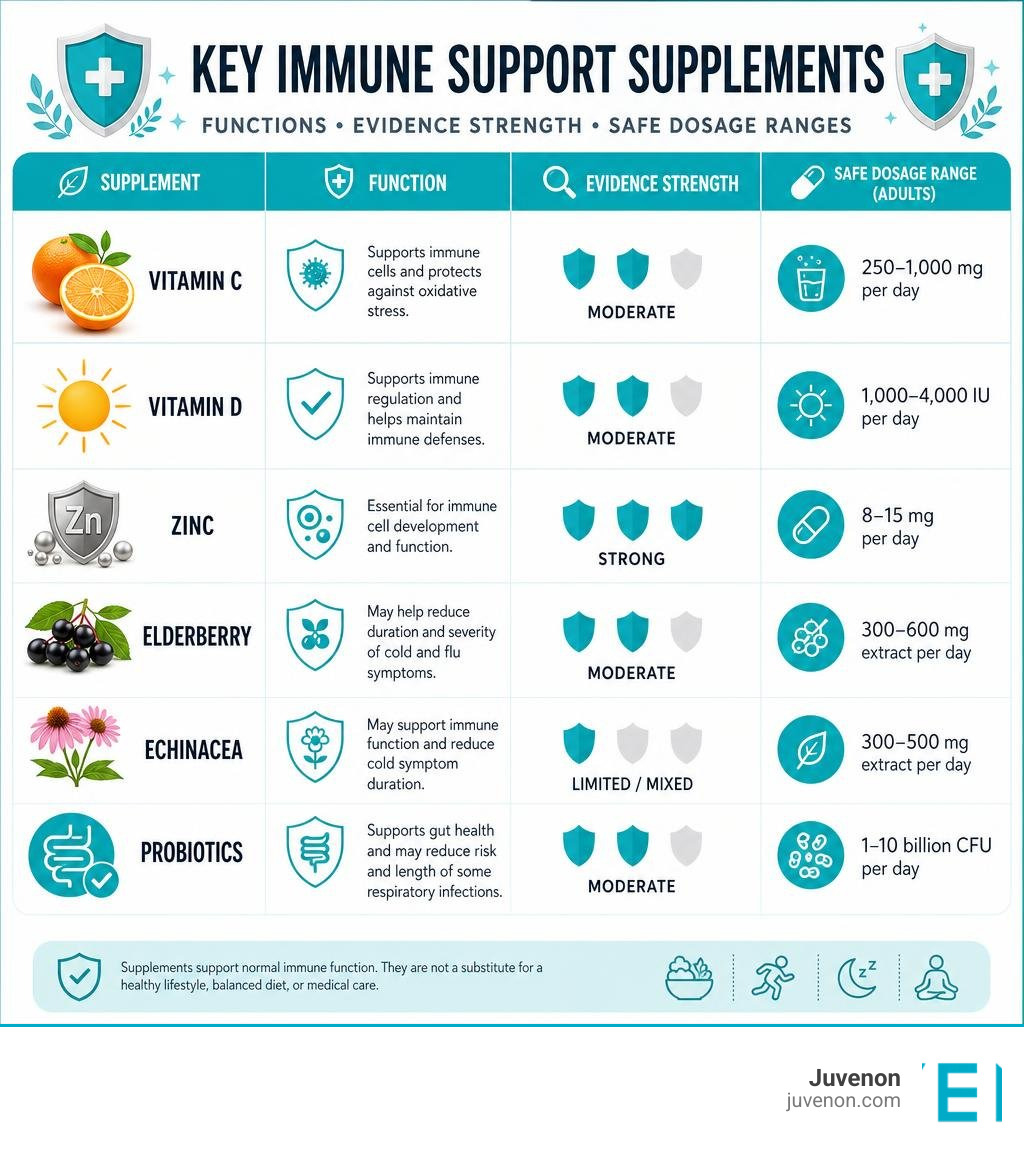
| Supplement | What the Evidence Shows |
|---|---|
| Vitamin C | May shorten cold duration; most helpful taken daily, not after symptoms start |
| Vitamin D | May reduce risk of respiratory infections, especially if levels are low |
| Zinc | Lozenges may speed cold recovery if started at first signs of illness |
| Elderberry | May ease flu symptoms if used early; ripe, cooked fruit only |
| Echinacea | Mixed results; may offer modest benefit for cold and flu symptoms |
| Probiotics | May reduce risk and length of some respiratory infections |
A few things to know upfront:
- No supplement can supercharge your immune system — the goal is to support normal function, not "boost" it
- Most healthy adults get enough key nutrients from food; supplements help fill real gaps
- More is not better — high doses of some nutrients carry serious risks
- Around 23,000 emergency room visits per year are linked to supplement use, often from taking too much
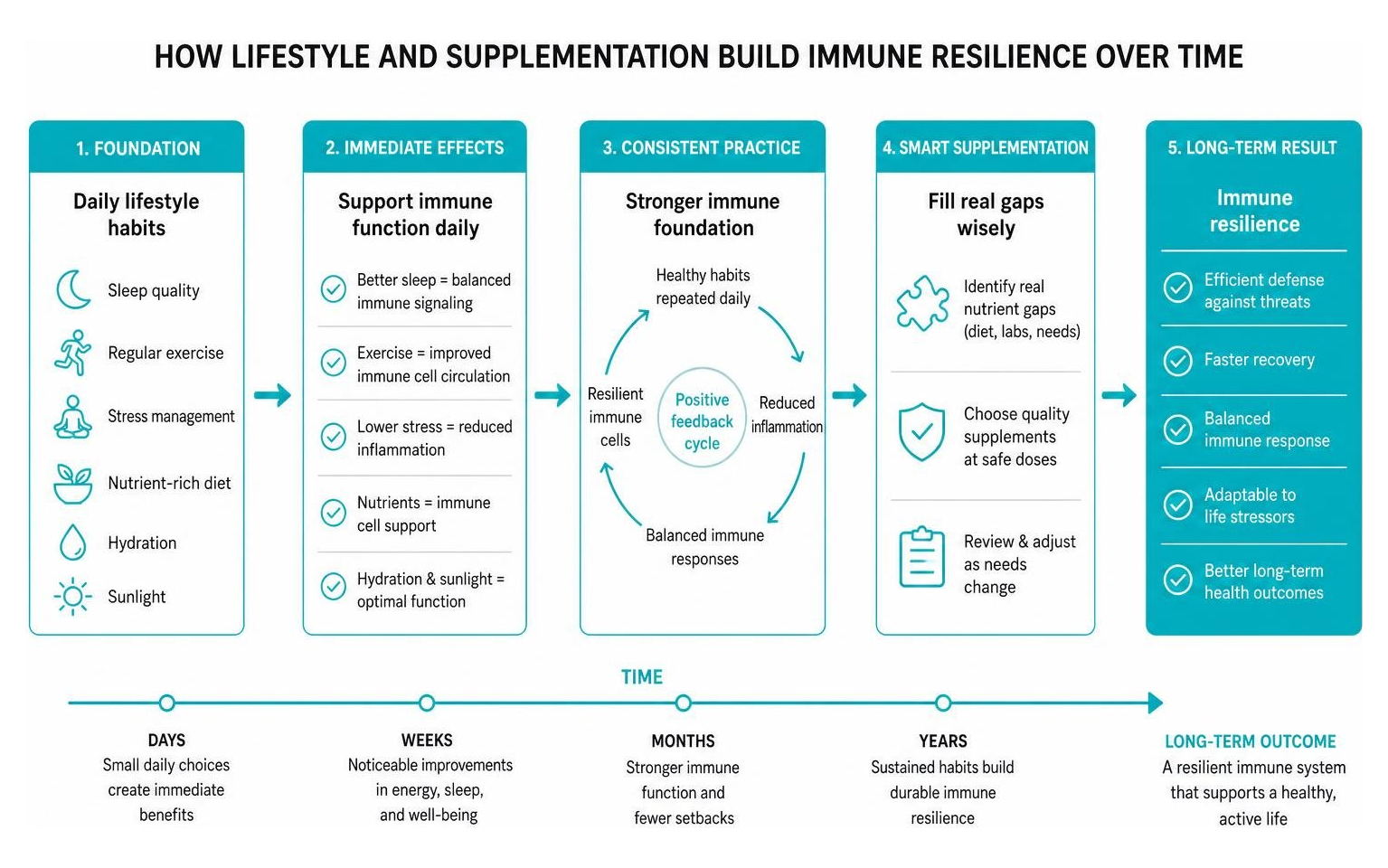
The science is clear that lifestyle habits — sleep, exercise, stress management, and a nutrient-rich diet — remain the foundation of immune health. Supplements can play a meaningful supporting role, but only when chosen wisely.
I'm Michelle M. Henson, Head of Copywriting and Legal Compliance Editor at Juvenon, where I've spent years translating complex health science — including the research behind immune support supplements — into clear, evidence-based guidance you can actually use. Let's walk through everything you need to know, from the nutrients that matter most to how to spot a quality product.
Common immune support supplements vocab:
Boosting vs. Supporting: Understanding Immune Resilience
When we see the phrase "boost your immune system" plastered across product labels, it sounds incredibly appealing. We picture our white blood cells lifting weights, ready to instantly destroy any virus that dares cross our path. However, in immunology, a "boosted" or overactive immune system isn't actually a good thing.
An overactive immune system can lead to chronic inflammation, allergies, and autoimmune disorders where your body mistakenly attacks its own healthy tissues. The real goal is not to "boost" your immune system into overdrive, but rather to foster immune resilience.
To understand this concept, we must look at What Is Immune Resilience. Immune resilience is your body's ability to adapt to stressors, fight off pathogens efficiently, and return to a balanced, calm state once the threat is gone. Think of it as a well-trained orchestra: you don't want the brass section playing at maximum volume all the time; you want every instrument to play in perfect harmony, responding dynamically to the conductor.
The Impact of Lifestyle on Your Immune Defenses
No pill, powder, or liquid can replace the foundational habits that keep your body running smoothly. To build true, long-term resilience, we must look at how we live our lives day-to-day.
- Sleep Quality: When we sleep, our bodies release cytokines, which are essential proteins that target infection and inflammation. Chronic sleep deprivation reduces the production of these protective proteins and lowers the activity of our virus-fighting T cells.
- Physical Activity: Regular, moderate exercise stimulates cellular defense by circulating immune cells more rapidly throughout the body. In fact, you can significantly Strengthen Your Immune System With Better Circulation, allowing your body to detect and neutralize threats much faster.
- Stress Management: High levels of chronic stress flood the body with cortisol. Over time, elevated cortisol levels suppress the effectiveness of your immune response, making you far more susceptible to common seasonal bugs.
- Daily Habits: Incorporating small, practical changes into your routine is the most sustainable path to health. For a comprehensive look at these habits, check out our guides on Tips To Strengthen Immunity Naturally and Immune Boosting 101 Natural Ways To Strengthen Your Defenses.
Essential Nutrients and the Role of Immune Support Supplements

Our immune cells require a steady supply of micronutrients to perform their daily duties. From the physical barrier of your skin to the complex chemical signals of your adaptive immune system, vitamins and minerals act as essential cofactors for cellular health.
According to the National Institutes of Health's guide on Dietary Supplements for Immune Function, several key nutrients are absolutely vital for maintaining these defenses. Let's explore how we obtain these nutrients and whether supplementation is truly necessary.
Do You Need Immune Support Supplements if You Eat a Balanced Diet?
In an ideal world, we would get every single vitamin, mineral, and antioxidant we need from our dinner plates. A diet rich in colorful, whole foods provides a complex matrix of nutrients that work synergistically to keep us healthy.
- Whole Foods First: Fruits, vegetables, nuts, seeds, and lean proteins contain natural fiber and co-nutrients that enhance absorption. To get started, you can explore these incredibly delicious Immune Boosting Foods You Actually Want To Eat and prepare for seasonal changes with the Top 5 Immune Boosting Foods To Boost Your Immunity This Fall.
- Addressing Nutrient Gaps: Despite our best efforts, modern life can make it difficult to maintain a perfect diet. Soil depletion, busy schedules, dietary restrictions (such as vegan or gluten-free diets), and winter weather can create subtle nutrient gaps.
- Bioavailability Matters: Not all nutrients are absorbed equally. For example, plant-based iron and zinc are less bioavailable than their animal-based counterparts. This is where high-quality immune support supplements can step in to act as a reliable nutritional safety net.
Scientific Evidence for Key Vitamins, Minerals, and Botanicals
When choosing immune support supplements, it is crucial to separate marketing hype from clinical reality. Let's dive deep into what the latest scientific evidence from 2026 says about the most popular ingredients on the market.
Vitamin C
Often hailed as the ultimate cold-fighter, Vitamin C is a powerful antioxidant that supports various cellular functions of both the innate and adaptive immune systems.
- The Evidence: Taking Vitamin C regularly does not prevent you from catching a cold, but it can help decrease cold symptoms and reduce the number of days a cold lasts. It is particularly effective for individuals undergoing extreme physical stress, such as marathon runners or those living in very cold climates. However, starting Vitamin C after you already have a cold has not been shown to provide significant benefits.
- Food Sources: Citrus fruits, bell peppers, strawberries, and broccoli.
Vitamin D
Vitamin D plays a critical role in modulating both the innate and adaptive immune responses. It helps your immune cells identify and destroy pathogens more effectively.
- The Evidence: Some studies suggest that taking Vitamin D supplements regularly might slightly reduce the risk of getting a respiratory infection, especially in people who have low baseline Vitamin D levels. Because many adults in the US and Canada have suboptimal levels due to limited sun exposure, maintaining healthy levels is essential. To understand this deeper, read about The Link Between Vitamin D And Your Immune System.
- Food Sources: Fatty fish (salmon, mackerel), fortified milk, and egg yolks.
Zinc
Zinc is a mineral crucial for the development and function of immune cells, particularly neutrophils and natural killer cells.
- The Evidence: Research indicates that zinc lozenges or syrup may speed recovery from the common cold if started within 24 hours of the onset of symptoms. Additionally, zinc supplements are highly effective at shortening the duration of diarrhea in children in low-income countries where zinc deficiency is common.
- Food Sources: Oysters, beef, pumpkin seeds, and lentils.
Elderberry
Elderberry is a popular botanical packed with antioxidants known as anthocyanins, which give the berries their deep purple color.
- The Evidence: Some clinical studies suggest that elderberry extract can help reduce the duration and severity of influenza and cold symptoms when taken at the very first sign of illness. However, more large-scale studies are needed to confirm these effects.
- Safety Note: Raw elderberry bark, leaves, seeds, and unripe fruit contain compounds that can be toxic. Only consume fully ripe, cooked elderberry or professionally prepared extracts.
Echinacea
This traditional herb has been used for centuries to support seasonal wellness.
- The Evidence: Clinical trials on echinacea show highly mixed results. While some studies suggest a modest benefit in reducing the duration of cold and flu symptoms, others show no difference compared to a placebo.
To help you compare, we've summarized these findings in the table below, referencing comprehensive data from The 15 Best Supplements to Boost Your Immune System and established medical guidelines.
| Nutrient/Botanical | Recommended Daily Intake (Adults) | Safe Upper Limit (Daily) | Primary Clinical Benefit |
|---|---|---|---|
| Vitamin C | 75–120 mg (35 mg more for smokers) | 2,000 mg | Shortens cold duration and severity |
| Vitamin D | 15–20 mcg (600–800 IU) | 100 mcg (4,000 IU) | Reduces respiratory infection risk in deficient individuals |
| Zinc | 8–12 mg | 40 mg | Speeds up recovery from colds if taken early |
| Elderberry | N/A (Varies by extract) | N/A | May ease flu-like symptoms early on |
| Echinacea | N/A (Varies by preparation) | N/A | Modest, inconsistent reduction in cold duration |
When choosing the right formulation for your needs, it is best to focus on clean, high-quality options that prioritize bioavailability and rigorous quality standards.
Safety, Risks, and Quality Standards in Supplementation
While immune support supplements can be incredibly beneficial, they are not entirely risk-free. Because the dietary supplement industry is not regulated in the same strict manner as prescription medications, the burden of safety and quality verification often falls on the consumer.
As detailed in the professional fact sheet on Dietary Supplements for Immune Function and Infectious Diseases, taking excessively high doses of vitamins and minerals can lead to systemic complications.
Potential Risks, Side Effects, and Medication Interactions
More is not always better. Megadosing—taking doses far exceeding the Recommended Dietary Allowance (RDA)—can cause serious harm to your organs and disrupt your body's natural physiological balance.
- Vitamin Toxicity: Fat-soluble vitamins, such as Vitamin A and Vitamin D, are stored in the body's tissues and can build up to toxic levels. Excessive Vitamin A can cause liver damage and birth defects, while extremely high doses of Vitamin D can lead to kidney stones, heart rhythm problems, and even kidney failure.
- Mineral Imbalance: Taking high doses of zinc (above 40 mg daily) over a long period can interfere with your body's absorption of copper, leading to copper deficiency and a weakened immune system.
- Medication Interactions: Many botanical supplements can interact with prescription drugs. For example, echinacea can interact with medications that suppress the immune system, and high doses of Vitamin E can act as a mild blood thinner, which may be dangerous if you are already taking blood-thinning medications.
- Vulnerable Populations: Pregnant women, young children, older adults, and those undergoing specialized medical treatments must exercise extreme caution. If you are exploring advanced ways to support your cellular defenses, such as learning 5 Ways To Strengthen Your Cancer And Virus Fighting T Cells, always do so under the direct supervision of your medical team.
How to Safely Choose High-Quality Immune Support Supplements
To protect yourself from inaccurate labeling, unapproved ingredients, or heavy metal contamination, look for these key indicators of quality when shopping for supplements:
- Third-Party Testing: Look for a seal on the bottle from an independent testing organization, such as USP (United States Pharmacopeia), NSF International, or ConsumerLab. These organizations verify that what is on the label is actually what is in the bottle.
- GMP Certification: Ensure the product is manufactured in a facility that follows Current Good Manufacturing Practices (cGMP) established by the FDA.
- Ingredient Transparency: Avoid products that hide their ingredients behind "proprietary blends." You should know exactly how many milligrams of each active ingredient you are consuming.
- Clean Formulations: Choose products free from unnecessary fillers, artificial colors, and excessive added sugars. Clean, bioavailable forms of nutrients (such as zinc bisglycinate or plant-derived Vitamin D3) are generally much easier on the digestive system.
Frequently Asked Questions about Immune Health
Can you actually "boost" your immune system?
No, you cannot—and should not—try to artificially "boost" your immune system. Your immune response relies on a delicate physiological balance. Attempting to force your immune cells into a hyper-active state can lead to chronic inflammation or autoimmune issues. Instead, focus on supporting normal, balanced function. To learn more about this natural, balanced approach, check out our guide on how to Boost Your Immune System The Natural Way.
What are the symptoms of taking too many immune supplements?
Taking excessive amounts of immune support supplements can cause a range of unwanted side effects. Common symptoms of vitamin or mineral toxicity include:
- Gastrointestinal Distress: Nausea, vomiting, stomach cramps, and diarrhea (frequently caused by too much Vitamin C or Zinc).
- Systemic Issues: Chronic headaches, fatigue, dizziness, and painful kidney stones (often linked to high doses of Vitamin D).
- Mineral Imbalances: Hair loss, brittle nails, and nerve damage (which can occur with excessive selenium or zinc intake).
If you experience any of these symptoms, stop taking the supplements immediately and consult your healthcare provider.
How does gut health affect overall immunity?
Your gut and your immune system are deeply connected. In fact, over 70% of your immune system resides in the tissues lining your gastrointestinal tract. Your gut microbiome—the trillions of beneficial bacteria living in your digestive system—acts as a training school for your immune cells.
These bacteria teach your immune system to distinguish between harmless food particles and dangerous pathogens. Supporting your gut health with prebiotic fibers, fermented foods, and high-quality probiotic supplements can significantly improve your body's overall immune resilience and reduce the frequency of seasonal respiratory infections.
Conclusion
True immune health is not built in a day, nor is it found at the bottom of a single supplement bottle. It is the result of consistent daily habits: deep sleep, regular physical activity, stress management, and a colorful, nutrient-dense diet.
When your lifestyle needs a helping hand, scientifically backed immune support supplements can provide the precise, high-quality nutrients required to keep your cellular defenses strong. At Juvenon, we believe in supporting your health and longevity through rigorous, evidence-based nutrition.
By focusing on cellular integrity and systemic balance, we can help our bodies navigate life's seasonal challenges with ease and confidence. For more expert tips on building balanced immune resilience through daily habits and smart supplementation, read our guide: Immune Boosting 101 Natural Ways To Strengthen Your Defenses.
Ready to elevate your daily wellness routine? Explore our full range of scientifically formulated, third-party tested products at the Juvenon Products Page, backed by our industry-leading 60-day money-back guarantee.