Natural Cellular Health Supplements - Juvenon
ASK QUESTIONS OR ORDER BY PHONE
1-800-567-2502
volume 3 number 11  november 2004
   
Alpha Lipoic Acid: A Marvelous Nutrient

By Benjamin V. Treadwell, Ph.D.

The importance of the nutrient alpha lipoic acid on cellular health was described in some detail in a previous Juvenon Health Journal The Two Faces of Alpha Lipoic Acid. Today’s article begins with a brief summary of the previous publication and then provides significant new information on the effects alpha lipoic acid cellular metabolism.

Alpha Lipoic Acid and Cellular Energy Production

Alpha lipoic acid is an essential nutrient that functions as a cofactor in the catalytic conversion of food-derived metabolites to energy. While the cells of our body synthesize lipoic acid, we also obtain it from the foods we eat. Evidence indicates we require both sources to supply healthy quantities to our cells. As we age, however, this amount may be insufficient for maximum cellular health, since absorption from foods may decline and cellular synthesis may be less efficient.

  Lipoic acid has been demonstrated to be a potent antioxidant in several ways.  
Protection from free-radical damage

Lipoic acid has been demonstrated to be a potent antioxidant in several ways. First, it can scavenge toxic free radicals directly. Second, because it is soluble in fat and water, it can insert itself in membranes as well as in the cell’s water compartments. Thus, lipoic acid can protect virtually all the cell from oxidants. Third, it is well known that various antioxidants with different properties are required to protect the cell. Lipoic acid has been shown to function as the ultimate reducing (activating) agent in converting several additional antioxidants to their reduced and active forms. These include vitamins C and E, ubiquinone (Coenzyme Q10), and the important cellular antioxidant, glutathione. Finally, lipoic acid has been demonstrated in cell culture and animal experiments to have the capacity to activate a family of genes (called phase II genes), which are critical in the removal of toxic cellular substances. There are over 200 of these cell-protective genes. They are important in keeping our cells free from toxins produced during cellular metabolism as well as those obtained from prescribed drugs and environmental toxins.

Recent findings

Mirror image R and S isomersRecent studies shed new light on lipoic acid’s capacity to regulate metabolism. Lipoic acid given to humans in oral doses of 300-600 mg/day has been documented to increase the serum level of lipoic acid in the blood to 25-50 micromoles/liter (5mg/liter of blood). It turns out that doses in this range can promote the activation of an important regulator of energy metabolism (pyruvate dehydrogenase complex) and in effect accelerate the removal of a carbohydrate-derived food metabolite, pyruvate, by converting it to energy. The net effect of this activity is to accelerate the removal from the serum of carbohydrate precursors to pyruvate. (These results were obtained with cultured rat liver cells and skeletal muscle, and to date have not been examined in humans.)

The liver is a major regulator of carbohydrate-derived metabolite levels, and any increase in the activity of an enzyme that acts on these metabolites to convert them to energy can have a significant effect on reducing their levels in serum. Lowering serum levels of these carbohydrate-derived metabolites can have important positive effects on overall health.

This research also demonstrated that lipoic acid inhibited the production of energy from fat in liver cells, but not in muscle. This is an important finding in that a product of fat metabolism (acetyl CoA) inhibits the conversion of carbohydrate-derived metabolites to energy. Therefore, by inhibiting fat oxidation in the liver, and thus preventing the accumulation of the fat-derived oxidation product acetyl CoA, lipoic acid accelerates the removal of the carbohydrate metabolite, pyruvate. In this way it helps keep precursors to this metabolite at healthy levels in the serum.


Lipoic acid inhibited the production of energy from fat in liver cells, but not in muscle.


In summary, lipoic acid, at least in cell culture, has been shown to lower carbohydrate-derived metabolite levels by activating enzymes to convert them to energy. Secondly, lipoic acid prevents the conversion of cellular metabolites (such as amino acids) to carbohydrates, further promoting a healthy serum level of these metabolites. Finally, lipoic acid inhibits the conversion of fat to energy, thus preventing the production of fat-derived metabolites to accumulate and subsequently interfere with the removal or utilization of carbohydrates for energy production.

As noted, this latter effect is unique to liver. This is important because muscle tissue, which has high energy demand, utilizes fat for energy, so it would not be wise to interfere with the energy production of this tissue. Therefore, one can conclude that at least one of lipoic acid’s effects (inhibition of fat metabolism in liver) is specific to the liver.

What does all this mean to human health?

The research cited above is encouraging in that it does suggest that lipoic acid in certain doses (300-600mg/day) may help promote the metabolic conversion of carbohydrates to energy. This effect is important because high serum levels of carbohydrate metabolites can negatively affect cellular health.

FREE SHIPPING for Life with our Monthly Convenience Program.
Buy Now!
U.S. Addresses Only

Research Update

When the micronutrient alpha lipoic acid is chemically synthesized, the resulting compound has two isomers, R and S. The two have the same chemical formula but different properties as they are mirror images. Alpha lipoic acid synthesized by the body has only the R form. Researchers have long wondered whether the natural R form might be superior in some way. It was significant, therefore, when a recent study found that the R form, the S form and the R+S combination had similar effects on the activity of at least one enzyme involved in regulating the rate of conversion of food metabolites into energy. For details, click here.

This Research Update column highlights articles related to recent scientific inquiry into the process of human aging. It is not intended to promote any specific ingredient, regimen, or use and should not be construed as evidence of the safety, effectiveness, or intended uses of the Juvenon product. The Juvenon label should be consulted for intended uses and appropriate directions for use of the product.

   
Ask Ben    
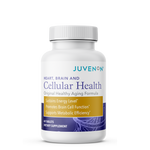
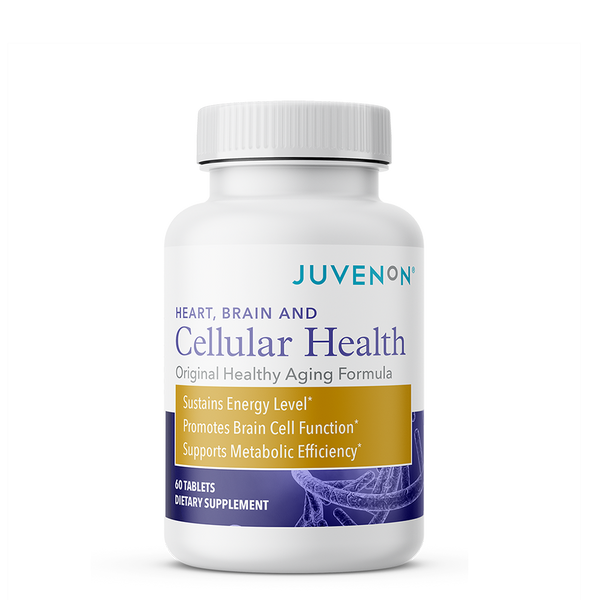
Dr. Treadwell answers your questions about Juvenon™ Cellular Health Supplement

QUESTION: Just got done reading a very interesting report on the net about lipoic acid. Seems that there are 2 forms, something called (R+), which seems to be very good, and something called (S-), which seems to be a "synthetic" form. What type does Juvenon have?
M.S., via email

ANSWER: The Juvenon™ Cellular Health Supplement product has both the R and S forms. Two major enzyme complexes involved in energy production require the R form. However, don't believe everything you read. There is no solid evidence the S form has any negative effect on the cells of our body. In fact, virtually all the lipoic acid studies on humans over the past 35 years used the R/S form with good results and no known significant toxic effects.

If you carefully examine the article you refer to on the R form and the questions raised about the S form you will see it provides no published evidence to support the negative comments on the S form. Why? Because there is no evidence to date, and the questions are based on speculation alone.

The problem with the R form once isolated from the S is that it is unstable and tends to form polymerization products. This is why virtually all the clinical studies performed in humans over several decades use the racemic mixture (50:50 mix of the R+/S isomers). We are currently developing a technique to prepare the R isomer in an active, pure and stable state. We hope to be able to offer this in the Juvenon™ Cellular Health Supplement formula in the near future, but only when we are confident of its purity and stability.

Send your questions to AskBen@juvenon.com.
For more questions and answers, go to juvenon.com/product/qa.htm.

Benjamin V. Treadwell, Ph.D., is a former Harvard Medical School associate professor and member of Juvenon's Scientific Advisory Board.

Vigorate Dog Treats

Share:  Del.icio.us   Digg   Mixx   My Web   Facebook   LinkedIn  

  Español     Guarantee     Legal Notices     Privacy     Site Map     Contact     RSS RSS Feed © 2008 Juvenon, Inc.

*These statements have not been evaluated by the Food and Drug Administration. This product is not intended to diagnose, treat, cure or prevent any disease.